
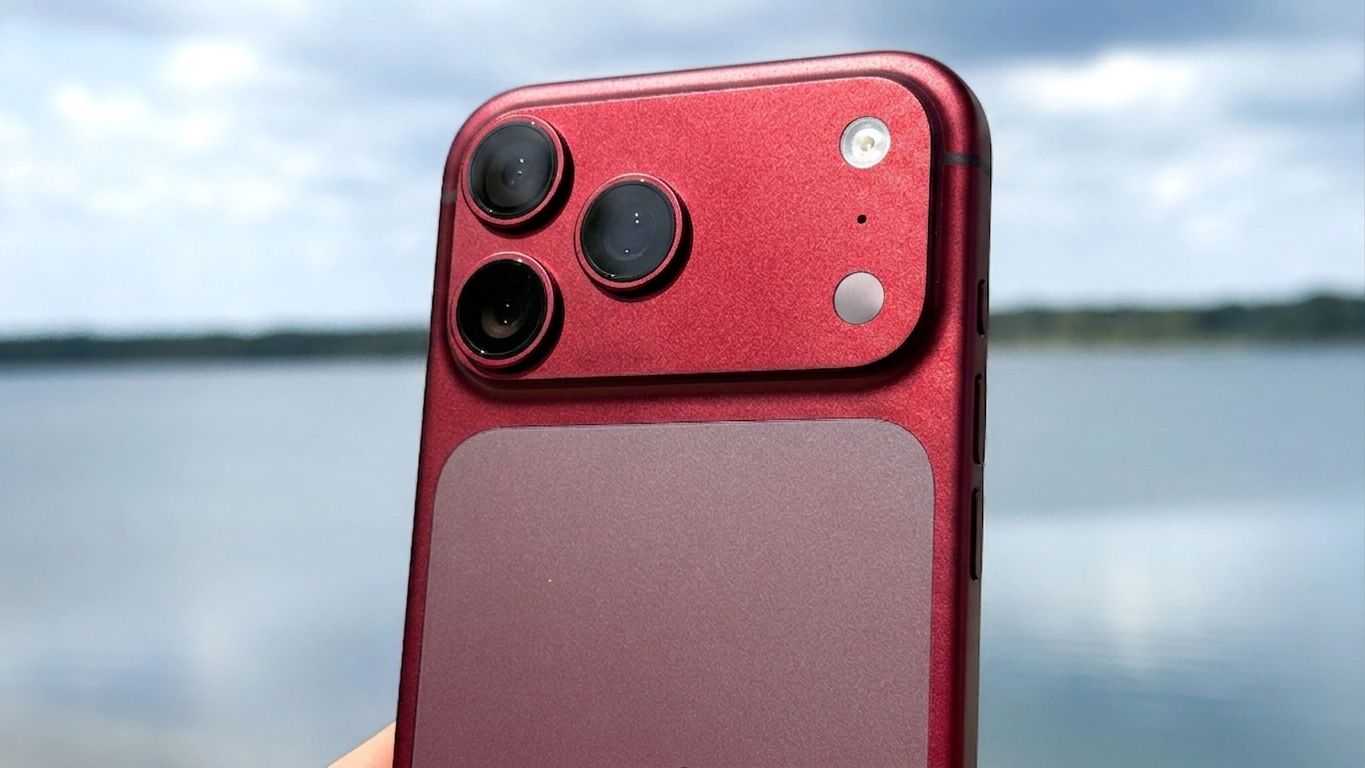
(Image credit: Tom's Guide / edited with Gemini AI) Variable apertures might sound unfamiliar to the average person, but they’re not necessarily new in the smartphone world. Still, Apple could make a compelling case for the technology, with rumors hinting that the upcoming iPhone 18 Pro Max will feature a mechanical variable-aperture camera.I remember how Samsung tried to popularize the concept with dual-aperture lenses on the Galaxy S9 and Galaxy S10 years ago, before quietly phasing out the hardware in favor of software-driven computational photography. But as mobile sensors have grown larger and computational photography has pushed its physical limits, Apple’s attempt at reviving the feature could yield big rewards.Apple has already proven it makes some of the best camera phones around, but a physical variable aperture could finally deliver what earlier iterations couldn't. Still, as a videographer, I have my reservations — so I asked professional photographers exactly how a variable-aperture iPhone could be beneficial (or not).What is a variable aperture and why should you care? (Image credit: Tom's Guide)For photographers who use elaborate, dedicated cameras to make a living, picking up a lens means having total control over its aperture ring. Turning that dial expands or contracts the mechanical blades inside the barrel, directly controlling how much light reaches the sensor and how dramatically the background softens.Smartphone cameras, by contrast, have historically been locked into a single fixed opening, relying almost entirely on computational algorithms and simulated portrait modes to mimic what high-end glass accomplishes naturally.In layman’s terms, think of the aperture like the iris of a human eye. The size of this opening is measured in f-stops, where a smaller number represents a wider physical opening.That’s why photographers often recommend shooting “wide open” (dialing down to an f-stop value like f/1.4 or f/1.8) to flood the sensor with light in dim settings, or creating an authentic background blur with portraits. But altering that opening triggers a ripple effect across the entire exposure triangle.Get instant access to breaking news, the hottest reviews, great deals and helpful tips. (Image credit: Future)“When we're working, we’re always conscious of shutter speed, aperture, and ISO — us old-timers call it ASA,” explains Ken Braswell, owner of ShoreGrafx. “Photographers know that you control your depth of field with your aperture, and you also can use it to control your shutter speed."That dynamic balance is precisely what makes variable glass so powerful. By mechanically stopping down to a narrower aperture — represented by higher f-stop numbers like f/8 or f/16 — a shooter restricts incoming light, allowing for slower shutter speeds that can introduce deliberate motion blur to rushing streams or light streaks from passing cars at night.Just as importantly, a smaller physical opening expands your depth of field, keeping an entire landscape or a group photo razor-sharp from foreground to background without any artificial software artifacts. (Image credit: Future)Samsung introduced a mechanical dual-aperture system on the Galaxy S9 and S10, allowing the main camera to physically switch between f/1.5 and f/2.4. In low-light environments, the lens opened to f/1.5 to let in maximum ambient light, while daytime landscapes benefited from a shift to f/2.4 to sharpen details across the frame.However, because the switch was limited to just those two fixed stops on relatively small sensors, the optical differences were subtle for casual users. Apple could shift the landscape entirely by taking a more versatile approach with a true multi-stage variable aperture system.Real-world benefits Image 1 of 1 (Image credit: Tom's Guide / John Velasco) While Apple’s Pro lineup has long relied on a fixed f/1.78 aperture across its 48MP main sensor, rumors point to a major shakeup for the iPhone 18 Pro Max. Leaks suggest the variable-aperture system will be an iPhone 18 Pro Max exclusive, leaving the standard iPhone 18 Pro with a fixed aperture.Another potential incentive to choose the Pro Max over the standard Pro is that it might also feature an extended 6x optical telephoto zoom.Thanks to presets, face-tuning, and things like Google’s Remix feature, consumers have been spoiled by the benefits of AI and other software wizardry.Frank FiliatraultIn tricky real-world scenarios, hardware control solves problems that software post-processing and digital trickery simply cannot. “Thanks to presets, face-tuning, and things like Google’s Remix feature, consumers have been spoiled by the benefits of AI and other software wizardry,” said Frank Filiatrault, owner and lead photographer at Curbside Captures. “A variable aperture allows you to not only let in more light, but it also allows you to adjust your photography to incorporate things like bokeh and more creative depth of field without the software after the fact.” Image 1 of 14 (Image credit: Tom's Guide / John Velasco) By giving shooters true mechanical control, the iPhone 18 Pro Max wouldn't just be calculating depth maps or masking edges post-shot — it would be capturing the scene optically from the start. It speaks directly to the ongoing "AI versus reality" debate across mobile tech, often highlighted by features like Google’s Pro Res Zoom on Pixel phones. Just take a look at some of the photos I've captured above.Whether isolating a subject in a dimly lit venue or keeping an entire family crisp in a portrait, having actual blades move behind the glass ensures cleaner light gathering and authentic depth of field that no software patch can replicate.Think different (Image credit: Future)No matter how advanced mobile camera sensors become, I can attest that professional photographers aren’t trading in their full-frame bodies or cinema rigs for an iPhone 18 Pro Max. For working pros, smartphones serve a fundamentally different purpose: secondary capture, studio prep, and as Braswell pointed out right from the start, “your best camera is the one you have with you.”“I’m not going to add anything to my arsenal by having my iPhone having an aperture,” explains Ken Braswell. “I might use it in the studio to document lighting and camera, just to record how my studio setup was. But the intent isn’t for super high-quality images; you’re just trying to document what’s going on.”Frank Filiatrault echoes that exact sentiment, viewing mobile hardware as a reliable supplement rather than an A-cam successor. “Pros will use it just the same — for BTS content, as a travel vlogging device, for social content, etc.,” Filiatrault notes. “Tide lifts all boats, so to speak.”Because professional photographers won’t be swayed by mechanical blades alone, Apple faces a different challenge: convincing the average Joe that this hardware leap actually matters. Mainstream consumers don't shop for f-stops, shutter speeds, or sensor crop factors. In fact, I’d be surprised if Apple executives even mention the technical term "aperture" during the keynote.They could be starting something new and bring awareness to aperture to average people, and they might start getting more creative.Ken Braswell“I don't think the average person is going to be into it so much,” Braswell admits. “They could be starting something new and bring awareness to aperture to average people, and they might start getting more creative.”To bridge that gap and avoid the marketing pitfalls Samsung faced years ago, Apple will almost certainly package this hardware under intuitive, consumer-friendly branding — much like it did with FaceTime, AirDrop, and True Tone.“Thanks to software, we’re getting to a point where sometimes ‘good-enough’ really is good enough,” says Filiatrault. “Folks don’t need to spend more money on the flagship device... What it will do is help inspire another generation of visual storytellers and empower them with better tools.”I have plenty guesses on what Apple could do to highlight a feature such as this on the iPhone 18 Pro Max. Perhaps, it could be used for artistic effects, like somehow offering a long exposure mode where it could switch aperture levels to keep subjects crisp and add motion blur to the background.By translating complex camera hardware into tangible everyday benefits, Apple won't just sell the iPhone 18 Pro Max as an enthusiast tool — it will reshape how casual shooters understand and use light. In the spirit of Apple’s classic “Think Different” spirit, this new camera system could ultimately inspire an entire generation to shoot differently. Follow Tom's Guide on Google News and add us as a preferred source to get our up-to-date news, analysis, and reviews in your feeds. Subscribe to Tom's Guide on YouTube and follow us on TikTok. Finally, you can visit our dedicated Tom's Guide Savings Squad hub for expert help on getting the best products for less. More from Tom's GuideiPhone Ultra trade-offs: The biggest things you’re not getting versus iPhone 18 Pro3 big reasons to buy iPhone 18 Pro Max over iPhone 18 Pro this yeariPhone Ultra is Apple's biggest product in years, but supply chain issues mean many could miss out at launch John’s a senior editor covering phones for Tom’s Guide. He’s no stranger in this area having covered mobile phones and gadgets since 2008 when he started his career. On top of his editor duties, he’s a seasoned videographer being in front and behind the camera producing YouTube videos. Previously, he held editor roles with PhoneArena, Android Authority, Digital Trends, and SPY. Outside of tech, he enjoys producing mini documentaries and fun social clips for small businesses, enjoying the beach life at the Jersey Shore, and recently becoming a first time homeowner.
iPhone 18 Pro Max — I asked pro photographers what they really think of a variable aperture camera
Full Article
Original Source
Read the full article at Tomsguide →KhanList aggregates and links to publicly available news content. We do not host full articles from third-party sources. Always verify important information with original sources.