
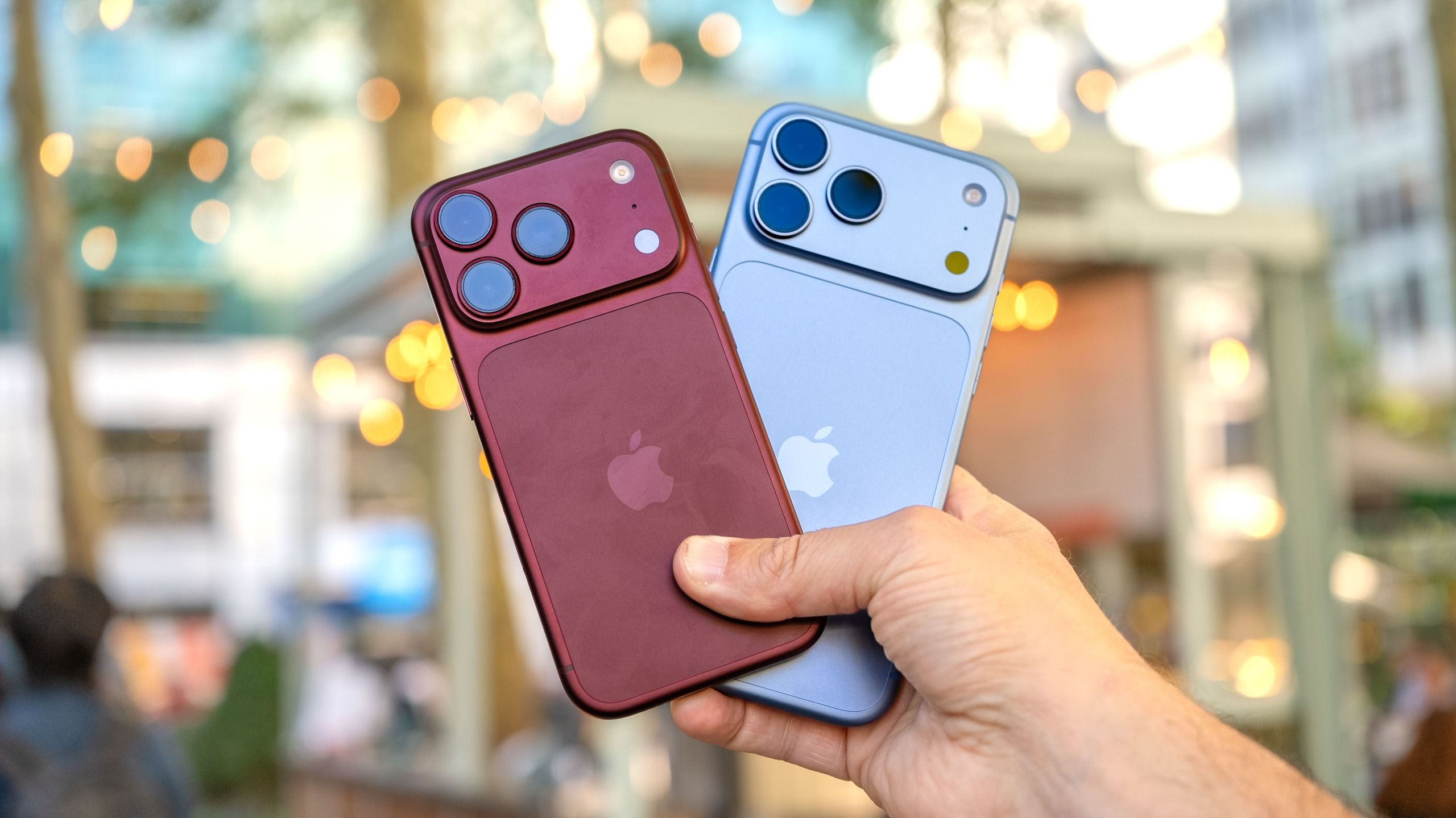
(Image credit: Tom's Guide) Apple made a lot of bold claims about the A20 Pro chipset that's powering the iPhone 18 Pro and iPhone 18 Pro Max. Apple promised that these phones are faster and more efficient, while offering big improvements to graphics and AI processing. But how much of a difference do these new chips actually make?The A20 Pro changes things up this year, having been built with a 2nm design that offers much better transistor density than the 3nm A19 Pro from last year. On top of that Apple promises that the 6-core CPU has a pair of "super cores" that are 20% faster, plus an additional four efficiency cores. The seven-core GPU is supposed to offer 40% improved graphics, while Apple had added a second neural engine to double the new chip's AI processing power.We've been testing both new phones for our iPhone 18 Pro and iPhone 18 Pro Max review, and the benchmarking tests paint a very good picture for Apple's latest flagship. In fact, based on benchmark scores, there's been a huge performance leap that puts the likes of iPhone 17 Pro and Samsung Galaxy S26 Ultra to shame.If you're looking for a phone with the best performance and graphics prowess, Apple should top your shopping list. Though, it would be nice if the AI processing power was a little higher. Here's what we learned after testing the iPhone 18 Pro and iPhone 18 Pro Max.A20 Pro: Overall Performance (Image credit: Tom's Guide)Every time we review a phone, we run Geekbench's benchmarking tests to gauge the overall CPU performance and how different devices compare to their contemporaries. In the case of the iPhone 18 Pro and iPhone 18 Pro Max, we did the latest Geekbench 7 benchmark, and the older Geekbench 6 tests. Swipe to scroll horizontally Row 0 - Cell 0 Geekbench 6(single/multi-core) Geekbench 7(single/multi-core) iPhone 18 Pro 4,735 / 12,800 4,022 / 11,543 iPhone 18 Pro Max 4,741 / 12,789 4,025 / 11,525 Galaxy S26 Ultra 3,785 / 11,563 3,149 / 10,612 iPhone 17 Pro 3,834/ 9,988 3,138 / 8,692 iPhone 17 Pro Max 3,871 / 9,968 3,285 / 8,999 As you can see, both tests showed a massive improvement in both single- and multi-core testing. The iPhone 18 Pro came out of Geekbench 6 testing with a respective 4,735 and 12,800 in single and multi-core testing.Meanwhile Geekbench 7 saw the phone record scores of 4,022 and 11,543. The iPhone 18 Pro Max scored similarly, with Geekbench 6 scores of 4,741 / 12,789 and Geekbench 7 scores of 4,025 / 11,525Sign up to the Tom's iGuide weekly newsletter with coverage on everything from product launches to software updates, this is your go-to source for the latest updates on all the best Apple content.That's a huge improvement compared to the iPhone 17 Pro and Pro Max. Both phones came out with similar scores in both iterations of Geekbench benchmarking, with iPhone 17 Pro recording scores of 3,834/ 9,988 in Geekbench 6 and 3,138 / 8,692 with Geekbench 7. Meanwhile, the iPhone 17 Pro Max finished testing with 3,871 / 9,968 from Geekbench 6 and 3,285 / 8,999 from Geekbench 7.As for Apple's biggest rival, the Samsung Galaxy S26 Ultra, that came out with a score of 3,785 / 11,563 for Geekbench 6 and 3,149 / 10,612 with Geekbench 7. That sits in the middle of the iPhone 17 Pro and iPhone 18 Pro, and while this means Apple has Samsung beat at the moment, things may change with the release of the Galaxy S27 Ultra and the Snapdragon 8 Elite Gen 6 for Galaxy chipsetA20 Pro: Graphics Performance (Image credit: Tom's Guide)Graphics performance is often where Apple chips lag behind the Snapdragon flagship, but this year the A20 Pro has pushed well beyond what Samsung's flagship phone has to offer. In fact, considering the S26 Ultra was almost neck and neck with the iPhone 17 Pro and Pro Max, the fact that the A20 Pro has jumped so far ahead is pretty impressive. Swipe to scroll horizontally Row 0 - Cell 0 3DMark Solar Bay Unlimited iPhone 18 Pro 61.93 fps / 16,288 iPhone 18 Pro Max 67.9 fps / 17,850 Galaxy S26 Ultra 49.37 fps / 12,984 iPhone 17 Pro 46.4 fps / 12,208 iPhone 17 Pro Max 46.6 fps / 12,260 Using 3DMark's Solar Bay Unlimited benchmarking test, the iPhone 18 Pro produced a score of 16,228 and an average frame rate of 61.93 fps. The iPhone 18 Pro Max did even better, with a 17,850 score and 67.9 fps average frame rate. The S26 Ultra, on the other hand, recorded a score of 12,984 and an average frame rate of 49.37 fps.As for the iPhone 17 Pro and Pro Max, both phones came out with scores of 12,208 and 12,260, respectively. Alongside average frame rates of 46.4fps and 46.6fps.A20 Pro: AI performance (Image credit: Tom's Guide)Geekbench's AI test gives us an idea of how good a phone is at overall AI processing through its Neural Engine. Since Apple added a second engine to the A20 Pro, we should see major gains. Thankfully for Apple, the results do reflect this, though the scores are not twice as high as the A19 Pro. Swipe to scroll horizontally Row 0 - Cell 0 Geekbench AI 1.7 iPhone 18 Pro 69,245 (Quantitized Core ML/Neural Engine) iPhone 18 Pro Max 71,974 Galaxy S26 Ultra 83047 (TensorFlow Lite QNN) iPhone 17 Pro 49,050 iPhone 17 Pro Max 48549 The iPhone 18 Pro recorded an AI processing score of 69,245, which rose to 71,974 on the iPhone 18 Pro Max. That's a significant increase over the iPhone 17 Pro's 49,050 and the 17 Pro Max's 48,549. However, it seems Apple is still lagging behind Samsung, with the S26 Ultra recording a score of 83,047.Clearly Apple still has work to do on AI, though considering it jumped onto the bandwagon a little later than its rivals, that's to be expected.A20 Pro: Sustained Performance (Image credit: Tom's Guide)Recording performance figures is one thing, but it doesn't matter much if the phone can't sustain it for extended periods of time. Last year saw the iPhone 17 Pro and Pro Max's sustained performance score rise, on account of the new design. A combination of the aluminum unibody design, raised plateau and brand new vapor chamber meant that heat could be transported away from key areas and dissipated more effectively — letting it work harder for longer.This year the iPhone 18 Pro and Pro Max came with a redesigned vapor chamber that has three times the surface area of last year's design. Apple promises this will improve sustained performance by around 40% — but did it? Swipe to scroll horizontally Sustained Performance Row 0 - Cell 0 3DMark Wild Life Extreme Stress Test Stability Score iPhone 18 Pro 62.8% iPhone 18 Pro Max 79.4% Galaxy S26 Ultra 53.9% iPhone 17 Pro 61.1% iPhone 17 Pro Max 65.2% According to our testing, the iPhone 18 Pro Max's stability score, the measure at which we measure sustained performance during graphics testing, rose from 65.2% to 79.4%. Meanwhile iPhone 18 Pro rose from 61.1% to 62.8%.That's a pretty major gain for the iPhone 18 Pro Max, with a 14.2% rise, but it's far less impressive that the iPhone 18 Pro only achieved a 1.7% gain. Still, both phones are leagues ahead of the Samsung Galaxy S26 Ultra, which only managed a stability score of 53.9%.A20 Pro: Bottom line (Image credit: Tom's Guide)It's fair to say that Apple has done a great job with the A20 Pro. While AI processing still lags behind one of its biggest rivals, the benchmarking tests show that Apple has made serious gains compared to the iPhone 17 Pro and Pro Max. Work still needs to be done, but this is definitely a positive step forward.As for raw computing and graphics performance, we can't fault the improvement Apple has made. Not only has it put A-series chips back on top, and ahead of Snapdragon, it's made enough of an improvement to graphics performance that Qualcomm and Samsung are going to have to put the effort in for the next generation "for Galaxy" chip.That said, with the Snapdragon Summit happening next week (September 22 to 24), we don't have to wait long to see what the next generation of Android flagships is working with. Follow Tom's Guide on Google News and add us as a preferred source to get our up-to-date news, analysis, and reviews in your feeds. More from Tom's GuideiPhone 18 Pro's Reference Image mode helps verify if an image has been altered by AI — here's how it worksI tried the new iOS 27 Safari features — here's 3 settings worth usingiPhone Duo vs Samsung Galaxy Z Fold 8: Which foldable phone will win? Tom is the Tom's Guide's UK Phones Editor, tackling the latest smartphone news and vocally expressing his opinions about upcoming features or changes. It's long way from his days as editor of Gizmodo UK, when pretty much everything was on the table. He’s usually found trying to squeeze another giant Lego set onto the shelf, draining very large cups of coffee, or complaining about how terrible his Smart TV is.
iPhone 18 Pro benchmarks: Apple just built the most powerful phones we've ever seen
Full Article
Original Source
Read the full article at Tomsguide →KhanList aggregates and links to publicly available news content. We do not host full articles from third-party sources. Always verify important information with original sources.