
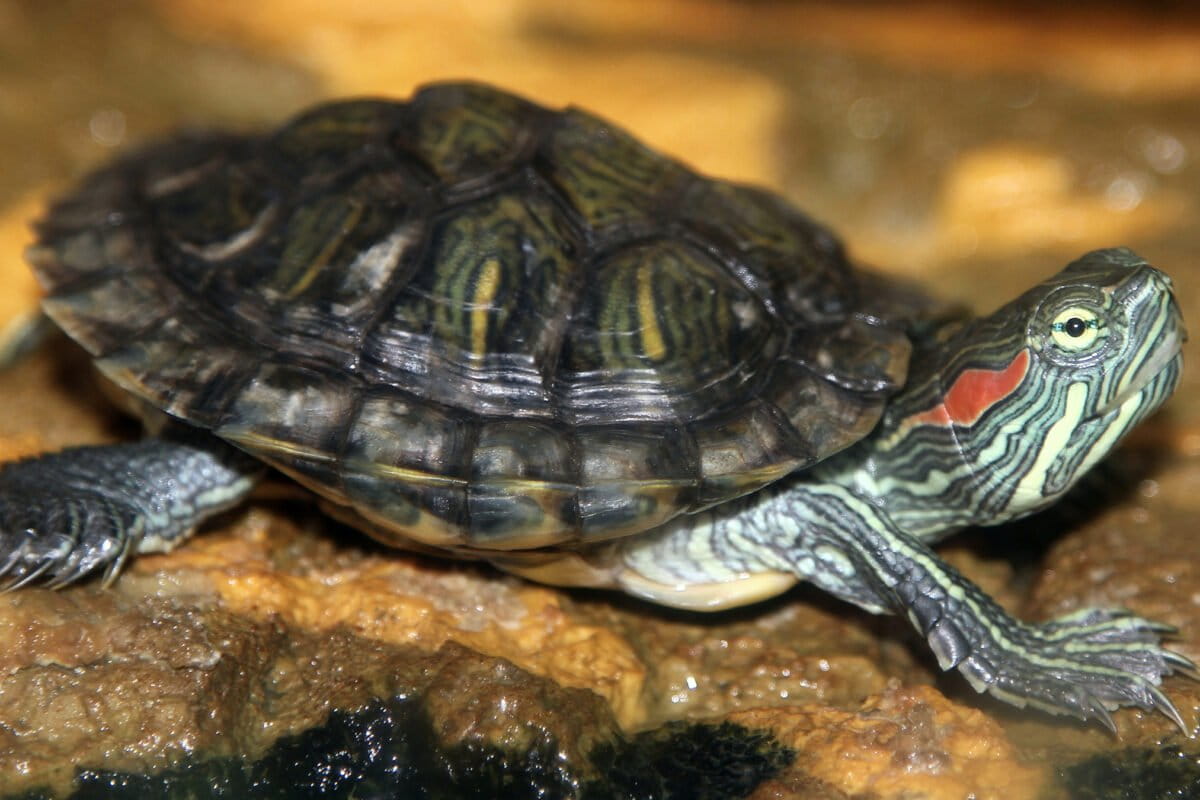
There has been a long-standing assumption that invasive alien species have greater biodiversity impacts in wealthier Global North countries than in the Global South.But a new study finds that the average severity of impacts of invasive alien species is greater in the Global South.In Myanmar, for example, where 70% of the population practices agriculture, farmers struggle to adopt self-devised methods of dealing with invasive alien species such as the golden apple snail. The environmental impacts caused by invasive alien species are more severe in poor countries of Global South than wealthy countries of Global North, a new study finds. The study shatters a long-standing assumption that wealthier Global North countries suffer the worst effects of invasive alien species (IAS) and highlights weak governance and insufficient management capacity as some of the reasons for greater severity of impacts in the Global South. The study published in Science in July employed a method involving the assessment of the average impact of severity, which uses a different approach from previous research. Instead of focusing on numbers of invasive species, this method focuses on how serious the level of impacts caused by invasive species are. Previously, impacts of IAS have been regarded more of a problem in the Global North because fewer large impacts were reported from the Global South, Sven Bacher, professor of ecology at University of Fribourg and the lead author of the research, told Mongabay by email. “We show that this is due to uneven reporting, and that the average impacts are actually higher in the GS [Global South]. This even holds for impacts of the same IAS introduced to both the GS and the GN [Global North]: on average their impacts are larger in the GS,” he said. Among the paper’s key findings, the scientists identified weak governance and limited management capacities as two major factors contributing to the Global South’s greater vulnerability. Some of the impacts of IAS can include damage to native species and ecosystems globally, causing hundreds of extinctions. Additionally, IAS can have ecological costs including habitat destruction and irreversible loss of native biodiversity. According to Bacher, preventing invasions is the most cost-effective option for dealing with invasive species, particularly in situations where control is ineffective such as the marine ecosystems. The Mediterranean mussel (Mytilus galloprovincialis) is among 100 of the world’s worst invasive alien species. Image by Jon Sullivan via Flickr (CC BY-NC 2.0). The wild boar (Sus scrofa) is considered invasive when introduced outside its normal native ranges. Image by Bernard Ruelle via Flickr (CC BY-NC-SA 2.0). To put the research in context, Mongabay talked to farmers in Myanmar who know too well the impacts of invasive species. Myanmar, a country in the Global South, has 162 introduced and invasive plant and animal species, according to the 2020 GRIIS Checklist of Introduced and Invasive Species. . Among the Association of South East Asian Nations, Singapore leads with 698 invasive species, followed by Philippines with 453, Indonesia 396, Vietnam 365, Malaysia 363, Laos 297, Thailand 172, Cambodia 155, Brunei 133 and Timor-Leste 24. There have been no explicit studies on invasive species in Myanmar due to weakening in research capacity owing to the 2021 military coup which has plunged many institutions into crisis. “The main issue is, internationally, universities and research centers provide support for conducting research,” Win Paing Oo, co-founder of Native Species Conservation and Identification (NSCI), told Mongabay by phone. “But in Myanmar, students don’t do much research, and there are no research projects. These are the problems we are facing now.” The NSCI group includes students, researchers, university lecturers, and PhD personnel who are working at research centers. The group mainly focuses on identifying and classifying animal and plant species through its Facebook group. When the members discover new, unusual or rare species, they collaborate with international researchers to publish scientific papers. Members also conduct awareness sessions both online and in the field. Paing Oo said the impacts of invasive species, particularly invasive animals, are quite severe in Myanmar. Invasive species can be found even in streams and creeks rarely touched by humans and farmers are among those most affected by invasive species, he added. “The lower are the most affected. Those who do manual labor suffer more. When invasive species become widespread, farmers are the ones who suffer the most,” he said. This is important in a country where about 70% of the people practice agriculture and exemplifies a key finding in the Science study. According to the study, IAS impacts were greater in lower-income countries — where farming is often a critical livelihood for much of the population. In the Science study, the average impact severity (AIS) is calculated based on the Global Impacts Dataset of IAS (GIDIAS), which includes more than 22,000 documented records of impacts caused by more than 3300 invasive species. The GIDIAS database is consolidated from more than 6,700 sources of scientific publications and grey literature from 172 countries. Flowers of lantana, one of the world’s worst invasive alien species, in Myanmar. Image by Lihai Song via iNaturalist (Free to use). According to the study, high potential of economic growth and high levels of corruption as some of the factors leading to high rates of introductions of IAS through trade. Simultaneously, these can weaken governance and the capacity to manage IAS effectively. In a 2021 study, seven main developments in international trade were identified as increasing the rate of introduction of IAS. These are faster sea transport, new trade routes, changes in ballast system, the use of refrigeration, containerization, air transport, and global communication technologies. “Contrary to our expectation, economic growth was negatively related to impact severity,” the scientists said in the Science paper. To control for research gaps, including fewer reports of IAS impacts in some regions, Bacher said they developed a metric that is independent of research effort, meaning that the study results were valid whether there were many or few reported impacts in a country. This metric assessed the “average impact severity” rather than the number of reported cases of IAS. According to Bacher, every impact that was reported in each country was either classified as severe (when a native species had smaller populations because of IAS or was extirpated due to the IAS) or not severe otherwise. The AIS can be interpreted as probability of an invasive alien species causing severe impact and this probability was overall higher in countries of the Global South. The level of severity varied significantly across countries and species globally with some countries reporting mostly sever impacts and others mostly non-severe impacts, Bacher added. The study also split the data into terrestrial, marine and freshwater habitats and into different organism groups (plants, vertebrates, invertebrates, microorganisms) and found the same pattern. However, Bacher noted that microorganisms as a taxonomic group are understudied and it was difficult for their research to draw strong conclusions on the impacts of alien microorganisms. The study compared the impact severity of seven species — mosquitofish (Gambusia affinis), Mediterranean mussel (Mytilus galloprovincialis), Alaskan king crab (Paralithodes camtschaticus), wild boar (Sus scrofa), black rat (Rattus rattus), Monterey pine (Pinus radiata) and lantana — and found a higher percentage of severe impacts in the Global South compared with the Global North regardless of numbers of documented impacts. All these species are considered invasive when introduced outside their normal native ranges with four of them (Mosquitofish, Mediterranean mussel, black rat and lantana) listed among the 100 of the world’s worst invasive alien species. A farmer feeds tilapia fish in his pond in Bangladesh. Tilapia are from Africa and the Middle East and are now farmed across the world. Image by Saikat Mandal Tanu, WorldFish via Flickr (CC BY-NC-ND 2.0). An Aedes aegypti mosquito, the species that carries dengue. Image by Marcos Teixeira de Freitas via Flickr (CC BY-NC 2.0). According to a report released by the Intergovernmental Platform on Biodiversity and Ecosystem Services (IPBES) in 2023, invasive species have cost the world $423 billion a year due to damages and lost income since 1970. In Myanmar, farmers have been dealing with a pest known as the golden apple snail (Pomacea canaliculata). Since the 1990s, this snail a species native to South America has become invasive in Southeast Asia, causing damages to rice paddies. A farmer from Danubyu township, Ayeyarwady region in southwestern Myanmar, told Mongabay in an interview that they have been dealing with golden apple snails for more than three years. Another farmer from northern Shan State, about 400 kilometers (250 miles) north of Danubyu, told Mongabay that it has been 15 years since they first noticed golden apple snails in their paddy fields. The snails, which were introduced into Myanmar as food for humans and later for the control of aquatic weeds, eat the small plants of rice paddy. Myanmar farmers adapt by using different methods devised on their own and at their own expense to minimize the damage. “To reduce the damage, we sow the rice seeds in areas without water instead of sowing them in the field with water,” said Han Htun, a 60-year-old farmer from Danubyu. “For some newly sown fields, farmers use machines to pump out all the water so they can reduce the damage. If newly sown fields are left covered with water, the entire field could be destroyed. The government hasn’t even provided seeds to farmers whose fields have been damaged. I haven’t heard of any other support either.” Since golden apple snails thrive best in waterlogged fields and eat young paddy plants, farmers drain water from the fields when the plants are young. Apart from growing paddy, the farmers have to rely on gardening and livestock farming for livelihoods. Other than the golden apple snails, other known invasive animal species in Myanmar are red-eared slider turtle (Trachemys scripta elegans), Nile tilapia (Oreochromis niloticus), suckermouth catfish (Hypostomus plecostomus), African catfish (Clarias gariepinus), common carp (Cyprinus carpio), giant African land snail (Lissachatina fulica), Varroa jacobsoni — a mite which parasitizes the Italian bee (Apis mellifera ligustica), Aedes aegypti mosquito and fall army worm (Spodoptera frugiperda). A giant African land snail (Lissachatina fulica) in India. Image © Raasbihari Kumar via iNaturalist (CC BY-NC 4.0). Fall armyworm damage on maize. Fall armyworm typically targets fresh leaves and fruit of crops like maize, with its appetite waning as the crop matures. Image by Lydia Amanzi/CIFOR-ICRAF. AIS do not only pose risks ecosystems but also directly to humans. The invasive Aedes mosquito, for example, caused a major dengue fever outbreak in Myanmar’s former capital Rangoon (now Yangon) in 1970. Dengue fever continues to cause deaths in Myanmar every year. Between 2021, when the military staged the coup, and July 2026, 225 people died of dengue fever in Myanmar. These data are collected by the Ministry of Health at the junta-controlled area and do not include conflict-affected areas controlled by resistance groups. Therefore, the actual number could be higher. According to a report published by the Food and Agriculture Organization of the U.N. in 2003, there are at least 18 alien aquatic species in Myanmar, and among them, African catfish (Clarias gariepinus), which predates on smaller fish and nibbles on the body parts of larger fish. Another IAS that poses a threat to native species is the suckermouth catfish, which has recently become a growing threat to native aquatic species. They are difficult to eradicate because they have little market value as food, are highly resilient to environmental conditions and reproduce quickly. In 2017, the Biodiversity and Nature Conservation Association warned that the sucker fish problem needs to be addressed urgently. Invasive species are not only a problem in Myanmar but also in neighboring Thailand where the blackchin tilapia (Sarotherodon melanotheron), introduced to Thailand by CP Foods in 2010, has caused serious problems for farmers by disrupting fisheries, threatening ecosystems and destroying livelihoods of fish farmers as they feed on fish stock. They also reproduce quickly and hence are difficult to manage. On Sep. 9, 2026, a Thai court ordered the Department of Fisheries and its director general to eliminate the invasive fish from Thai waterways, following nearly two years of protests by farmers. “Scientists and policymakers should as first step acknowledge the fact that the highest impacts of IAS are in the GS. This would allow scientists to identify factors responsible, which may vary across different regions of the GS [and also the GN]. This would also allow policymakers to adjust their priorities in treating impacts of IAS,” Bacher told Mongabay. Banner image: A red-eared slider turtle (Trachemys scripta elegans). Image by Jim, the Photographer via Flickr (CC BY 2.0). How much suffering do invasive species cause? Researchers are measuring that Why forest conservation is also public health Measuring biodiversity in a world of tree-planting pledges Citations: Bacher, S., Pyšek, P., & Seebens, H. (2026). Invasive species’ environmental impacts are more severe in the Global South. Science, 393(6809), 376-380. doi:10.1126/science.aed0603 Hulme, P. E. (2021). Unwelcome exchange: International trade as a direct and indirect driver of biological invasions worldwide. One Earth, 4(5), 666-679. doi:10.1016/j.oneear.2021.04.015 Credits Topics
Invasive species have more severe environmental impacts in Global South, study finds
Full Article
Original Source
Read the full article at News →KhanList aggregates and links to publicly available news content. We do not host full articles from third-party sources. Always verify important information with original sources.