
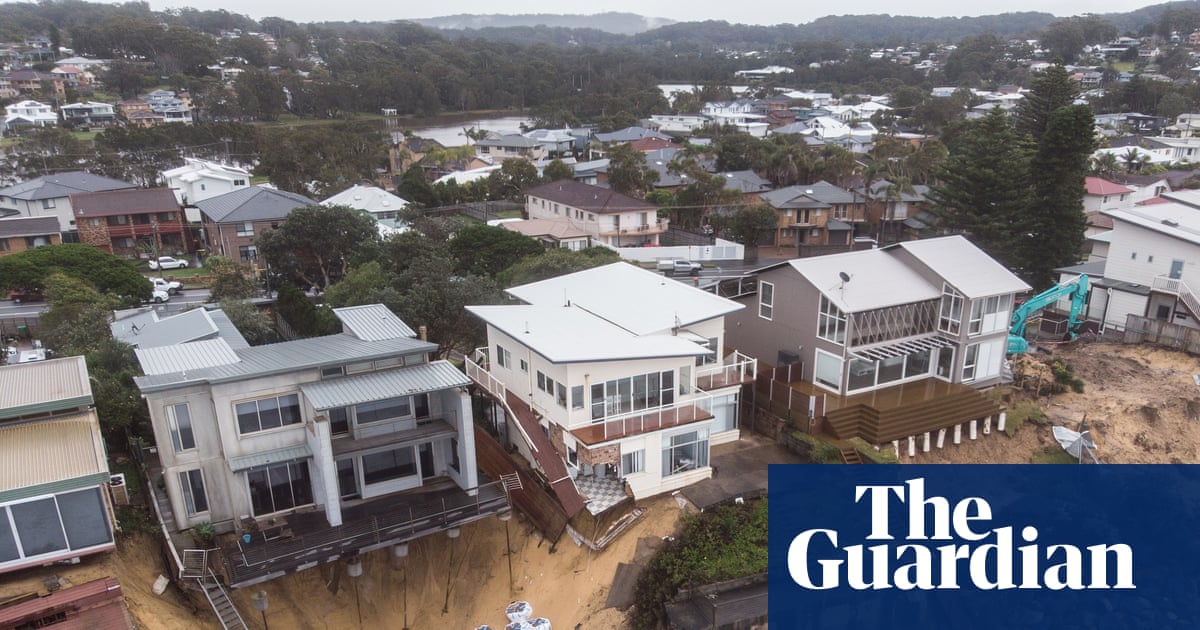
An Australian government snapshot of life in 40 years has been sharply criticised for underplaying the economic and social damage expected due to the worsening climate crisis.The government’s seventh intergenerational report, which projects out to 2066, finds the effects of global heating four decades from now are “highly uncertain”, pointing to the pace of the global energy transition as a key source of unpredictability.The report finds sea level rise from global heating will have the greatest effects on coastal and low-lying areas, while hotter temperatures could reduce productivity of workers, affect agricultural crop yields and damage tourism. “Over the next 40 years, increasingly frequent and severe natural disasters will pose a significant economic risk,” it finds.Sign up for the Breaking News Australia emailThe deputy director of Melbourne Climate Futures at the University of Melbourne, Assoc Prof Ben Neville, said that while the report “connects demographic trends with threats on the horizon, it is negligent in ignoring the economic damage that the changing climate already is and will increasingly bring in the next 40 years”.The report mentions treasury modelling which finds that a disorderly approach to the net zero transition result in a cumulative $2tn hit to the economy by 2050.“As the geopolitics show, we are clearly on this disorderly pathway,” Neville said, adding that – as highlighted by the national climate risk assessment – current modelling methods significantly underestimate economic impacts “as they don’t incorporate the recognised complex impacts of climate change”.“Not integrating this perspective when forecasting the next 40 years is a very disappointing miss, illustrating a government that just doesn’t seem to get it on climate change, all while it co-leads the world towards the next global Cop negotiations in Turkey.”Sarah Wheeler, a professor of water economics at Flinders University said that the issue of water scarcity was overlooked in the report. “One of the largest impacts [of climate change] will be on water security issues, with higher water variability meaning increased probability of more damaging flooding and severe droughts,” she said.“Without urgent action to address and manage these issues, the ramifications on Australian productivity and wellbeing will be huge.”Climate activist Anjali Sharma questioned the report’s utility. “Young people won’t be looking at this report to know their future. What use is a report forecasting the next forty years by a government failing to tackle the greatest challenge of our time?”However, the report does highlight the benefits of embracing renewable energy.Prof Frank Jotzo, director of the Centre for Climate and Energy Policy at the Australian National University, said it “correctly points out the many economic advantages that Australia will reap from the transition to renewable energy, and from future clean energy-based export industries”.“The national vision of renewable energy based exports of green iron, green ammonia and carbon-neutral fuels is alive, despite some disappointment of early excitement not yet having translated into large investments.”The executive director of policy for the Investor Group on Climate Change, Francesca Muskovic, said: “The government needs a laser focus on making sure datacentres’ growing electricity demand is aligned to and supports investment and rollout of new, firmed renewable energy.“Runaway demand without securing a strong pipeline of additional, new clean energy supply will put immediate, acute pressure on the existing grid and could lead to increased energy prices for Australian households and businesses.”
Intergenerational report underplays effect of climate crisis on Australia’s future, experts say
Full Article
Original Source
Read the full article at Theguardian →KhanList aggregates and links to publicly available news content. We do not host full articles from third-party sources. Always verify important information with original sources.