
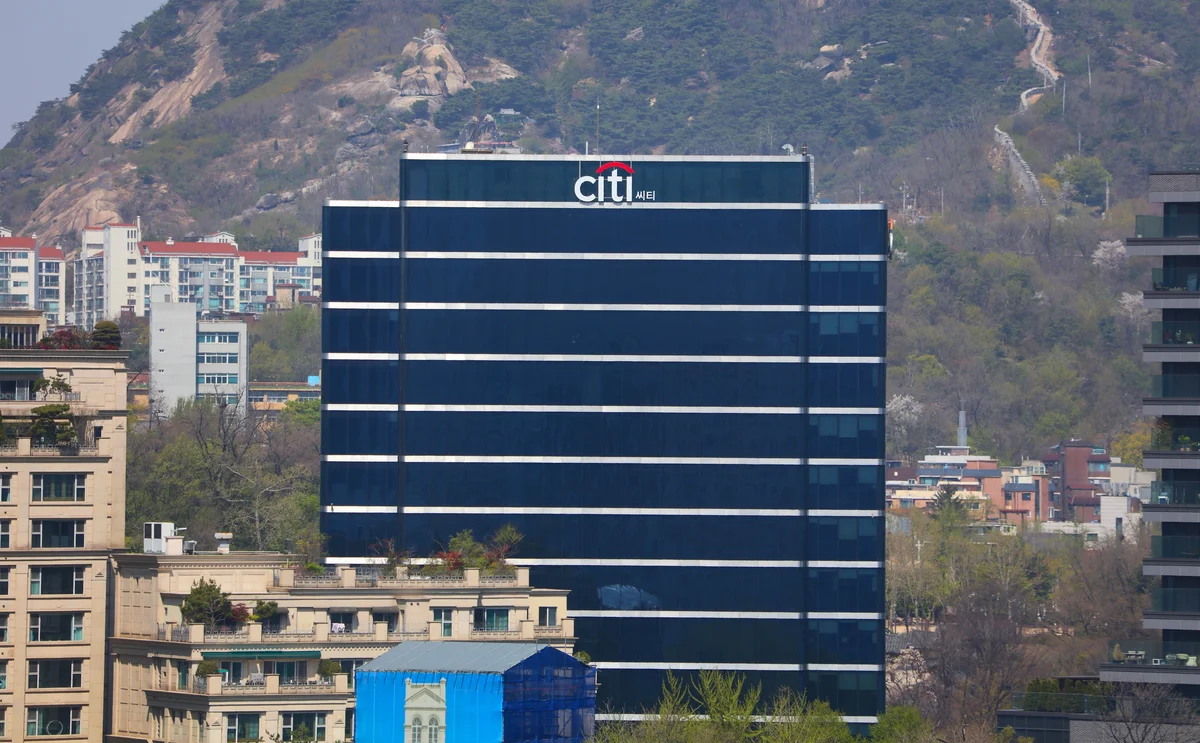
In the wake of new capital and accounting rules, South Korea’s life insurers went looking for a more sophisticated hedging product to help them better manage duration mismatches and asset-liability pressures. The constant maturity treasury (CMT) swap fitted the bill. The only problem was finding a bank willing to take the risk.Citi stepped up to the plate, showing some real ingenuity. The CMT swap is common in the US and Europe where lifers use them for duration hedges that match the benchmark the guarantees in their variable annuities are sensitive to. But to bring the product to Korea, Citi had to first figure out how to navigate some tricky local market challenges.“In Korea, insurers were looking for CMT swaps because they provided a better fit for their variable annuity models,” says Mengli Gu, head of LM rates trading, Asia-Pacific. “The challenge for us was determining how to best manage the associated slippage risk.”In these trades, Citi pays the insurer a fixed rate and receives a CMT rate in return. Through this process, the bank becomes structurally short on-the-run bonds relative to off-the-run bonds as the calendar progresses and new Korean Treasury Bonds are issued. When a new KTB is issued, it trades rich and Citi loses money. There is also no clean way to hedge the risk, given that Korea’s repo market is mostly overnight and the on-the-run benchmark bond is the hardest to borrow.Citi’s solution was to build a forward synthetic bond and assign it a fair value to the on-the-run versus the off-the-run spread it needed to warehouse. The process utilised Korea’s when-issued trading mechanism, allowing the new benchmark bond to be priced before formal issuance – a tool also commonly used in the US Treasury market. That made the spread observable earlier in the cycle and allowed Citi to price the cost of warehousing the swap. “We determined how to price the cost of warehousing the risk using historical analysis as well as insights from studying auction dynamic from other markets,” says Gu. “In a market like Korea, managing that risk can be particularly challenging because the market can gap against you when there are squeezes in the auction cycle.”Citi then recycled some of the risk via futures and other exotic trades, such as range accruals on the three-and 10-year CMT spread for the clients of a Korean securities house, among others.In Korea, insurers were looking for CMT swaps because they provided a better fit for their variable annuity models. The challenge for us was determining how to best manage the associated slippage riskMengli Gu, Citi“We initially used a combination of futures and bonds to manage the basis risk, before expanding into basis swaps and eventually range accruals such as 10s3s,” says Gu. “With the back end of the curve inverted, investors were able to access attractive levels, and it provided a natural hedge to the CMT.”The Korea CMT business sits alongside another bigger business in Group of 10 rates, where CMT range accruals have become a blockbuster with yield-seeking private bank clients in Asia. By far the most popular of these notes has been range accruals linked to the 10-year US Treasury yield.“We’ve captured significant rates business in the private bank space, and CMT has been a standout this year,” says Vivian Tang, head of fixed income structuring, Asia-Pacific (Apac). “Individual trades may not be large, but the volume we handle is supported by resilient infrastructure.”Clients who spoke to Risk.net singled out the bank’s deep on-the-ground presence, depth of inventory in rates solutions as well as its record of being first to market.“Citi’s key differentiator is its strong local presence in Korea and its ability to deploy balance-sheet capacity through its onshore banking platform,” says a sales director at a Korean securities house. “Citi is often able to provide more diverse and innovative solutions than counterparties whose Korean banking operations are either limited or less active. They have consistently been proactive and often one step ahead in identifying and delivering solutions to meet client demands.”The four pillarsCiti’s success in Korea has been the product of a distribution model the bank has been building across its Asia rates franchise for many years; one that runs in both directions.“Our distribution model works both ways,” says Davy Tsang, the bank’s head of rates investors sales, Asia North and Asia South, based in Hong Kong. “We bring global products into Asia, while bringing our local expertise and capabilities to global investors.”Tsang explains that this model rests on four pillars.The first is Citi’s global presence. The bank operates across 14 key Asian markets, with boots on the ground in many of those markets, not only in Hong Kong or Singapore hubs. The second is a cross-border solutions business built on the bank’s 180-country global network. It’s followed, Tsang says, by the ability to quickly adapt to Asia’s fast-changing regulatory landscape and respond with new solutions to new problems. The final pillar is intelligent risk recycling, using the breadth of Citi’s rates franchise across G10 and emerging markets (EM) to find risk offsets that allow the bank to scale certain types of business.It’s a model that allows Citi to scale products such as CMT swaps and other products in Korea, as well as rates solutions in other markets across the region.For example, having rates volatility traders on the ground in Australia has helped the bank to become a leading issuer in Australian dollar callable notes. The growth of this business has helped the bank to diversify away from the Taiwan callable note market, which has become less active in recent years as a result of new regulations on Taiwanese insurers.“We are able to offer AUD callable notes because of the strength of our AUD volatility franchise,” says Tang. “Historically, demand has come from Taiwan and Korea. This year, we are also seeing interest from Chinese banks and private bank clients, broadening demand beyond the traditional markets.”The four-pillar model continues to evolve, particularly when it comes to risk recycling.In the past year, Citi has reviewed its trading data with the help of artificial intelligence, looking for opportunities to improve the way it recycles risk between its flow and structured books.“We use AI internally to analyse our data and enhance how we assess factors such as positioning, risk, activity and hit ratios,” says Tsang. “Scale in our flow business gives us deeper insight and a stronger platform to facilitate large, bespoke and structured transactions more efficiently.”We are able to offer AUD callable notes because of the strength of our AUD volatility franchiseVivian Tang, CitiLandmark tradesThere have been some landmark bespoke transactions recently, as well.On May 20, 2025, the Asian Development Bank (ADB) and Indonesia’s Ministry of Finance completed the conversion of 27 sovereign loans totalling $3.3 billion from Japanese yen into Indonesian rupiah.Citi provided rupiah through cross-currency swap trades, sourcing in yen and converting into dollars and then rupiah – a structure that delivered an IDR funding rate at or below zero. For a USD/IDR cross-currency swap transaction of this size, Citi’s ability to warehouse and recycle risk was decisive.“From a rates perspective, this transaction demonstrated our ability to support a complex cross-currency financing by bringing together capabilities across our G10 and local markets franchises,” says Sunny Li, managing director, corporate derivatives, Asia South, Asean and Australia. “This is likely one of the largest single cross-currency transactions in EM Asean or Apac.”Citi’s rates and FX teams ensured local regulations were observed while minimising market impact and further worked to recycle the risk from the trade using the offshore market, onshore market and various proxy hedges.“The transaction required close co-ordination across our G10 and local markets franchises in Apac,” says Li. “Bringing together our regional capabilities allowed us to manage the different currency components and execute across both offshore and onshore markets.”Tsang adds that building scale in the flow business has given Citi the capabilities to more efficiently facilitate larger, more bespoke and structured transactions, such as the ADB deal.“That scale allows us to serve the more complex end of the market,” he says.A second landmark trade in the past year came from a different direction: Chinese corporate issuers with dollar liabilities and a hedge accounting problem.The trade was pitched off the back of a structural shift in renminbi markets.For years, Chinese corporates raised US dollars and managed the rate and currency exposure on an ad hoc basis. Citi pitched the idea of hedging those USD liabilities back to renminbi, again through the cross-currency swap market. This allowed clients to present their underlying liabilities as matched pairs under International Financial Reporting Standard 9 and so avoid earnings volatility. The hedge also benefited from positive carry in the offshore renminbi.“We have been working with clients to explore how they manage liabilities across foreign and local currencies, and where alternative currency solutions may make sense,” says Yoshiyuki Takano, Apac head of corporate solutions group, Asia North and Japan at Citi.“Net investment hedging under IFRS 9 can be an effective tool for multinational corporates looking to manage currency volatility associated with their operations in global markets.”Pioneering marketsThe trades with Chinese corporates demonstrate Citi’s capacity to build new markets by solving client problems. In Korea, the bank has done the same thing on a bigger scale.Tsang describes the Korean won rates market’s development in five stages: bonds to derivatives, linear to non-linear, tenors extending out to 10 years, flow to structured products, and finally local to global. The first four were built to serve domestic institutions such as the Korean lifers. The fifth took a decisive step forward on April 1, 2026, with South Korea’s inclusion in the FTSE World Government Bond Index.The inclusion of KTB’s into the WGBI precipitated enormous passive inflows from foreign investors, estimated to be in the tens of trillions of won. Overseas pension funds have been one of the big sources of this inflow, and Citi’s Korea desk facilitates the benchmark-matching order flow. Citi also partnered with the country’s Ministry of Finance to facilitate roadshows for foreign investors.“Historically, Korea was largely an onshore-driven market,” says Tsang.“Over the past two years, the market has become increasingly international as Korea moved towards WGBI inclusion, opening the ecosystem to more offshore participation. We have also worked hard to understand the interest and facilitate access of our Asian and global investors.“We are not just participating in these markets – we are helping to shape their development. Only users who have a paid subscription or are part of a corporate subscription are able to print or copy content.To access these options, along with all other subscription benefits, please contact info@risk.net or view our subscription options here: http://subscriptions.risk.net/subscribe You are currently unable to print this content. Please contact info@risk.net to find out more. You are currently unable to copy this content. Please contact info@risk.net to find out more. Copyright Infopro Digital Limited. All rights reserved.You may share this content using our article tools. As outlined in our terms and conditions, https://www.infopro-digital.com/terms-and-conditions/subscriptions/ (clause 2.4), an Authorised User may only make one copy of the materials for their own personal use. You must also comply with the restrictions in clause 2.5.If you would like to purchase additional rights please email info@risk.net
Interest rate derivatives house of the year: Citi
Full Article
Original Source
Read the full article at Risk →KhanList aggregates and links to publicly available news content. We do not host full articles from third-party sources. Always verify important information with original sources.