
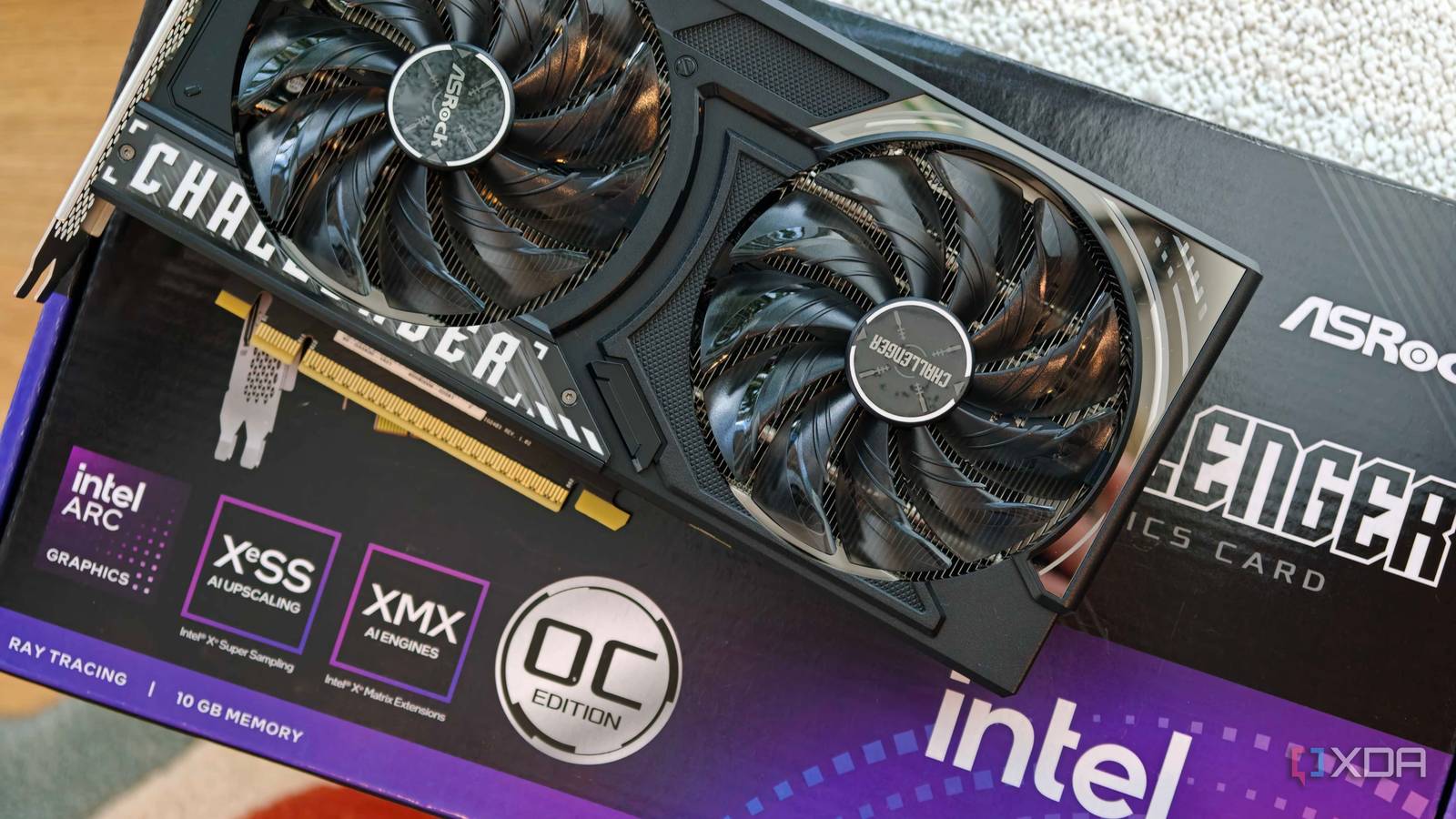
Published Oct 8, 2026, 7:01 AM EDT His love of PCs and their components was born out of trying to squeeze every ounce of performance out of the family computer. Tinkering with his own build at age 10 turned into building PCs for friends and family, fostering a passion that would ultimately take shape as a career path. Besides being the first call for tech support for those close to him, Ty is a computer science student, with his focus being cloud computing and networking. He also competed in semi-pro Counter-Strike for 8 years, making him intimately familiar with everything to do with peripherals. Shopping for a 16GB GPU in 2026 has become a really grim affair. The RTX 5060 Ti 16GB "launched" at a price of $429, and now sells for around $800, and the RX 9060 XT is a bit better, but paying over $500 for a card that launched at $349 is also suboptimal. Right now, if you're looking for a brand-new card that has 16GB of VRAM and you're on a budget, those are basically your only two choices. Intel does have the 12GB Arc B580 that has been a budget champion of its generation, but it's not competing with the likes of the 5060 Ti and 9060 XT. However, they did have a B770 in the works, but unfortunately for us, it never reached store shelves in a configuration that makes sense for the average consumer. It was the card the market needed, but never got. 16GB choices at this tier of GPU have collapsed into two choices The 5060 Ti and the 9060 XT stand alone When it comes to the mid-range performance class, there are really only two choices, and both of them are inflated in price. Nvidia's option is the RTX 5060 Ti 16GB, which has nearly doubled from its $429 launch price to about $800 at major US retailers. AMD's is the RX 9060 XT 16GB, a $349 card at launch whose cheapest models now sit at around $520, with plenty of partner cards well beyond that. The Radeon is a much better value pick, but that's part of the problem. The 9060 XT 16GB doesn't have a competitor near its price, and it still seems to be rising. Intel, meanwhile, isn't apart of this range at all. Its gaming lineup tops out at the Arc B580, a 12GB card that launched at $249. There's nothing above it for anyone who wants more memory or more performance from Intel. Intel has had the chip made, and we know how it performs The B770 "exists" but it's not on a consumer card The B770 was expected to use Intel's larger Battlemage chip, BMG-G31, with 32 Xe cores against the B580's 20, and 16GB of GDDR6. That chip did end up launching in a graphics card as the Arc Pro B70. That card had 32GB of memory and was built around AI and workstation use, not gaming. People have picked one up and used it for gaming purposes though, so we know roughly what a B770 would've been able to achieve in today's games. TechSpot's dozen-game suite had it roughly matching the RX 9060 XT and about 6% behind the RTX 5060 Ti. That puts it a bit short of the early rooms that put it between the RTX 4070 and 5070. There are even gaming support for the drivers powering the Pro B70 and B65, so the foundation exists for these chips to be capable gaming cards. Intel's reasons for skipping it are valid It's clear that they wouldn't have been able to compete on the other metrics For a die that's RTX 5080-sized, only being able to deliver 5060 Ti-class performance is a tough look for what would've been the B770, and that's just the start of its issues. Being that size means it's significantly more expensive to make, and at the board power numbers coming out of the Arc Pro B70, it's clear that it would've be fighting to keep up efficiency-wise too. Pricing is the real key, because nobody is going to pay a premium for an Intel GPU. The absolute maximum a B770 could've been is $400 to undercut the 5060 Ti's $429 MSRP, and to sell a chip of its size at that price, it's almost certainly not worth it. Using GDDR6 wouldn't have saved it either, as evidenced by the price increases that the RX 9000 series has experienced due to memory shortages. The Arc Pro B70 is currently well over $1,000 at the time of writing, and the extra 16GB of GDDR7X on-board simply cannot account for the entirety of the $700 gulf between it and the alleged B770. Shipping it anyway could've been valuable More options are always good What's good for Intel's margins and what's good for people buying graphics cards are different questions, though, and the B770, even if it were overpriced at MSRP, could've been competitive at elevated prices. It's anyone's guess as to what it would've sold for, but if it were to slide in at the gap between the RX 9060 and RTX 5060 Ti, it would've given buyers a nice middle ground. Of course, this would be dependent on its performance. The gap isn't being filled anytime soon Leaks suggest that Intel's Xe3P "Celestial" gaming card was canceled long ago, making the B580 and B570 Intel's only discrete gaming GPUs for the foreseeable future. No new gaming cards are expected from Intel until at least late 2027 with its "Druid" GPUs, the fate of which is still undecided. ASRock Intel Arc B580 Challenger 12GB OC
Intel had the 16GB GPU the market desperately needed, but decided not to ship it
Full Article
Original Source
Read the full article at Xda-developers →KhanList aggregates and links to publicly available news content. We do not host full articles from third-party sources. Always verify important information with original sources.