
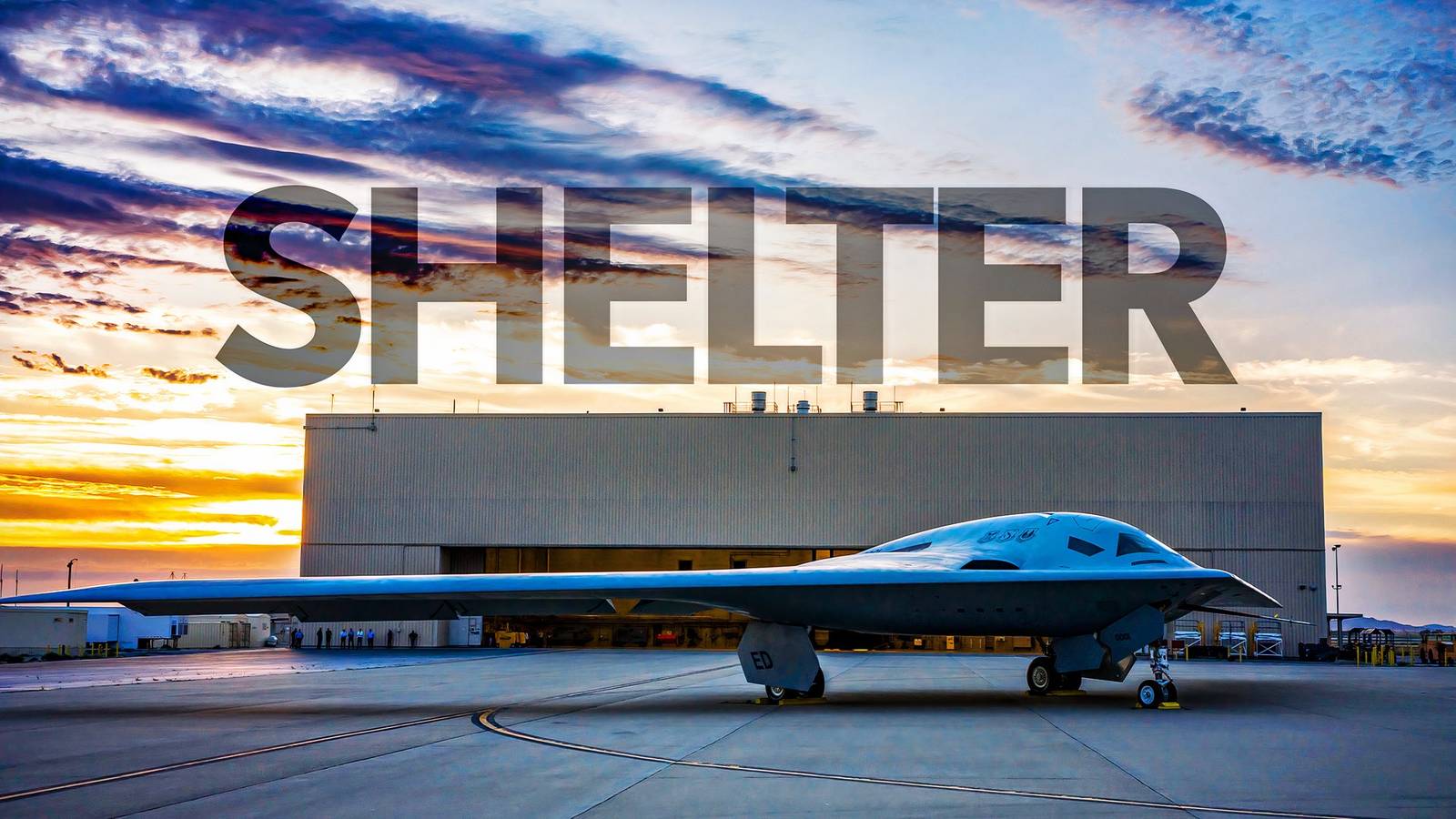
Published Sep 5, 2026, 4:00 AM EDT Chris earned a Master’s degree in Defense and Strategic Studies (Highest Honors) from the University of Texas at El Paso. His graduate work concentrated on Global and National Security, Low-Intensity Conflict, Modern Warfare, and US grand strategy. He also undertook extensive regional studies, analyzing how key regions integrate into the broader US security architecture. This rigorous program provided him with a comprehensive understanding of U.S. military operations, global strategy, and weapons systems. Additionally, he gained a strong appreciation for great power competition.—an increasingly central force shaping international relations and conflict for the foreseeable future. The Northrop Grumman B-21 Raider represents the future of the United States Air Force’s (USAF) stealth, deep-penetration bomber force. The next-generation aircraft is designed to conduct both conventional and nuclear strikes within contested airspace and complex integrated air defense networks, providing the service with a new platform for long-range strategic operations. The first operational Raiders are slated to enter active duty in 2027, operating out of Ellsworth Air Force Base (AFB), South Dakota, where they will eventually form the foundation of a new bomber force. Preparations for the bomber’s arrival are already well underway at Ellsworth, however, and the transformation taking place on the ground is almost as significant as the aircraft itself. The US Army Corps of Engineers (USACE) Omaha District has already awarded $89.7 million in contracts for B-21-related infrastructure, with Conti Federal, a leading federal construction and design-build firm with extensive experience supporting the US military, receiving a substantial portion of this work. The projects encompass environmental protection shelters (EPS), fuel-system maintenance, weapons-loader training and radio frequency facilities, as well as other infrastructure needed to support the Raider’s operations. These developments are notable because coverage of the B-21 generally focuses on its stealth characteristics, advanced systems and flight-test progress. Yet an aircraft cannot generate combat sorties without the infrastructure needed to maintain, arm, test and protect it. With the first Raiders approaching their expected arrival at Ellsworth, that supporting infrastructure is now rapidly taking shape—and Conti Federal is at the forefront of the effort. Environmental Protection Shelters Will Protect The B-21 Between Missions Credit: US Air Force A visible indicator of the B-21’s progress toward operational capability is the construction of Environmental Protection Shelters (EPS) at Ellsworth AFB. These enclosures could eventually be used across all three B-21 main operating bases, the depot, and possibly at forward operating locations. According to Colonel Derek Oakley (USAF), Air Force Global Strike Command’s Integration and System Management Office director, “Environmental Protection Shelters help extend the life of the aircraft and reduce required maintenance by limiting UV exposure, limiting snow accumulation and melt, and limiting icing/de-icing operations experienced by the aircraft over time...” The colonel further explained that the shelters will help wings operating the bomber generate more sorties per mission. This will be possible because the structures reduce the need to continually move B-21s in and out of traditional hangars, allowing the aircraft to remain protected while being more readily available for operations. Conti Federal, the prime contractor responsible for constructing these shelters under the B-21 Bed-Down program, has now been awarded its tenth contract in support of the effort. The most recent award, worth $49.8 million, covers the construction of six 80-Row EPS at Ellsworth Air Force Base, totaling 20,000 square feet (1,858 m²) of enclosure space. An earlier $43.9 million contract awarded to the company covered construction of the 60 Row South Environmental Protection Shelters, which are similar to those described above. The 60 Row South project is expected to be completed by October 2028, while the newer 80 Row EPS project is scheduled for completion by November 2028. The shelters are pre-engineered structures and will be constructed with three maintenance kiosks providing space for personnel, equipment, utilities, and other maintenance-related functions needed to support aircraft operations. The contract also provides for associated paving connecting the shelter area to existing airfield infrastructure, ensuring the aircraft can taxi between the shelters and the flightline or runway system. In addition, Ground Support Equipment (GSE) paving will provide dedicated paved areas for equipment supporting the B-21, enabling efficient movement around the shelters and aircraft operating areas. Ellsworth Is Building A Sprawling B-21 Support Ecosystem Credit: US Air Force While work on the shelters is ongoing, Conti is pressing forward with additional infrastructure critical to the B-21 program, with several projects occurring simultaneously at Ellsworth. The company was awarded a $63 million (£46.6 million) base contract for the construction of a B-21 Fuels System Maintenance Dock covering 39,000 square feet. This single-bay facility will contain an aircraft measurement bay, back shop, administrative and support spaces specifically for fuel-system maintenance. The project also includes new utilities and an airfield apron, connecting the facility to Ellsworth’s existing airfield infrastructure. Additionally, the company is converting an existing 26,000-square-foot maintenance hangar, Dock 81, into an additional fuel-systems maintenance facility. The two projects will ultimately provide approximately 65,000 square feet of dedicated fuel-system maintenance space, illustrating how extensively Ellsworth’s maintenance infrastructure is being reconfigured around the B-21. Beyond fuel, Conti is undertaking a $44.7 million (£33 million) renovation of 60,000 square feet within Ellsworth AFB’s historic 120,000-square-foot Pride Hangar to create a Weapons Loader Training (WLT) facility supporting the B-21 program. Originally constructed to house B-36 Peacemakers, the hangar is being converted to include specialized weapons-loading training bays featuring aircraft fuselage mock-ups, as well as administrative, training, utility, and secure areas. The project also encompasses pavement replacement, utility and fire-protection upgrades, hazardous-material remediation, and repairs to the existing hangar. A final notable facility is the 64,500-square-foot Radio Frequency (RF) Hangar, for which Conti has not disclosed the contract value. The building will feature a single aircraft measurement bay purpose-built to support critical radio-frequency testing of the emerging B-21 airframe. The specialized measurement bay is particularly significant because it demonstrates that the infrastructure being built at Ellsworth extends beyond conventional aircraft maintenance, incorporating dedicated facilities for testing the Raider’s advanced systems and characteristics. Finally, the building will also include back shop, administrative and support spaces, all designed and built to meet stringent security requirements. The project will further incorporate enhanced security features, including intrusion detection systems, access control systems and closed-circuit television, providing the necessary measures to protect the B-21 and the sensitive operations conducted within the facility. The Alert Apron Shows the B-21 Is Being Built For Strategic Readiness Credit: US Air Force Separate from the shelter construction being undertaken elsewhere across Ellsworth, the B-21 beddown also includes significant work on the base’s alert infrastructure. The USACE awarded Bryan Construction a $54.8 million contract for work at the West Alert Apron, making the project yet another major component of the infrastructure being installed in anticipation of the Raider’s arrival. The contract is part of a broader effort to prepare Ellsworth for the operational requirements of the B-21 fleet. The West Alert Apron is particularly significant because it is tied to the infrastructure needed to keep B-21s positioned for rapid operational employment. Rather than representing another conventional aircraft parking area, the project forms part of the alert-side infrastructure that will support aircraft, aircrews and associated ground operations. Its construction alongside the other B-21 facilities at Ellsworth demonstrates that the Air Force is preparing not only for the arrival of the aircraft, but for the operational processes required to generate and launch them. The timing of the project is particularly notable. The first operational B-21 Raiders are expected to arrive at Ellsworth in 2027, while the West Alert Apron work is scheduled to continue into 2028. Its construction therefore forms part of a much larger transformation of Ellsworth that is already underway as the Air Force prepares to introduce the Raider. Alongside dedicated maintenance, weapons loading, RF testing, and alert facilities, the apron provides further evidence that the B-21 is being integrated into an operational infrastructure network designed around the requirements of a next-generation strategic bomber. Ellsworth Is Becoming a B-21 Base, Not Simply Receiving B-21s Credit: US Air Force Generally, coverage of the B-21 focuses heavily on its stealth capabilities, its potential impact on future air warfare strategy, and its role in deterring peer adversaries. However, relatively little attention is given to the infrastructure required to enable the aircraft to conduct its highly sensitive and strategically important missions. The contracts awarded to Conti Federal and Bryan Construction offer a glimpse into the extensive infrastructure being developed at Ellsworth to support the Raider and transform it into an operational combat capability. The first operational B-21 Raiders are expected to arrive at Ellsworth AFB in 2027, making the infrastructure now under construction more than a speculative investment for a distant future. These projects are being executed today, with Conti’s July contract awards particularly significant as the base undergoes a rapid physical transformation. By the time the first B-21s arrive at Ellsworth next year, they won't be entering an ordinary Air Force base or simply being a new aircraft parked on the ramp. They'll be entering a purpose-built ecosystem designed around the stringent requirements of America's next-generation strategic bomber.
Inside The Specialized Shelters Being Built To Protect The B-21 Raider From Harsh Winters
Full Article
Original Source
Read the full article at Simpleflying →KhanList aggregates and links to publicly available news content. We do not host full articles from third-party sources. Always verify important information with original sources.