
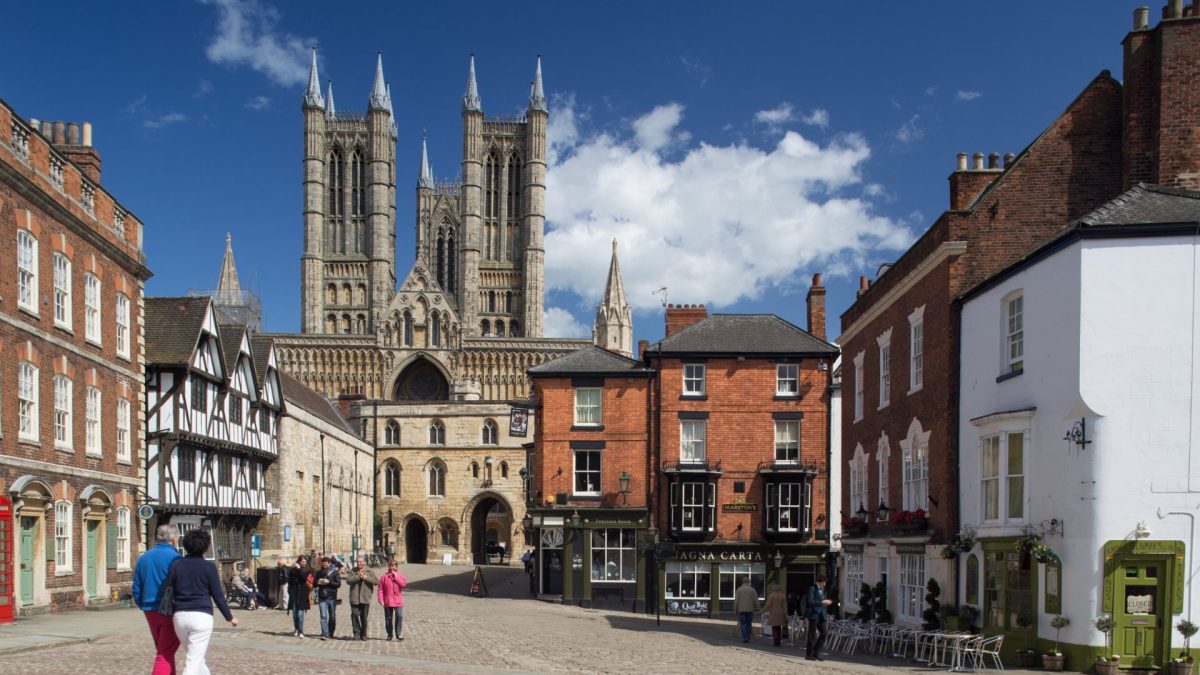
Thirty years ago, the rebranded University of Lincoln transformed the fortunes of what had been a struggling cathedral city. The opening of a new campus in the city’s centre led to an explosion of undergraduates. 1996 saw 500 new students in the Brayford Pool campus – now it is home to around 17,000 undergraduates, of whom 12,000 live in the city. The property market was also revitalised beyond sparkling new university bulidings, with a sudden demand for housing to suit students and young professionals. Landlords flourished, hoovering up properties in areas such as the West End and having no trouble finding tenants. Now, many of these homes are sitting empty, as landlords – mirroring patterns across the country – no longer want to rent them out, in large part due to Labour’s increased tax and regulation on rentals, while struggling to sell in the current market. ‘Landlords just think there’s no point’ The i Paper found more than 100 properties for sale on West Parade, the roughly mile-long main thoroughfare of the West End, alone. At least eight of those properties appeared similar, housing three to six bedrooms. Data shared with The i Paper by estate agency Hamptons shows almost a third (29 per cent) of all properties in Lincoln for sale in 2026 were previously to let. This is one of the highest rates in England and is only surpassed by much larger cities such as London and Manchester. Landlords are primarily leaving due to Labour’s increases to tax and regulation on rented properties – although changes in demand in the sector are also a factor.Owners of Houses of Multiple Occupation (HMOs) face the added challenge from the University of Lincoln, which has been building high-rise student accommodation of “a lot better quality”, said Darren Beckett, an estate agent in the city. “Students don’t want mouldy bedrooms – these places are coming with pool tables and common areas and en-suites.” “At one point I could ring up any HMO buyer with a property and they would snap them up before they’d even viewed them,” Beckett told The i Paper. “Now I ring up and they’re not interested – they can’t rent the ones they’ve got. “There is still rental demand in Lincoln – there’s a few letting agents that are really buoyant. But you do see a lot of people trying to offload them. “The Government is squeezing landlords and they just think ‘there’s no point, there’s better investments’.” Lincoln has a high number of students – but the property market is changing (Photo: Travelpix Ltd) ‘Mass exodus’ Chancellor John Healey used his first Budget last month to announce a fresh 2 per cent hike in the tax landlords pay on rental income, bringing the basic rate to 24 per cent, the higher rate to 44 per cent and the additional rate to 49 per cent starting April. This comes on top of the Renters’ Rights Act, which came into full effect in May and brought changes such as ending “no fault” evictions, abolishing fixed-term tenancies and setting new rules on increasing rent. At a local level, Lincoln is among many local authorities which have also increased regulation around HMOs, implementing an Article 4 directive which means all HMOs require planning permission. The result looks to be the beginnings of what one landlord described in a local Facebook group as a “mass exodus”. Landlords are selling up in Lincoln with many lying empty (Photo: Stephen Craven/Creative Commons) Beckett, who has been in the industry for more than two decades, said he “saw it coming”. “Lincoln has its own microeconomy, it’s very unique,” he told The i Paper. “There was the change when the students came to the uni, I thought it would just be a little uni but it’s become something a lot of people didn’t expect. That brought in a lot of investment in buy-to-let and HMOs. “Now there’s an Article 4 in place and you need a licence.” Many HMO owners trying to sell their empty homes have taken on the additional task of converting the houses “into a normal property, undo all the work” before putting them on the market, he said. “The rooms are all split up.” “I’ve seen a lot of properties around that price range and a lot of them are empty.” New risk of rental increase While Labour has been praised by many housing campaigners for doing more to protect tenants, some argue the reforms and tax changes will inevitably lead to an increase in rents. “The latest tax hike, announced as the ink is still drying on the Renters’ Rights Act, is likely to prove inflationary for tenants,” said David Fell, analyst at Hamptons. “The annual pace of rental growth faced by tenants moving into a new home has accelerated in each of the last 10 months. “While sales by landlords can be good news for first-time buyers, for the remaining renters, they tend to mean higher rents and make it more difficult to find somewhere to live.” A Ministry of Housing, Communities and Local Government spokesman said: “There is no evidence of large numbers of landlords leaving the private rented sector. “We’re protecting tenants from excessive rent increases through our landmark Renters’ Rights Act, giving tenants strong powers to challenge above-market increases and banning rental bidding wars.”
Inside the high street full of empty homes where landlords can’t sell up
Full Article
Original Source
Read the full article at Inews →KhanList aggregates and links to publicly available news content. We do not host full articles from third-party sources. Always verify important information with original sources.