
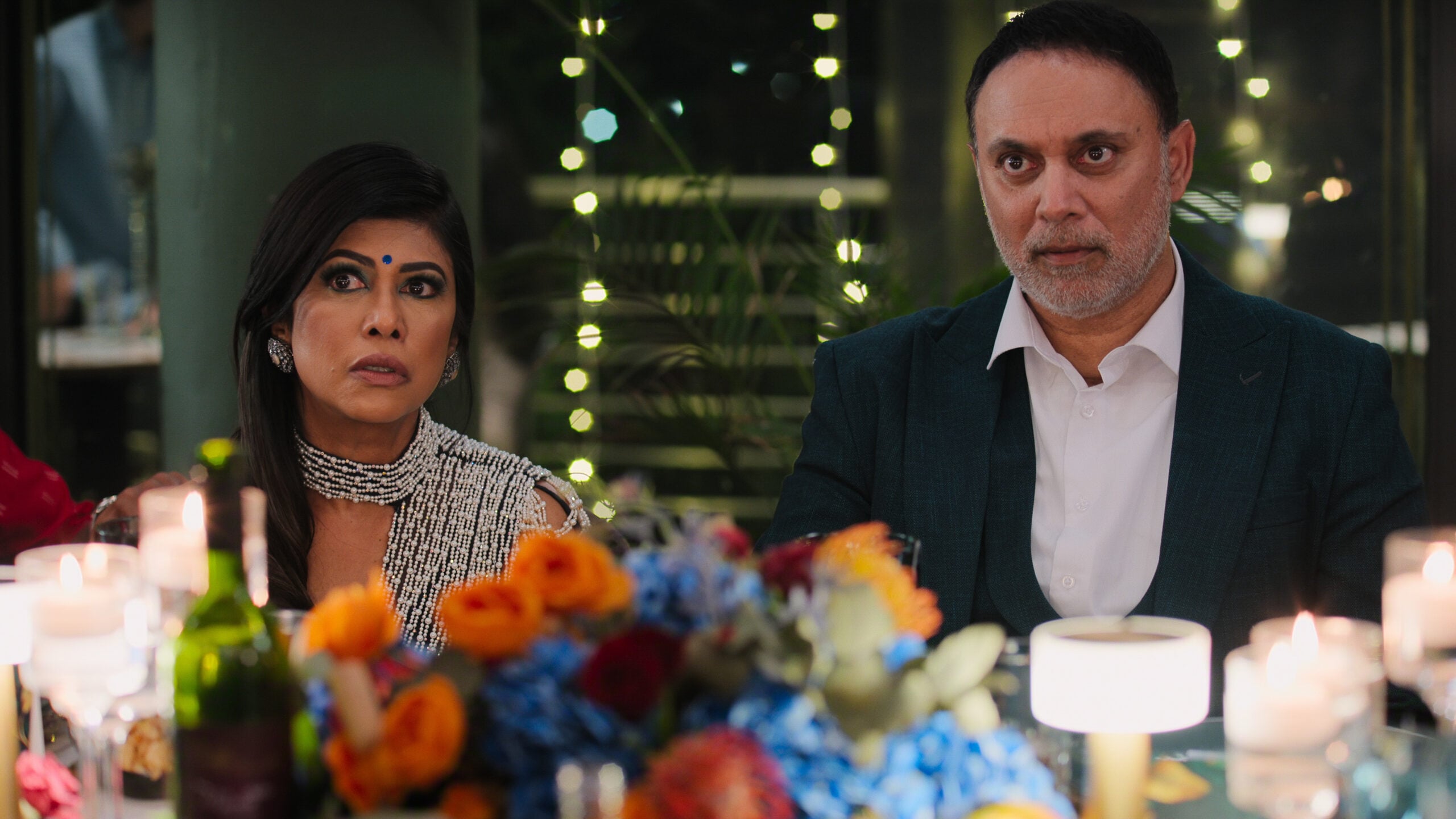
Rethabile Ramaphakela and Jayan Moodley open up about 'How To Ruin Diwali: Meet The Parents', Netflix's new spin-off landing on 30 October. Netflix’s 10-year anniversary in South Africa keeps delivering new details, and one of the more delicious ones is a cultural crossover set to take the How To Ruin franchise to a Diwali wedding. How To Ruin Diwali: Meet The Parents, from Burnt Onion Productions in collaboration with producer Jayan Moodley (The Kandasamys), goes live on Netflix on 30 October. It follows an interracial couple whose engagement throws two very different families and cultures into one very chaotic room, with all the misunderstandings and melodrama that it promises. The Citizen sat down with How To Ruin creator Rethabile Ramaphakela and Moodley after the Netflix press junket to talk about the collab, the culture-clash comedy, and why they chose to shoot in Durban. ‘Feeding the tiger’ Ramaphakela likened the growth of the How To Ruin universe to an animal that outgrew its owner. “No, I’m feeding it, I’m feeding it for the rest of my life,” she told The Citizen, describing the franchise’s expansion since How To Ruin Christmas first premiered. “I think Netflix had just started doing South African stuff, and I think Blood & Water had come out and Queen Sono had come out. Very different to what we were about to introduce, so there were a lot of nerves. And then essentially, boom, just like that, everyone loved it.” (L to R) Rosemary Zimu-Mnguni as Mmabatho and Kyle Clark as Varshen in How To Ruin Diwali S1. Picture: Netflix © 2026 She credits the franchise’s staying power to something deeper than seasonal gimmicks. “It just shows that we’re a country; we grew up on comedy; we know our differences between families and cultures, and I think that’s why there’s just room for it to grow and grow.” Staying true to the culture For Moodley, who built her name on South African Indian family comedy with The Kandasamys, the partnership was a chance to bring her world into an even bigger one without softening it for a broader audience. “It was Netflix who first coined the term at one of the workshops; they said ‘local flavour’. We don’t create these worlds, we live in them. We’ve grown up in them. We know those aunties, we know those ridiculous cousins, we know the drunk uncle.” She pointed to her back catalogue as proof of the approach staying consistent: “We don’t dilute it in the comedy. We stay true to who it is, and I think in trying to be unapologetically who we are, it actually then connects with everyone else.” The Netflix effect Both creators pointed to Netflix’s global reach as a genuine turning point, not just a marketing line. “For the first time, I started getting messages all the time from people in Sri Lanka, Canada, Malaysia and Mauritius, all people who have watched these productions on Netflix,” Moodley said. She credited the platform’s backing for making the Ramaphakela collaboration possible in the first place. “That would never have happened if we didn’t have someone supporting, backing, encouraging, saying, ‘Tell more local stories, we are with you all the way.'” Ramaphakela added that the bigger budget changed what the shows could look and sound like. “Never before can I afford… Like before, when you’re making content on the local broadcasters, affording commercial tracks is always the whole budget,” she said. “It’s so exciting that you’re able to open the world up to our music and our shows as well. Being over the top with our costumes, everything just feels bigger.” L to R) Luthando Bu Mthembu as Eazi E, Sonia Mbele as Penelope and Meshack Mavuso as Mandla in How To Ruin Diwali S1. Picture: Netflix © 2026 Moodley agreed, pointing out that South African productions have historically had to leave local soundtracks on the wishlist. “There’s so many South African songs we would have loved to use in previous productions. We just can’t afford it. Now you’re able to take not just South African stories, but South African costumes, music, art and production design… It’s really amazing.” Durban over Johannesburg Setting the story in KwaZulu-Natal rather than the more obvious Johannesburg Indian-community hubs was, by Moodley’s account, a last-minute swerve. “I walked into the writers’ room, I’d just flown in from Durban… and they said, ‘we’re thinking like Fordsburg or Benoni,'” Moodley recalled. “I looked and was like, ‘We’re doing this around Diwali, and it’s not in Durban? I was like, should I take the next flight back home? We just laughed.” The team settled on Durban instead. “We have the beaches, we have the markets, we have every Diwali paraphernalia you can think of.” Ramaphakela said the location gave the story room to look different from past instalments in the franchise. “We’ve shot in Durban before, but like a disaster holiday – there’s more holiday vibes this time. There’s parts of the CBD that are a little bit different.” She added that filming gave her a personal education in KZN’s Diwali traditions: “Even learning about Diwali in Durban is like a whole new experience.” The universal uncle (and mother-in-law) Working across two distinct cultural lenses surfaced more common ground than either creator expected. “We have that uncle on both sides. Those mothers-in-law – the crazy ones. I think we do think we’re so different, but essentially, at the heart of it, we were all raised by the same mothers, if you know what I mean,” Moodley said. Ramaphakela agreed there’s nuance beneath the shared ground, and that the show leans into the absurdity of cultural pride rather than away from it. “There’s a very funny scene where we see two characters overtly dressed in their own culture, which is so ridiculous – they’re just trying to show that, you know, we are also here. But it’s comedy.” How To Ruin Diwali: Meet The Parents streams on Netflix from 30 October.
Inside ‘How To Ruin Diwali’ with Rethabile Ramaphakela and Jayan Moodley
Full Article
Original Source
Read the full article at Citizen →KhanList aggregates and links to publicly available news content. We do not host full articles from third-party sources. Always verify important information with original sources.