
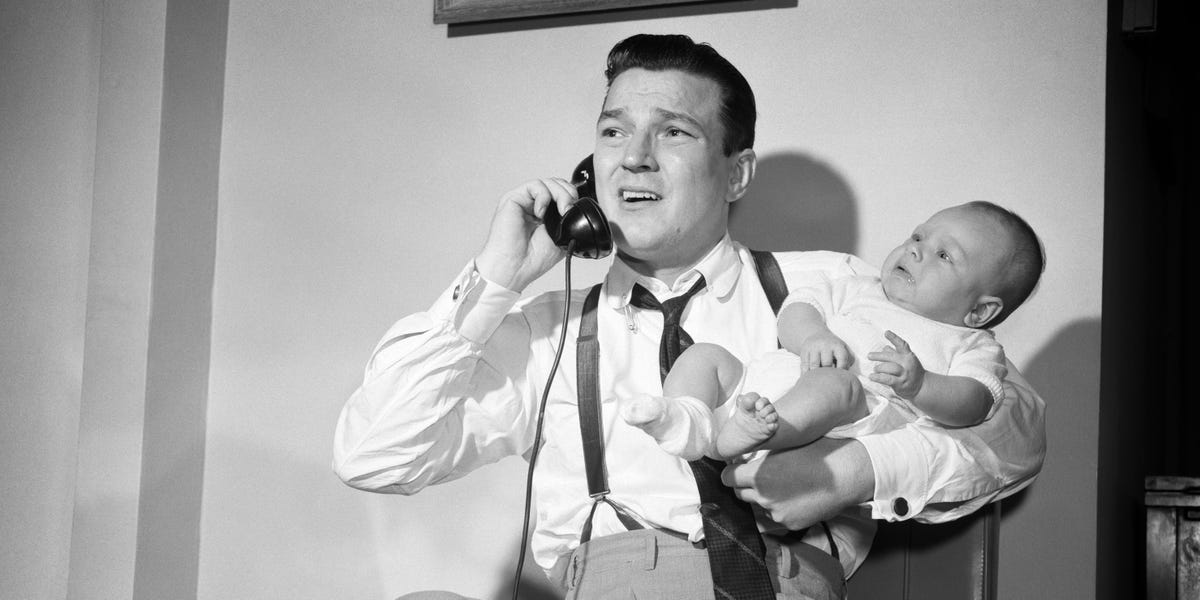
Influencers have a baby boomer problem Baby boomers, like this baby right here, often find influencers … annoying. Debrocke/ClassicStock/Getty Images Influencer marketing to baby boomers hits different — and not in the way brands intended.Research from Morning Consult, conducted exclusively for Business Insider, reveals a stark generational divide in attitudes toward influencers. Boomers — people born between 1946 and 1964 — are distrustful of influencers, skeptical of their recommendations, and more likely to find their content "annoying."In the survey of roughly 2,000 US adults conducted in September, 31% of boomers said they trust influencer recommendations at least somewhat, compared with 62% of Gen Z and 64% of millennials. Two in five (40%) boomers surveyed said they trust influencers less than they did a few years ago.Sure, plenty of adults become set in their ways and harder to persuade as they age. But advertising pros said there's another factor that could help explain boomers' wariness of influencer marketing: brands themselves continue to overlook the older generation."Brands are terrified of taking any dollars away from speaking to young people," said Jennifer Meehan, an EVP at the communications agency Edelman.That fear also extends into the creators they look to partner with.Florian Dost, a marketing professor at Brandenburg University of Technology in Germany, interviewed influencer agencies and talent managers as part of a recent study. Some of the managers his team interviewed found that older influencers often drove higher campaign conversion rates, but brands rejected them."Agencies may know that," Dost said. "They certainly sometimes try to put it forth because they also see the numbers. But clients don't want to hear."Boomers' distaste for influencers presents a challenge for CMOs. The generation is a considerable consumer force, accounting for 42% of spending among affluent US households, according to Visa research from last year. With US marketers forecast to spend $40 billion on creator economy partnerships and ads this year, per Business Insider sister company EMARKETER, brands risk leaving a lucrative audience on the sidelines.Getting boomers to clickStewart Reynolds, 56, a Canadian comedy creator who posts under the name Brittlestar, said that older consumers rarely see themselves reflected in influencer marketing, which tends to favor young, attractive influencers.Reynolds, a Gen Xer, said 45% of his audience is over 45 years old. And while he has landed plenty of brand deals with the likes of Yorkshire Tea, Yoplait, and Dairy Farmers of Ontario, he jokingly admits he's jealous of the opportunities that his son, Gregor Reynolds, another successful comedy creator, receives."He's getting brand deals and campaigns that I wouldn't get because I'm not young and fit," Reynolds said. Stewart Reynolds, 56, a Canadian comedy creator who posts under the name "Brittlestar." Terry Manzo It's not just the brands, though.Marketing insiders said some of the disconnect could be explained by influencers failing to create content that's relatable to an older audience. About a quarter (26%) of boomers surveyed by Morning Consult said influencer content made them feel annoyed — the highest proportion of any generation. Only 5% of boomers said it made them feel happy, versus 28% of Gen Z, 30% of millennials, and 13% of Gen X. Other generations said influencer content was most likely to leave them feeling "entertained," while boomers' top choice was "annoyed."A separate study published earlier this year by Edelman, which surveyed more than 17,000 respondents worldwide, found that just 24% of boomers said they followed a content creator, compared with 86% of Gen Z, 77% of millennials, and 51% of Gen X.The age of the influencers older generations see on their screens isn't the only factor at play."It's less about finding someone who's the same age and more about finding someone they can see something of themselves in," said Lucy Kruszynski, global head of brand at influencer marketing agency Buttermilk.Shared interests and experiences can be more powerful than demographic similarities, she said. As boomers enter retirement, many have more time to rediscover hobbies and passions that took a backseat during their working lives. Brands could tap into those interests by partnering with creators who share their enthusiasm for pursuits like music, art, or home improvement.Some of the most successful boomer creators have scored deals that lean into these passion points. The boomer weightlifting influencer Marlene "Granny Guns" Flowers has more than 4.5 million followers across her social platforms and has collaborated with brands such as YoungLA and Ryse Supps. Barbara Costello, who is in her 70s and known as "Brunch with Babs," has more than 9 million followers and has scored partnerships with brands that range from the furniture brand Birch Lane to Nellie's Eggs and Walmart.Brands may also have to exercise patience when trying to convert older consumers. The Morning Consult survey found that 43% of boomers said they had never purchased a product based on an influencer's recommendation.For brands accustomed to measuring influencer marketing success in clicks and immediate sales, that could require a rethink. Kruszynski said some boomers follow creators for months, sometimes up to a year, before feeling comfortable purchasing something they've recommended."Even though there is absolutely a level of annoyance and a lack of trust, I don't think that baby boomers are immune to influencer marketing," Kruszynski said. "Brands need to think about how creators can build credibility through consistent content over time." Read next Business Insider tells the innovative stories you want to know Business Insider tells the innovative stories you want to know Business Insider tells the innovative stories you want to know Business Insider tells the innovative stories you want to know Lara O'Reilly is the anchor of the CMO Insider newsletter.She is a chief correspondent who has covered the digital advertising, marketing, and media industries since 2010. Her current beat includes big tech companies like Alphabet and Meta, adtech firms, agencies, publishers, the creator economy, and CMOs.Lara has previously worked as a reporter and executive producer at titles including The Wall Street Journal, Digiday, Yahoo Finance, and Marketing Week. She was previously Business Insider's senior global advertising editor from 2014 to 2017.Lara is a regular guest on TV and radio and has appeared on outlets such as the BBC, NPR, SiriusXM's Wharton Business Daily, and CTV Television Network. She also frequently speaks on stage at major events such as Web Summit, IFA, VivaTech, Advertising Week, and Cannes Lions.To get in touch with Lara O'Reilly, email loreilly@businessinsider.com or contact her on Signal at @loreilly.71 Sydney Bradley has been covering media and tech for Business Insider since 2020. She breaks news and writes extensively about Instagram and Facebook, as well as new social media startups, dating apps, the creator economy, venture capital, and tech culture.She regularly contributes to BI's "After Hours" series, where our reporters dive into the social scenes shaping tech, media, and finance.Sydney's reporting on Instagram was nominated as a finalist for the 2021 Los Angeles Press Club National Entertainment Journalism Awards.She graduated from the University of Virginia with a degree in American Studies. You can follow Sydney's work on LinkedIn, Twitter, and Instagram at @sydneykbradley.Have a tip? You can also contact her via encrypted messaging app Signal (@sydneykbradley.123), encrypted email (sydneykbradley@proton.me), or standard email (sbradley@businessinsider.com). Use a personal email address, a nonwork WiFi network, and a nonwork device; here’s our guide to sharing information securely. Influencers Creator economy Baby Boomers More
Influencers have a baby boomer problem
Full Article
Original Source
Read the full article at Businessinsider →KhanList aggregates and links to publicly available news content. We do not host full articles from third-party sources. Always verify important information with original sources.