
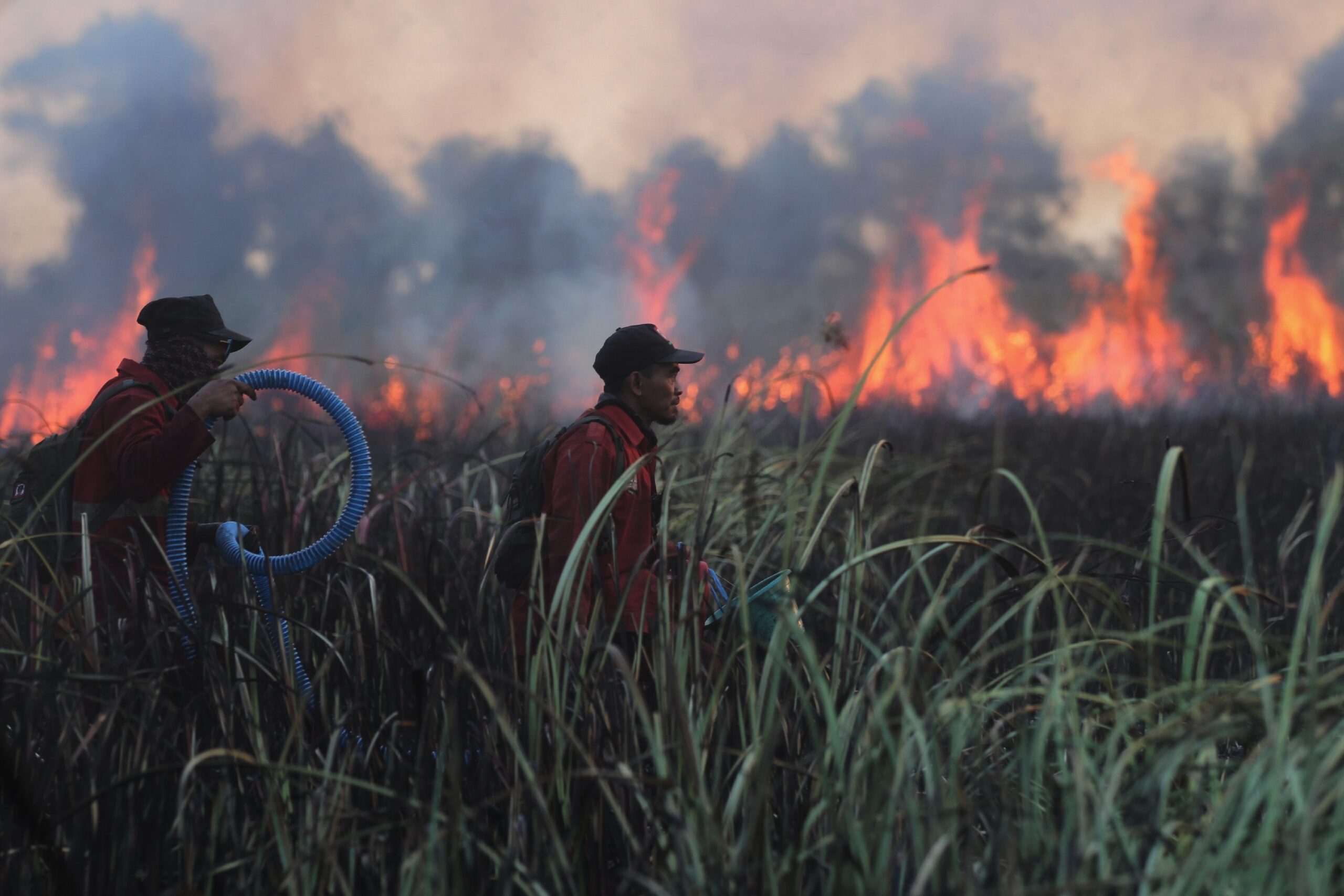
Indonesia plans to create a new agency to restore and manage peatlands prone to burning, in a repeat of a measure it took in response to the severe fire season of 2015.The new agency will replace an older one that shuttered at the end of 2024, raising questions about why its predecessor was allowed to die off and what the new body will do differently.The previous agency’s restoration efforts helped reduce fire hotspots, but damaged infrastructure and continued land conversion have limited lasting ecological recovery.Experts and environmental groups say the new agency must prioritize fire prevention and landscape-scale restoration, with clear authority, funding, and accountability. JAKARTA — In 2016, following the most devastating land and forest fires in its recorded history the previous year, the Indonesian government set up an agency to restore peatlands, among the worst-hit biomes during the disaster. A decade later, following the most devastating land and forest fires since the 2015 season, the current government has once again set up an agency to restore peatlands — prompting questions over what impact, if any, this new body will have. The National Peatland and Mangrove Management Agency, or BPGMN, was announced by Forestry Minister Raja Juli Antoni following a meeting at the State Palace in Jakarta on Sept. 24 between President Prabowo Subianto and a group of 22 experts. Like the earlier Peatland and Mangrove Restoration Agency (BRGM) established by Prabowo’s predecessor, Joko Widodo, which was shuttered in December 2024, the new agency will report directly to the president and be staffed by scientists and professionals, according to Raja Juli. For some observers, that begs the question of why Prabowo didn’t renew the BRGM’s mandate and instead let it expire, and what the BPGMN will do differently. “The BPGMN must not stop at changing the institution’s name,” said Uli Arta Siagian, national campaign coordinator for Walhi, Indonesia’s biggest environmental advocacy group. “The experience of the BRGM, which was disbanded at the end of 2024 after operating for nearly a decade, shows that changing the institutional structure does not automatically guarantee better governance. “The BPGMN must have a mandate, authority, success indicators, and working mechanisms capable of addressing the root causes of the problems,” she added. A canal constructed in peatland forest inside a pulpwood concession in Indonesia. Cleared and drained carbon-rich peat becomes dry and vulnerable to fires. Greenpeace has urged the Indonesian government to take immediate action to protect peat habitat by expanding moratorium areas, evaluating existing permits, and implementing full peatland forest protection. Image courtesy of Ulet Ifansasti/Greenpeace. Fragmented coordination Pantau Gambut, an independent peatland watchdog, noted that there hasn’t been any institution specifically tasked with peat restoration since Prabowo allowed the BRGM to shut down. Instead, the agency’s responsibilities were transferred across government ministries, the watchdog said, while Prabowo also went on to split up what was then the environment and forestry ministry into two separate ministries. According to Pantau Gambut, this has made coordination on peat protection and restoration more difficult, particularly where peatlands — the domain of the environment ministry — overlap with forest areas, overseen by the forestry ministry. The group said it remains unclear what legal instrument will undergird the BPGMN, what powers it will have, how it will be structured, how long it will operate, how it will coordinate with other agencies, and how its performance will be evaluated. “The government needs to first make the legal basis and institutional design of the BPGMN public,” said Putra Saptian, a senior campaigner at Pantau Gambut. “More importantly, it must ensure that the agency’s mandate can address peatland governance problems, rather than simply introducing a new structure.” Even under the BRGM, oversight of peatland areas within commercial concessions (often for oil palm or pulpwood plantations) was divided between the restoration agency and the then-Ministry of Environment and Forestry, according to Greenpeace Indonesia. It said this hindered an integrated approach across contiguous peat ecosystems, meaning that while some areas were targeted for restoration, adjacent peatlands were not. A blocked peatland canal built by villagers of Penyengat in Siak district, Riau province, Indonesia, as a part of research by CIFOR. Image by Hans Nicholas Jong/Mongabay. ‘Fire prevention is key’ At the State Palace meeting, the experts pressed on Prabowo the need to grant the new agency broader authority than its predecessor, according to Gusti Zakaria Anshari, a tropical peat expert at Tanjungpura University in western Borneo, one of the regions most badly affected by the current forest fires and haze. While the BRGM was tasked with restoration, he said, the BPGMN must also be responsible for managing peatlands and mangroves. But the agency’s specific powers and scope have yet to be decided, Gusti added. Indratmo Soekarno, a professor of civil engineering at the Bandung Institute of Technology, who was also at the meeting, said the government should draw on the experience of the BRGM when designing the new agency and planning future restoration work. “At that time, we had already mapped out several steps and plans for handling peatlands,” he told Prabowo during the meeting. “There was even a book, Mr. President, on how to manage peatlands. So that could serve as a lesson for how we manage them.” According to the government, the agency will prioritize preventing forest and land fires, particularly in six provinces with extensive peatlands: Riau, Jambi, and South Sumatra, on the island of Sumatra; and West, Central, and South Kalimantan, on the island of Borneo. But the government not yet made public the agency’s legal basis, detailed mandate, authority, or accountability arrangements. “Its purpose is to carry out prevention, because everyone recognizes that prevention is far more important, effective, and efficient than reactive or knee-jerk measures,” said Raja Juli, the forestry minister. Research led by Yulianto S. Nugroho, a professor of fire safety engineering at the University of Indonesia, who attended the State Palace meeting, found that it takes 200,000 to 1 million liters of water to extinguish a fire on 1 hectare of peatland, or about 21,400-107,000 gallons per acre. “This means the key is how we prevent fires, because once a fire has started, it is very difficult to extinguish,” Yulianto said at the meeting. A peat swamp in Sumatra smolders during the 2015 haze crisis. The drainage canals were dug in order to prepare the land for planting with oil palm, but the practice renders the land vulnerable to catching fire. Photo by Rhett A. Butler/Mongabay. How effective has restoration been? The central effort of the BRGM when it was established was to rewet peatlands that had been drained in preparation for commercial agriculture. Peat soils, which in Indonesia are found primarily on the islands of Sumatra and Borneo, are composed of waterlogged layers of partially decomposed vegetation, sometimes several meters deep. Draining these layers, typically by digging a grid of canals, leaves behind a tinder-dry peat soil that’s highly flammable. Much of the BRGM’s work, therefore was focused on blocking these canals, allowing water levels to rise again and rewet the peat. The agency was initially tasked with restoring 2.6 million hectares (6.4 million acres) of peatland — the same size as the total area burned in the 2015 fires. In 2020, the agency’s remit was expanded to include mangroves. Before its mandate ended on Dec. 31, 2024, the BRGM reported that its work had covered about 1.6 million hectares (4 million acres) of peatland and 84,000 hectares (207,600 acres) of mangroves. These were the total areas where it operated, not necessarily how much it managed to restore. A study published earlier this year examined the effect of peatland restoration on fire occurrence in parts of Sumatra and Kalimantan. It found that restoration measures — blocking canals and digging deep wells — were associated with a reduction of up to 22% in fire hotspots in restored areas during the 2019 El Niño. In their own summary of the research, the study authors also said restoration accounted for 38% of the decline in peatland fire hotspots between 2015 and 2019 in the area they studied. The study also found that maintenance mattered: blocking a canal was effective at keeping peat wet for the first year, but less effective thereafter. Monitoring by watchdog group Pantau Gambut has raised questions about the state of restoration work. In a study, the group found that 70% of the canal-blocking structures it observed were damaged. At 52% of monitored intervention sites, groundwater levels remained below what it determined was the safe threshold, leaving layers of peat dry and vulnerable to fire. The group also analyzed peatlands that burned between 2015 and 2019, and found that only 3% had been restored to a forested state, while about 41% had become scrubland and 54% had been converted to monoculture plantations, particularly oil palm. The findings, Pantau Gambut said, underscore the distinction between installing restoration infrastructure and achieving lasting ecological recovery. A Dayak Ngaju tribe man tries to extinguish fire on burning peatland in Mantangai, Central Kalimantan. Image © Jurnasyanto Sukarno / Greenpeace. El Niño-fueled fire season Indonesia is currently experiencing a severe fire season, exacerbated by the most intense El Niño in decades. As of Oct. 1, the independent forest-monitoring platform Nusantara Atlas had detected more than 827,000 hotspots, compared with about 616,000 over the same period in 2019, the last time a severe El Niño hit. Hotspots indicate the likelihood of fire, but are not, by themselves, a measurement of burned area. Walhi, the environmental NGO, said it had recorded 30,927 high-confidence hotspots nationwide between Jan. 1 and Sept. 7, 2026. Of those, 9,703 — nearly a third — were in peatland areas. The government has estimated that 20 million hectares (49 million acres), or 84% of Indonesia’s peatland ecosystems, have been degraded. Separately, nearly 900,000 hectares (2.2 million acres) of land had reportedly burned by August, sending smoke across cities and villages and into neighboring countries. The Ministry of Health reported more than 174,000 cases of acute respiratory infection in connection with the haze from the fires. A compounding factor of peat fires is that while the burning on the surface may appear to be extinguished, the fire can continue to smolder deep underground, resurfacing again days or even weeks later. Greenpeace Indonesia called on the government to take a holistic approach to restoring and managing peatlands, rather than a scattershot targeting of peatland fragments. “What are the purpose and targets of establishing this new agency: to restore peatlands piecemeal or at the landscape level?” said Sapta Ananda Proklamasi, a senior researcher at Greenpeace Indonesia. “Instead of immediately establishing a new agency, the government should simultaneously develop strong, comprehensive, landscape-based peatland protection regulations, as well as clear regulations to restore peatlands damaged by permits for oil palm concessions and industrial timber plantations.” Banner image: Firefighters carry their equipment as they attempt to extinguish a wildfire on a peatland field in Palembang, South Sumatra, Indonesia, Tuesday, Aug. 11, 2026. (AP Photo/Muhammad Hatta) FEEDBACK: Use this form to send a message to the author of this post. If you want to post a public comment, you can do that at the bottom of the page. Credits Topics
Indonesia’s new peatland agency faces questions over what it will do differently
Full Article
Original Source
Read the full article at News →KhanList aggregates and links to publicly available news content. We do not host full articles from third-party sources. Always verify important information with original sources.