
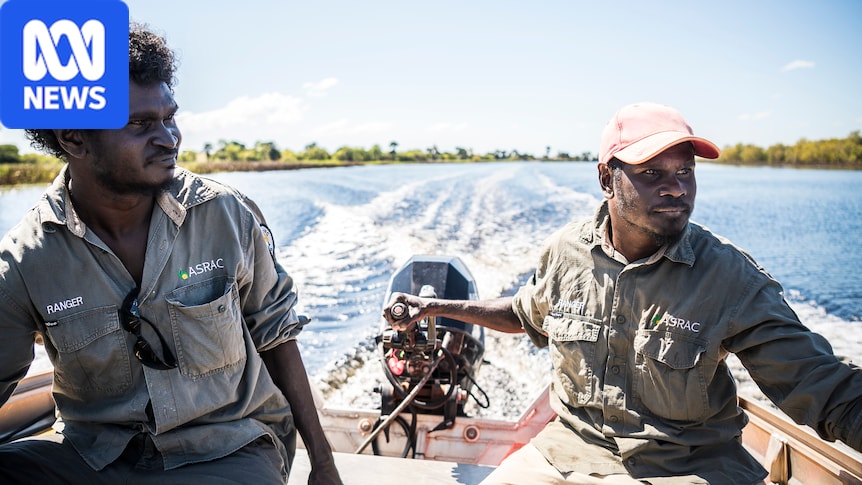
Indigenous ranger groups working in Australia's remotest wild areas are appealing to the federal government to increase their funding so they can do more to help monitor and protect species from being wiped out by bird flu.The Arafura Swamp Rangers help protect a vast, nationally important wetland in the Northern Territory's remote Arnhem Land.Rangers Harry Butler and Derek Ashley want more funding to extend monitoring work in the remote NT. (Supplied: Harry Butler)Ranger coordinator Harry Butler said the group was dreading bird flu's arrival, which he said seemed inevitable even though it has not yet reached the NT."The Arafura Swamp is a key biodiversity area. It supports about 300,000 waterbirds. We've got coastal emus. The H5N1 strain could be the nail in the coffin for that species," he said."You've also got migratory waders, red knots, great knots, ruddy turnstones, and then you've got what most people are most concerned about — the traditional food sources like magpie geese."Tt extends beyond birds as well, it goes into marine mammals, dolphins, whales and dugongs."Vulnerable species like Australian snubfin dolphin are already under threat off northern Australia. (ABC News: Carol Palmer)Tens of thousands of migratory birds will arrive in northern Australia from Europe next month.Mr Butler said while the rangers will not be able to stop infections, additional funding would allow them to expand their work of protecting habitats which would give more birds and animals a chance of surviving bird flu."If we received funding it would go into bolstering the ecosystems that we have out there and building the resilience for them by getting rid of invasive weeds," he said."We've also got around 20,000 head of feral buffalo that we're fighting to get off the Arafura Swamp and this all costs money."The Arafura Swamp Rangers are working to remove feral buffalo damaging the wetlands. (Supplied: Annette Ruzicka)Concerns for communities hunting birdsThe rangers are also worried about the many remote communities who hunt waterfowl, with the handling of infected birds posing a health risk."We need to get information out to communities about the threat H5N1 poses. People are out hunting in a traditional way, they're touching birds, and many people drink the fresh water which is a huge threat," Mr Butler said.The rangers are worried about the risk to residents in communities that eat wild birds, like magpie geese. (Supplied: Annette Ruzicka)Swamp ranger Derek Ashley is also very concerned."People don't know whether birds have got sickness. People will just go touching brolga, duck and magpie geese. We all hunt and shoot those ones," he said.Mr Ashley also fears sick bird droppings could contaminate drinking water near small communities which rely on water piped from local creeks."At my outstation we don't have a bore, the pipe is going to the river, and we don't know if a sick bird is flying there. We always see a lot of their poo there," he said.Derek Ashley says droppings from infected birds could pose a contamination risk for remote Territorians. (Supplied: Annette Ruzicka)The federal government has published fact sheets and videos warning Indigenous communities not to touch sick or dead birds.Senior ranger Charlie Ramandjarri said his community was worried about losing culturally important birds."We have birds connecting to songlines like brolga, eagles and seagulls from the salt coastal area that we are worried about," he said.Australia's biggest losses from bird flu so far have been more than a thousand terns in South Australia and thousands of elephant seal pups on Heard Island.The Arafura Swamp Rangers are worried bird flu could decimate important bird species including jabiru storks. (Supplied: Annette Ruzicka)Calls for additional funding for bird flu responseMr Ramandjarri has called on the federal government to provide additional, specific funding to rangers to monitor the threat of bird flu."If we see dead birds we need to take photos and samples and send it to biosecurity [organisations]. We need more support and we need more funding to do more jobs," he said.Whale and dolphin scientist Dr Carol Palmer, who has been working with remote ranger groups studying marine mammals for years, agreed more dedicated funding was needed.Carol Palmer says rangers need more funding. (ABC News: Jane Bardon)"What is very important, that if they come across something that has stranded dead, that they have got the proper masks, gloves and shoes," she said. "Then what to do with the DNA samples? We have to do a lot more working as a team to identify this."Off South America, the UK, they have had quite a lot of dolphins die, so it's pretty scary."Australia's dolphins, whales and dugongs are also at risk of bird flu. (Supplied: Carol Palmer)The federal government has committed $47 million to environmental bird flu responses, including the vaccinatation of little penguins.In the past two years the government has more than doubled the number of Indigenous ranger groups it funds to 320.But Patrick O'Leary from the national ranger advocacy group Country Needs People is calling on the federal government to provide more short and long-term funding."The short-term role is to be the eyes and ears on land and sea in many places the average person doesn't get to," he said.Jason and Isaiah Malibirr are helping to monitor waters off Arnhem Land, searching for signs of infected animals. (Supplied: Annette Ruzicka)"The long-term role is management of biodiversity and natural places managing fire, feral animals and weeds, because if we are not dealing with those long-term impacts then populations of wildlife can't be resilient to shocks like bird flu.He said federal ranger and federal Indigenous protected area contracts run out in June 2028."We need to see signals from government that they're working on that now," Mr O'Leary said.The federal government says it is working closely with rangers to monitor the bird flu outbreak. (Supplied: Annette Ruzicka)In a statement, federal Environment Minister Murray Watt's office said "threat mitigation projects are well underway across the country to reduce other threats and boost resilience of our native species to H5 bird flu".It added that the government was "working closely with First Nations groups, including Indigenous rangers"."This includes sharing information with communities and traditional owners, assisting local H5 bird flu surveillance activities that align with their existing ranger work, as well as reporting any signs of H5 bird flu in wildlife to the national bird flu hotline."
Indigenous rangers call for funding to protect remote NT from bird flu
Full Article
Original Source
Read the full article at Abc →KhanList aggregates and links to publicly available news content. We do not host full articles from third-party sources. Always verify important information with original sources.