
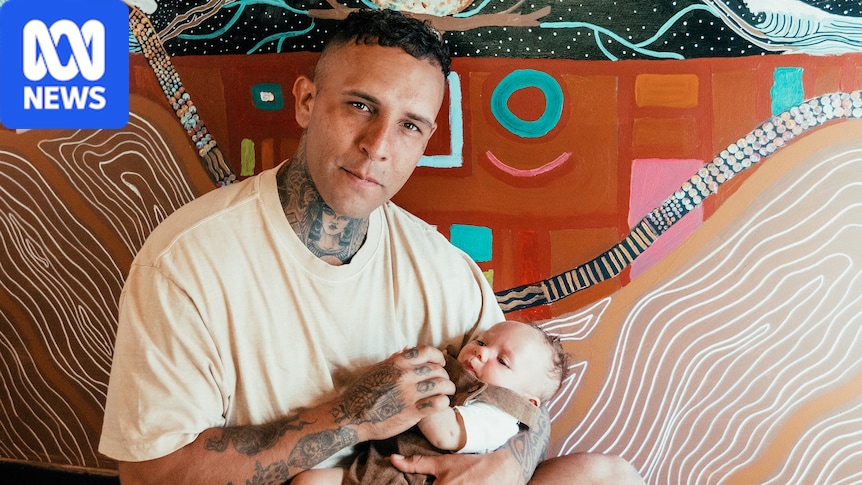
Across Australia this Father's Day, children will hand over homemade cards, families will crowd around breakfast tables and dads will be celebrated for the role they play in their children's lives.But for many Indigenous fathers, that celebration sits alongside a more complicated reality.Almost two decades after the Northern Territory intervention, Indigenous men and researchers say its shadow still lingers, reinforcing stereotypes of Aboriginal fathers as absent, irresponsible or dangerous.Author and Kalkalgal man Thomas Mayo says those perceptions are not confined to the past.SMS4DeadlyDads supports Aboriginal and Torres Strait Islander fathers through pregnancy and early parenthood. (Supplied: SMS4dads)"The stereotypes have been around for a long time," he said."We've seen them through the media, through racist cartoons that have basically told Australians that Indigenous fathers don't care about their children."Mr Mayo said the 2007 Northern Territory intervention intensified those stereotypes."The Northern Territory intervention back in the day really turned that stereotyping into a national scapegoating of Indigenous men," he said.Mr Mayo was raising three young children at the time and remembered feeling scrutinised simply for being with them in public."We remember that just holding our children in a shopping centre, [we] had suspicious eyes on us as if our children needed protecting from us because we were Indigenous men," he said.He later became a single father, gaining full custody of his children when they were four, six and seven."I'd iron their clothes every day and make sure that they were looked after and everything," he said.'It's like we've gone backwards'Mr Mayo said he believed racism towards Indigenous people had worsened since the 2023 Voice referendum."Since the referendum, racism has become much worse," he said."It's like we've gone backwards 50 years."Richard Fletcher (right) says Indigenous fathers need support that builds on their strengths. (Supplied: SMS4dads)Fatherhood researcher Richard Fletcher agreed the intervention had left lasting damage."It painted a picture that Aboriginal children were in danger from the men in the family," Dr Fletcher said.He has spent about four decades working with fathers and helped develop the SMS4dads and SMS4DeadlyDads programs.Dr Fletcher said negative stereotypes could add to the ordinary pressures of raising children."The negative perceptions become part of the sort of burden or the things that Aboriginal fathers have got to get over."Supporting dads, not judging themThe SMS4DeadlyDads program aims to strengthen Indigenous fathers' confidence and connection with their children. (Supplied: SMS4dads)SMS4DeadlyDads is a free text-messaging service for Aboriginal and Torres Strait Islander fathers across Australia.More than 1,000 Indigenous fathers have signed up to receive information about pregnancy, children's development, supporting partners and their own wellbeing.Gomeroi man Craig Hammond, an Indigenous lead with the program, said fathers could sometimes be overlooked during pregnancy and early parenthood.Craig Hammond says Indigenous fathers play an important role in keeping children connected to family, culture and country. (Supplied: SMS4dads)"Everybody's there with the mum, you know, rubbing tummy and all that, but it's about supporting the dad through this stage," he said.Mr Hammond said he had watched fathers become increasingly involved in parenting over the years."It's giving dads responsibility to take action," he said."That's our job too."Dr Fletcher said services should build on the strengths Indigenous fathers already had rather than approach them as a problem."They don't need support to tell them what they're doing wrong," he said."They need support to help them be the dad they want to be."Passing culture to the next generationFor Mr Mayo, fatherhood is about passing culture, knowledge and identity between generations.His book Dear Son brings together letters from Indigenous men reflecting on family, masculinity and culture."[Dear Son] is an act of defiance that is full of love, celebrating Indigenous men and Indigenous culture," he said.Mr Hammond said he also made sure his grandchildren knew where they came from and returned with them to country.For Mr Mayo, this Father's Day is a chance to celebrate Indigenous dads for exactly that role."We should be celebrating the long history of Indigenous fatherhood passing on knowledge from generation to generation," he said."We continue to be good fathers right across Australia and raise good men."Dr Fletcher agreed."Yes, we should shout out about it," he said."We should definitely celebrate."
Indigenous dads challenging stereotypes this Father's Day
Full Article
Original Source
Read the full article at Abc →KhanList aggregates and links to publicly available news content. We do not host full articles from third-party sources. Always verify important information with original sources.