
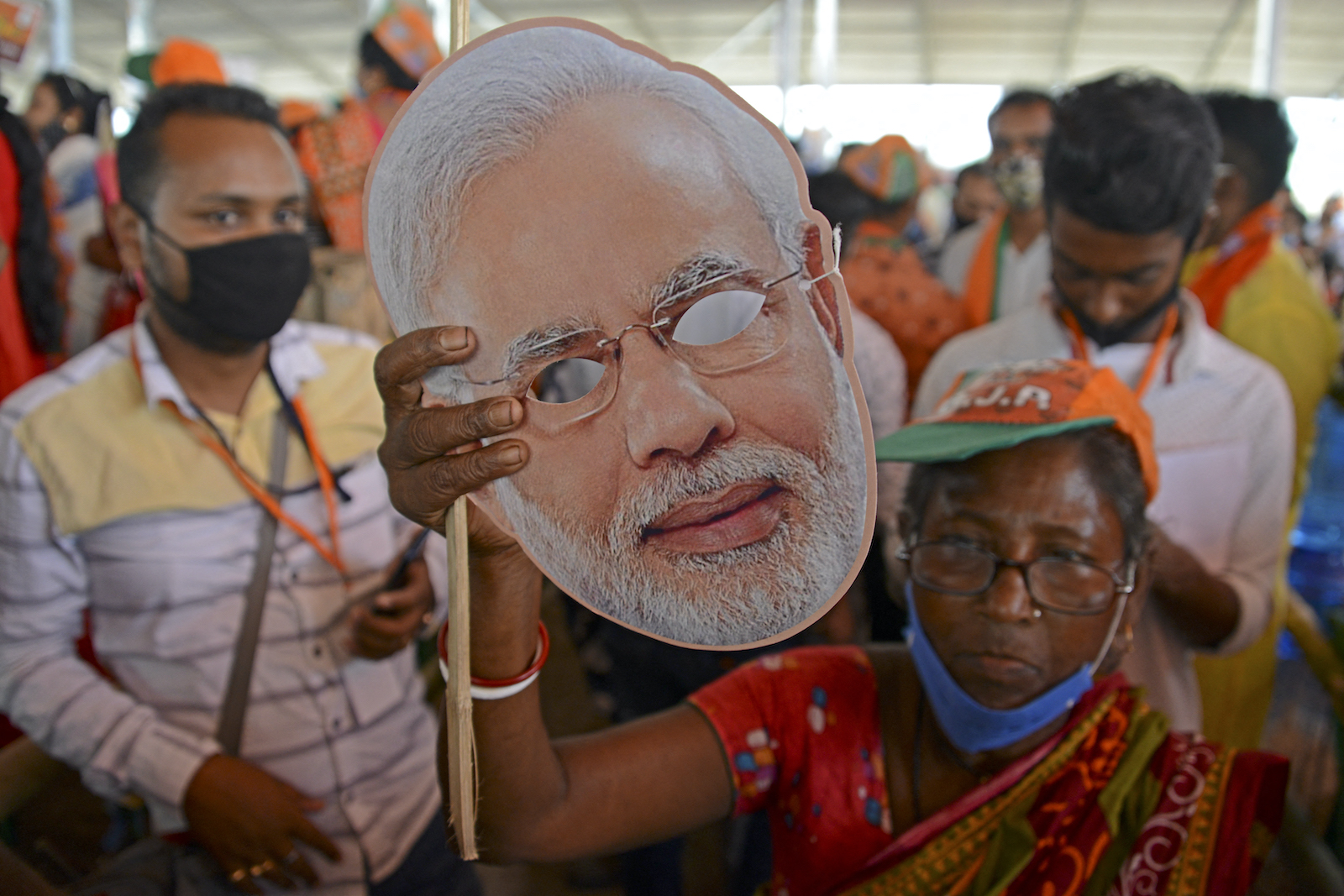
Famous Indian author Shashi Tharoor was famously quoted as saying: “Everything in India is recycled, even the dreams “ In October 2010, The Economist ran a cover titled “How India’s growth will outpace China,” citing India’s young population, dynamic private sector and a strong democratic system as advantages over China’s state-led model. The IMF projected India’s growth rate at around 9.7%, while China’s was 10.5% at that time, suggesting the gap was narrowing. There was optimism in India; many believed it would overtake China, ushering in a new era of prosperity. In 2010, China’s GDP was 3.6 times India’s (US$6.1 trillion vs. $1.7 trillion). By 2025, the gap had widened to nearly 4.9 times, with GDP of $19.5 trillion and $4 trillion, respectively. But the gap widened on a per-capita basis between 2010 and 2025: China’s GDP per capita rose from $4,500 to $13,862, while India’s rose from $1,350 to $2,702, increasing the gap from 3.3 times to 5.1 times in 2025. The argument is not that India has achieved nothing, but that the gap between its narrative and its capabilities has widened. India has spent too much political energy projecting power rather than building the capabilities that create it. Politics of perception Indian leader Narendra Modi understands that modern politics rewards perception extraordinarily well. A spectacular summit, a grand diaspora rally, a hugging photograph with world leaders, a new slogan and a grand declaration can easily shape a powerful narrative about India’s arrival. But symbolism and rhetoric don’t create capability. When confidence rests on promises rather than performance, it risks becoming false pride, i.e., Vishwaguru (World Teacher) creating an illusion of strength without the substance to sustain it. The 2025 Lowy Institute Asia Power Index places India third in comprehensive power in Asia. But the same index says India’s actual regional influence remains below what its resources would lead one to expect; its “Power Gap” has widened to its largest level in the index’s history. That is the paradox of Modi’s India. India has more potential power than it converts into actual influence. The best proof lies not in GDP, but in where Indians build their futures. Today more than 18.5 million Indian lives aboard in 2004 as per the UN, and India receives the highest remittances, around $150.7 billion in 2025. Out of all NRIs, the most influential and successful are the Indian Americans. Many NRI’s take pride in their success, but how much of it was built independently? They studied at American universities, built careers within the American system, secured jobs in their companies, benefited from its opportunities, and live on their land. The American system provided much of the foundation for their success, yet they claim it entirely as their own. Irony isn’t it. The tightening of H-1B rules and Suspension of IT & Tech Firms from the Permanent Labor Certification Program (PERM) is a reminder that success abroad ultimately depends on the institutions of the country where it is built. When leaving India becomes the pathway to Indian success, we must question our idea of national development. Modi built the narrative, not the capability Since 2014, Modi has turned the Indian diaspora into a powerful diplomatic brand, portraying their support and success abroad as evidence of a rising “New India.” The 2019 “Howdy Modi” rally in Houston became the symbol of this strategy. But NRI success reflects not only Indian talent, but also the strength of the foreign systems in which they thrive, not necessarily the performance of the Indian state or its institutions. The “Vishwaguru” image was built on the global success of NRIs, achieved outside India. While India focuses on the narrative of its rises, China focuses on building capabilities. It has spent the past decades relentlessly building industrial, technological, and scientific capabilities. When India announced its arrival as VishwaGuru, China responded with an unexpected technological leap: the AI model DeepSeek, which stunned the world. Today, we are in the AI age; whoever wins the AI race will be the next superpower. Guess what, the world’s most populous country is missing from the AI revolution not because it lacks talent, but because it has spent years supplying talent to build America’s AI empire instead of its own. Imagine having the manpower to build the future, yet choosing to be the workforce for someone else’s future. For example, Sundar Pichai and Satya Nadella, CEO of Google and Microsoft, respectively, are extraordinary examples of India reaching the pinnacle of global corporate power. But then there is another kind of success. A 32-year-old, Yang Zhilin, a Tsinghua and Carnegie Mellon graduate who worked in the American tech ecosystem at Google Brain and Meta, returned to China and co-founded Moonshot AI. Today, his company’s Kimi K3 AI model now rivals leading US models like Anthropic and OpenAI. As per Bloomberg Intelligence, the performance gap between top US and Chinese models has narrowed to 3%. It clearly shows a difference between a country exporting talent and one that absorb, retain and mobilize it for its own technological power. Both Suder Pichai and Yang Zhilin’s are successful story but with a contrast: one shows how far talent can rise within an extra-ordinary system, the other shows how talent can build help create an extraordinary system. For a country aspiring to be a technological power, the latter matters most. Screenshot Today, China dominates AI patent output, accounting for about 74.2% of granted AI patents in 2024, while India’s share is just 0.40%. The contrast is striking. A country can host an AI summit, invite top tech CEO’s, make billion-dollar investment announcements, launch national missions and put “AI” into every government speech, but that doesn’t create technological power. Superpowers are built on substance, not slogans. Yet, in Modi’s era, slogans have outpaced substance. India has immense technical talent, but much of it drives innovation abroad. India doesn’t need more Pichai’s abroad; it needs more Yang Zhilin’s building world-class tech at home. Until that happens, India’s superpower dreams risk becoming a dream repeatedly recycled, while the world races ahead.
India’s superpower dream is just another recycled Modi slogan
Full Article
Original Source
Read the full article at Asiatimes →KhanList aggregates and links to publicly available news content. We do not host full articles from third-party sources. Always verify important information with original sources.