
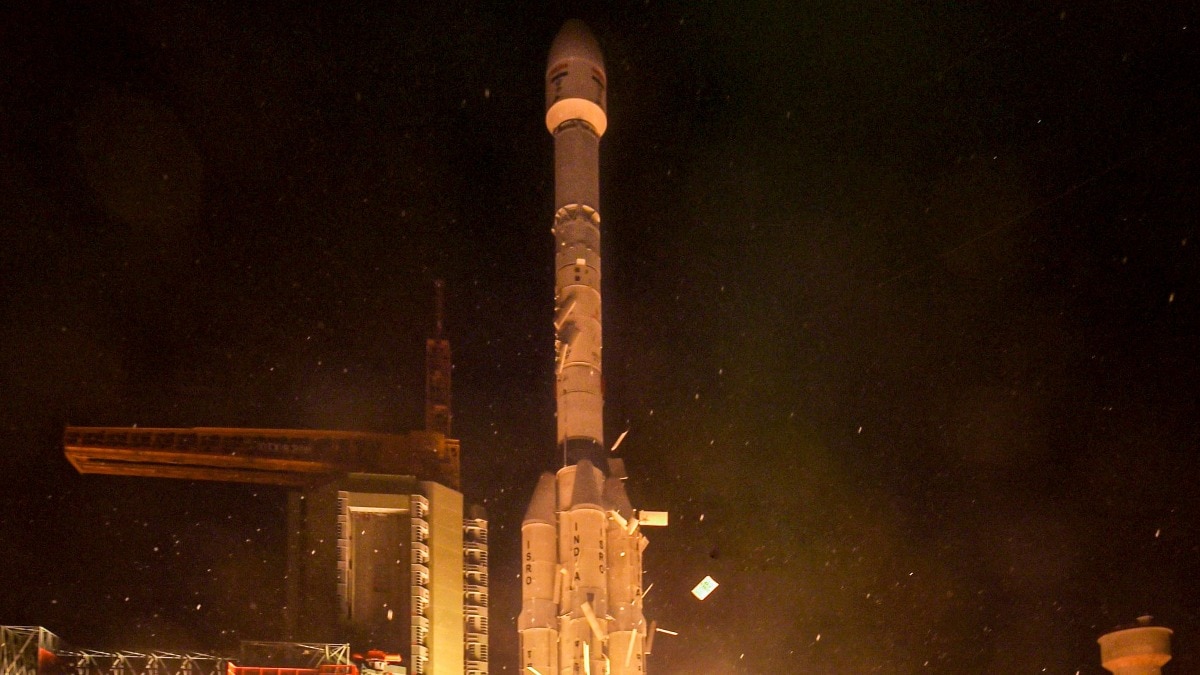
India's newest Earth-observation satellite has completed the biggest part of its journey.EOS-05 reached its intended geosynchronous orbit on Monday night after Isro successfully carried out the third and final orbit-raising manoeuvre.The Liquid Apogee Motor (LAM) fired for 1,247 seconds from 8:57 pm on September 7, pushing the satellite into an estimated orbit of around 35,000.Isro further confirmed that the spacecraft was healthy and well out in orbit. The satellite is now at the right height for its mission, but there is still some work to do before it starts routinely looking down at Earth.Third and final orbit manoeuvring of EOS-05 spacecraftThe third and final orbit raising manoeuvre to increase the perigee of EOS-05 completed successfully at 8:57 pm on September 07, 2026.The LAM engine fired for 1247 seconds and the estimated orbit after manouever is— ISRO (@isro) September 7, 2026FROM SRIHARIKOTA TO SPACEEOS-05 lifted off from Sriharikota at 2:55 am on September 4 aboard Isro's GSLV-F17. Weighing 2,367 kg, it is the heaviest payload carried by the GSLV so far. The rocket did not take the satellite directly to its final orbit but first released EOS-05 into a sub-geosynchronous transfer orbit, after which the satellite used its own LAM engine to raise its orbit.The first manoeuvre on September 5 lasted 5,406.4 seconds and raised the orbit to an estimated 20,000 km by 31,129 km.The second, carried out on September 6, raised the apogee to about 35,786 km.The final burn on September 7 then lifted the perigee further, producing the near-circular 34,903 km by 35,884 km orbit.Isro had said the satellite would eventually be placed in its 85.5° East orbital slot.EOS-05 is rather significant because it is India's first imaging satellite designed to operate from geosynchronous orbit.At roughly 36,000 km above Earth, a satellite in this class can remain over broadly the same part of the planet as Earth rotates beneath it, giving it a very different view from the brief snapshots provided by conventional low-Earth-orbit imaging satellites. Isro's GSLV-F17 rocket carrying the EOS-05 satellite is seen lifting off. (Photo: PTI)Â WATCHING OVER INDIAThat orbital position is what gives EOS-05 its biggest advantage.Instead of waiting for a low-orbit satellite to pass over a particular location again, EOS-05 is designed to repeatedly image large areas of the Indian subcontinent.Its planned mission profile allows imagery of broad areas at roughly 30-minute intervals, while priority targets can be revisited in as little as five minutes.That kind of rapid repeat imaging could be particularly useful when something is changing quickly, whether it is a cyclone approaching land, a flood spreading across an area, a forest fire, or changes in crops, water bodies and other natural resources.The satellite is designed for applications including disaster monitoring, agriculture, forestry and other Earth-observation needs.- EndsPublished On: Sep 8, 2026 10:23 IST
India's eyes in the sky: Isro's EOS-05 has reached its intended orbit
Full Article
Original Source
Read the full article at Indiatoday →KhanList aggregates and links to publicly available news content. We do not host full articles from third-party sources. Always verify important information with original sources.