
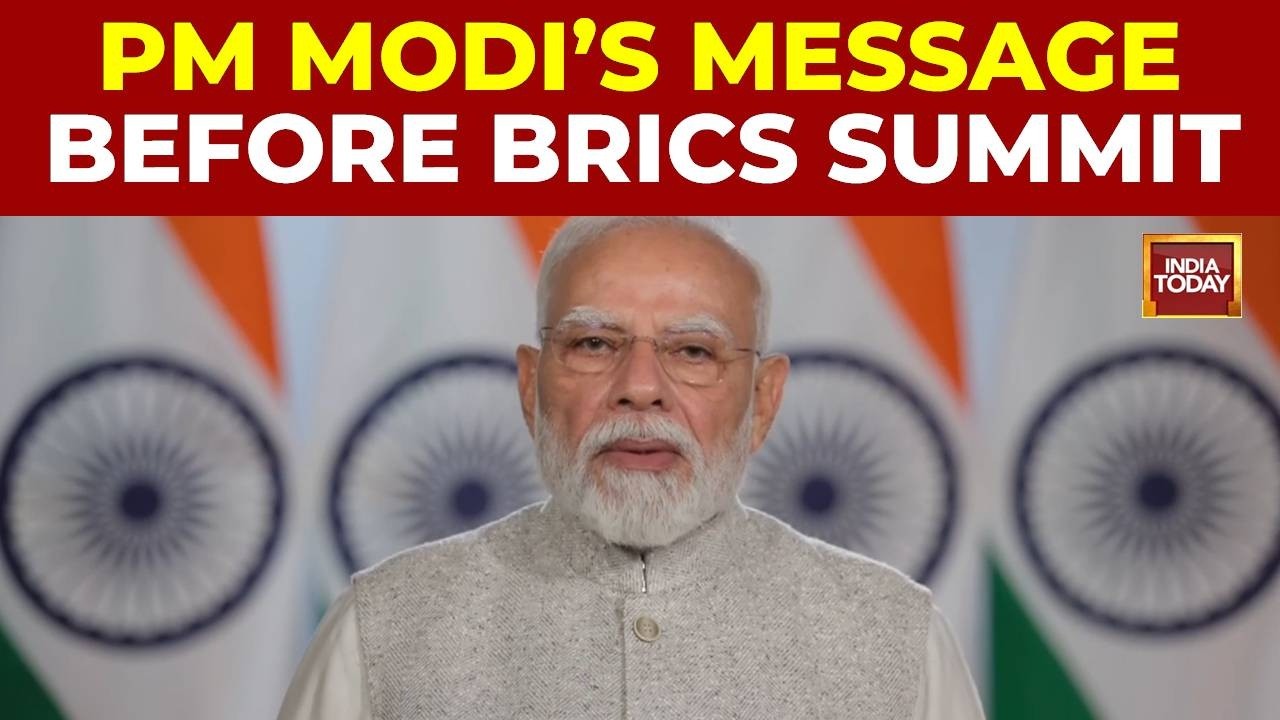
'Global South Is Capable Of Providing Leadership': Anil SooklalSpeaking at an India Today roundtable on the sidelines of the BRICS Summit, South African High Commissioner to India Anil Sooklal shared his perspective on the evolution of BRICS over the past two decades. He emphasized that the assembly of leaders in New Delhi demonstrates the Global South's capacity to provide global leadership amidst an increasingly fractured international order. Addressing geopolitical reforms, Sooklal highlighted BRICS' consistent advocacy for reforming global governance structures, including the United Nations Security Council, noting that the Johannesburg II Declaration explicitly recorded support from Russia and China for the aspirations of India, Brazil, and South Africa. On economic cooperation, he clarified that de-dollarisation is a narrative pushed by the Global North rather than an explicit BRICS agenda, reflecting instead a natural shift in global trade dynamics. Furthermore, Sooklal stressed the immense untapped potential in bilateral trade, direct air connectivity, and youth startup collaboration between India and South Africa.Ram Madhav: 'New World Order Emerges, India Must Play Balanced Role'In an interview on global affairs, BJP National Vice President and foreign policy expert Ram Madhav discusses India's strategic positioning across international forums including BRICS, the G20, the SCO, and the Quad. Responding to political criticism regarding the relevance of multilateral groupings, he highlights that BRICS represents over 60 percent of the world population and serves as a vital platform for the Global South. Addressing India-China ties, Madhav clarifies that bilateral concerns, such as border negotiations and a 100-billion-dollar trade deficit within 159 billion dollars of total trade, are handled bilaterally rather than at BRICS summits. Analyzing systemic shifts, he notes that the post-World War II order is ending and describes the transition as an interim where uncontrollable forces arise. Highlighting non-state power dynamics termed 'hetero polarity', Madhav underscores the rising influence of big tech corporations and investors, calling for international ethical frameworks and regulation around artificial intelligence alongside critical climate and resource resilience.Gulzar Singh Death Row: Family Alleges Forced Cremation, Police Threats And Political PressureThe death of Gulzar Singh in Punjab has triggered widespread political outrage after his family accused the state administration and police of carrying out a forced cremation without their consent. The deceased's wife and son released video statements alleging intimidation, absence of promised compensation or employment, and severe pressure from police forces drawn from multiple districts. They also demanded legal action against all individuals named by Gulzar Singh before his death, including Finance Minister Harpal Singh Cheema. Meanwhile, opposition parties, including the Congress, Bharatiya Janata Party, and Shiromani Akali Dal, have mounted attacks against the Bhagwant Mann-led government. Congress leaders submitted a memorandum to the Punjab Governor demanding the arrest of Harpal Singh Cheema and accusing authorities of evidence destruction. The National Commission for Scheduled Castes and a Bharatiya Janata Party delegation also intervened, raising concerns over security and justice for the bereaved family.BRICS Forum: Global Business Expansion, Indian Exports and Women EntrepreneurshipPanelists at the BRICS forum discussed the internationalisation of Indian business, opportunities across emerging markets, and the role of women entrepreneurs in driving economic growth. The session highlighted the untapped potential of Indian exports and domestic market strength, alongside trade prospects with countries across Africa, China, and Russia. Speakers examined bilateral investment between India and South Africa across sectors such as manufacturing, defence, and nuclear energy, while addressing the need for judicial efficiency and ease of doing business. The discussion also addressed economic participation for over 1.9 billion women across BRICS nations, emphasising the need for resilience building against climate and economic shocks, enhanced credit guarantees, and stronger institutional support frameworks. Panelists concluded that actionable policies, capability building, and robust social infrastructure are vital to translating market opportunities into sustainable economic progress across member nations.
Indian Space Station By 2035, Moon Mission By 2040 And Global Space Cooperation
Full Article
Original Source
Read the full article at Indiatoday →KhanList aggregates and links to publicly available news content. We do not host full articles from third-party sources. Always verify important information with original sources.