
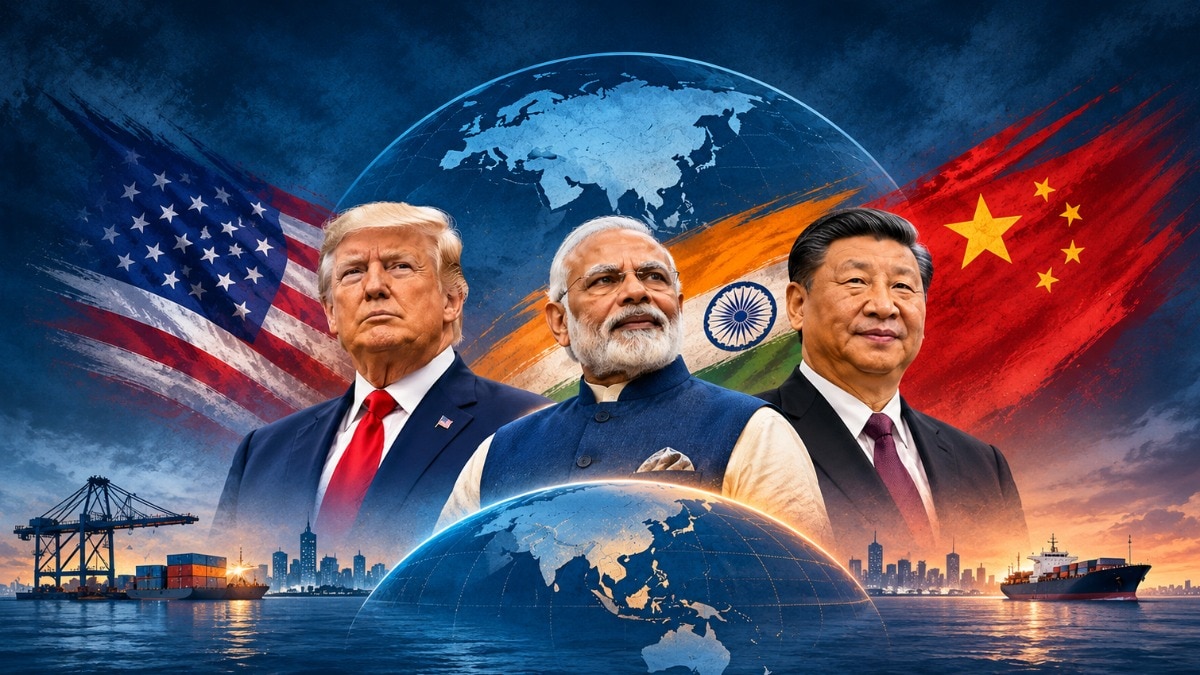
India has emerged as Asia's second-most powerful country after China, ranking third in the overall Asia Power Index behind the US and China, as its influence across the region continues to grow, according to the Lowy Institute's 2026 report.India has strengthened its position through gains in cultural influence, defence networks and future resources, even as its economic capability score slipped marginally. Its overall score stood at 40.5, ahead of Japan's 38.6, putting it firmly ahead of its Asian neighbour in the comprehensive power rankings.The report highlights India's growing regional influence but also points to a gap between the country's resources and the power it is able to translate into tangible influence. While India has considerable economic, military and demographic strength, it continues to lag in areas such as economic relationships and defence networks, suggesting there is room to expand its regional leverage.India's rise also comes against the backdrop of a closely contested power race between the US and China. The two countries scored 78.9 and 73.6, respectively, leaving a gap of just 5.3 points in the Index — significantly narrower than the gap separating China and India. India is the second-most powerful country among Asian nations INDIA GAINS GROUND IN CULTURAL INFLUENCE, DEFENCE NETWORKSIndia recorded some of its most notable improvements in Cultural Influence and Defence Networks, with its score in the two measures rising by 2.3 points and 2.1 points, respectively, in 2026.Its Cultural Influence score increased to 43.8, keeping it fourth in the overall Index. Excluding the US from the geographical comparison, India ranks third among Asian countries, behind China and Japan. The measure looks at cultural projection, information flows and people exchanges, capturing a country's ability to shape perceptions and build influence beyond its borders.India's Defence Networks score rose to 18.6, helping it climb two places to ninth in the Index. The improvement was attributed to greater regional defence engagement and BrahMos missile sales to Southeast Asian countries.However, India's position in defence networks remains relatively weak compared with its military strength. It continues to trail several countries, including Australia, Japan, South Korea and Singapore, highlighting the gap between possessing military capabilities and building strategic defence partnerships.INDIA'S FUTURE RESOURCES REMAIN A KEY STRENGTHIndia ranked third in Future Resources, with a score of 56.2, behind the US and China. Its score increased by 1.2 points during the year.This measure assesses countries' future economic and military resources, including projected economic capabilities, defence resources and the working-age population expected in the coming decades.India's demographic profile and long-term economic potential remain important strengths, giving it the ability to expand its regional influence over time.However, the report's assessment also points to the challenge of converting this potential into actual power. A large population, expanding economy and military resources do not automatically translate into greater regional influence unless they are supported by stronger economic relationships, diplomatic engagement and strategic partnerships.ECONOMIC CAPABILITY SLIPS, BUT INDIA RETAINS THIRD PLACEIndia's Economic Capability score declined by 0.7 points to 26.4 in 2026. Despite the fall, it retained third place in the overall Index, behind the US and China.The report attributed the decline partly to a weakening rupee, changes in how the International Monetary Fund measures economies and a nearly $20 billion fall in outbound investment.India's economic position remains considerably stronger than most countries in the region, but the decline highlights that its growing influence has not been matched by gains across every measure of power.INDIA'S DIPLOMATIC INFLUENCE REMAINS STRONGIndia ranked fourth in Diplomatic Influence, with a score of 70.3, although its score declined marginally during the year.The report noted that India's diplomatic influence remained relatively stable at a time when several countries in the region recorded sharper declines.Prime Minister Narendra Modi's regional leadership rating also improved by three places to second, behind Chinese President Xi Jinping.However, the report pointed to a contrast between India's regional standing and perceptions of its global leadership and strategic ambition, which weakened. It linked this partly to India's muted response during the conflict in the Gulf, including when a US submarine sank an Iranian naval vessel returning from an exercise hosted by India.This suggests that while India continues to command considerable diplomatic weight in Asia, its ability to project leadership in wider international crises remains under scrutiny.MILITARY CAPABILITY AND RESILIENCE REMAIN INDIA'S STRENGTHSIndia ranked fourth in Military Capability, with a score of 48.5, and fourth in Resilience, with 55.4 points.Its military capability score improved by 0.5 points, while resilience slipped marginally by 0.1 points.Military Capability assesses a country's conventional military strength, including defence spending, armed forces, weapons systems and its ability to deploy and sustain forces.Resilience, meanwhile, measures a country's ability to withstand external threats and disruptions, including its resource security, internal stability and geopolitical and geoeconomic security.India remains among Asia's strongest countries on both measures, but the rankings also underline that military strength is only one part of regional power. Its comparatively weaker economic relationships and defence networks suggest there is room to expand the influence it exercises through partnerships.INDIA STILL PUNCHES BELOW ITS RESOURCE POTENTIALDespite its gains, India continues to underperform in translating its resources into actual influence, according to the report's Power Yield measure.India recorded a Power Yield score of -3.3, suggesting that its actual power remains below what would be expected given its resources.The measure compares the resources available to a country, including economic capability, military strength, resilience and future resources, with the influence it is able to exercise through economic relationships, defence networks, diplomacy and cultural influence.India's negative score points to a gap between its potential and the influence it currently commands. However, this gap narrowed for the first time since 2023, suggesting India is becoming more effective at translating its resources into regional power.India's Economic Relationships score stood at 19.9, ranking seventh in the overall Index, while its Defence Networks score of 18.6 placed it ninth. Both remain areas where the country has room to strengthen its regional leverage.The report's findings suggest India is gaining influence and consolidating its position as Asia's second-most powerful country after China, but its next phase of growth will depend not just on expanding resources, but on how effectively it uses them to build economic ties, strategic partnerships and wider regional influence.Meanwhile, the Index also highlights the close contest at the top, with the US scoring 78.9 and China 73.6 — a difference of just 5.3 points. India's score of 40.5, however, shows that the gap between the two leading powers and the rest of the region remains substantial.- Ends
India strengthens position as Asia's 2nd most powerful country
Full Article
Original Source
Read the full article at Indiatoday →KhanList aggregates and links to publicly available news content. We do not host full articles from third-party sources. Always verify important information with original sources.