
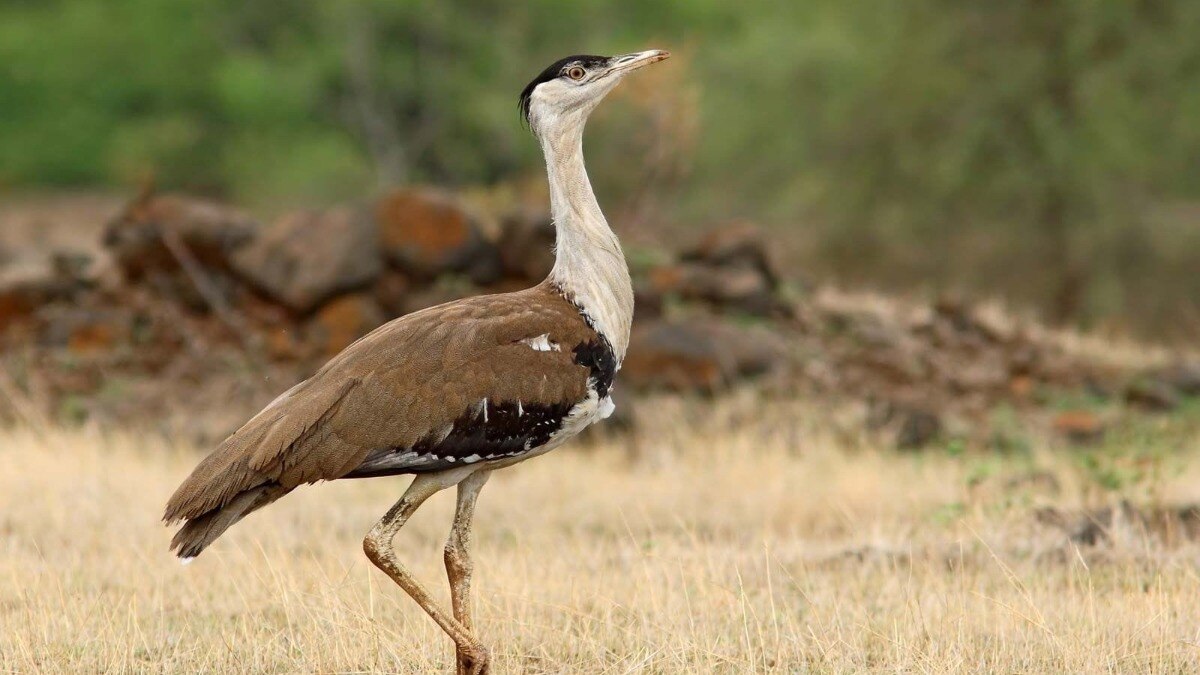
A desert fox killed a captive-bred Great Indian Bustard days after its release in Rajasthan. Authorities will review safeguards before releasing seven more birds into the wild.An image of an adult Great Indian Bustard. (Photo: X)New Delhi,Oct 21, 2026 16:32 ISTA six-month-old Great Indian Bustard, released into the wild as part of an ambitious conservation programme, was killed by a desert fox in Rajasthan's Desert National Park just days after its release, prompting wildlife authorities to review safety protocols for reintroducing captive-bred birds.The male bustard was one of two birds released on Ocrtober 4 as part of an experimental rehabilitation programme aimed at rebuilding the population of the critically endangered species in its natural habitat.Both birds were hatched and hand-reared at the Wildlife Institute of India's (WII) breeding centre in Sam, near Jaisalmer.In a milestone move, released two male Great Indian Bustards in Sam, Desert National Park, Jaisalmer, today morning. This landmark success has been made possible by the nearly decade-long unwavering dedication of our scientists, researchers and ground staff who have spent years to ensure GIB reclaims the deserts of Rajasthan. I thank PM Shri @narendramodi ji for his continued guidance, encouragement and constant support in ensuring our scientific community can work for the conservation of all our species, including the GIB. #IndiaRewildsGIB— Bhupender Yadav (@byadavbjp) October 4, 2026The bird was attacked on Sunday while it was at a natural water source inside the park. Its movements were being monitored through a satellite tracking device. Scientists and Forest Department officials monitoring the bird from the control room at the breeding centre received an alert through the tracking system and rushed to the location. However, the bird had already died.Mutilated remains and feathers of the bird were found at the scene. The fox had fled after the attack. Following the incident, WII scientists and Forest Department officials decided to review the procedures governing the release of captive-bred bustards and the safety measures in place at the release site.SEVEN MORE BIRDS AWAIT RELEASEThe experimental rehabilitation programme seeks to increase the Great Indian Bustard population and restore the species to its natural habitat. Eleven captive-bred birds, each approximately six months old, were identified for release under the initiative.Union Environment Minister Bhupender Yadav initiated the release of two male bustards on October 4 at the Sudasri release site in the Sam area. Two more males were subsequently released the following Wednesday.With one bird now dead, authorities said the seven remaining bustards planned for release would be introduced into the wild only after a comprehensive review of conservation protocols and safety arrangements.Forest officials said the attack occurred despite regular patrols and existing safeguards. The other three birds released into the wild remain safe and are moving through different parts of the Desert National Park, with their movements continuously monitored through satellite tracking.A SETBACK FOR BUSTARD CONSERVATIONThe Great Indian Bustard, known locally as the Godawan, is among India's most threatened bird species. The loss highlights the challenges of reintroducing captive-bred animals into natural habitats, where they must contend with predators and other dangers.Wildlife experts note that birds raised in captivity may have limited experience recognising and responding to predators. However, the incident also reflects the natural risks of life in the wild.Bhardwaj said the teams involved remained committed to the conservation programme, adding that such setbacks would strengthen their resolve to achieve its objectives.The review will determine how authorities proceed with the remaining releases while balancing the need to protect individual birds with the long-term goal of establishing a viable wild population.- Ends
India released two Great Indian Bustard into wild. One of them has been killed
Full Article
Original Source
Read the full article at Indiatoday →KhanList aggregates and links to publicly available news content. We do not host full articles from third-party sources. Always verify important information with original sources.