
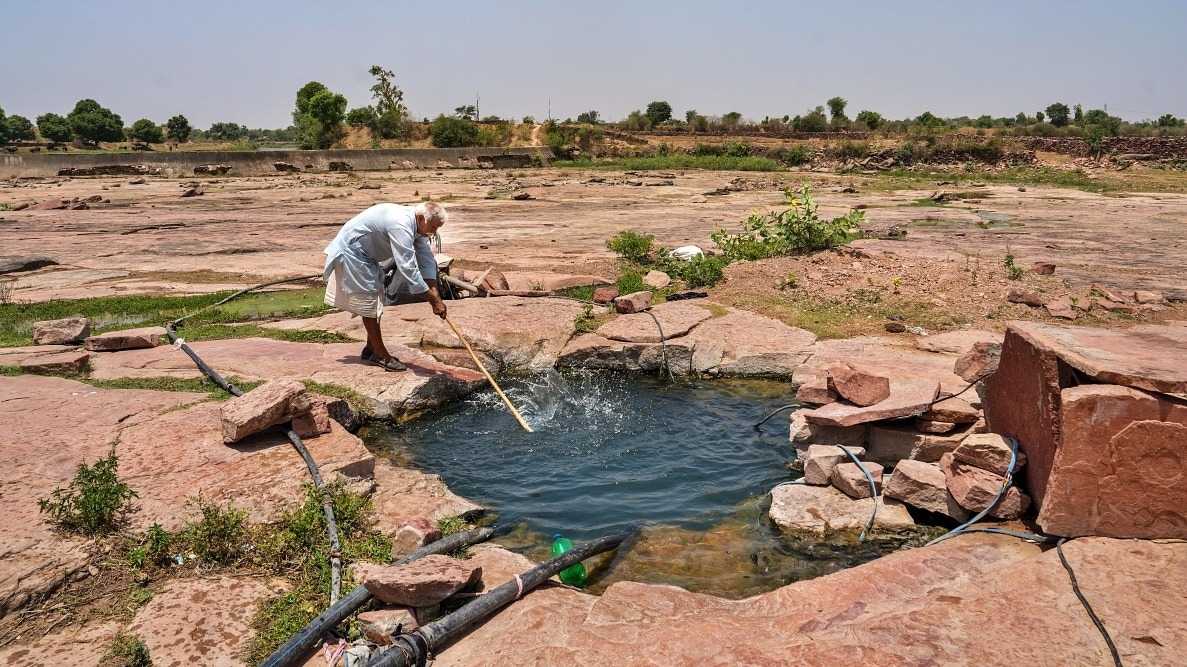
India is entering winter with weak monsoon rainfall, lower reservoir storage and growing groundwater stress. A strengthening El Nino could sharpen regional shortages as demand rises before the next monsoon.A borewell brimming with water after years of community-led water conservation efforts, in Karauli, Rajasthan. (Photo: PTI)New Delhi,Oct 12, 2026 07:30 ISTIndia is headed into the winter season with a worrying combination of deficient monsoon rainfall, declining reservoir reserves in several regions and persistent groundwater stress.Now, a strengthening El Nino is adding another layer of uncertainty to the country's water security, raising concerns about how well India will cope with the months ahead.The stress is not simply that India received less rain. It is that the country may have less water in reserve when temperatures rise, farms need irrigation, and cities face growing demand. What appears to be a seasonal water shortage today could become a more prolonged crisis as water consumption continues to outpace local supplies. A farmer checks his crops at a partially dried up paddy land, at Check Dara on the outskirts of Srinagar. Drought-like situation was witnessed in many parts of Kashmir valley due to shortage of water and early melting of snow in the mountains owing to intense heat. (PTI Photo) A DEFICIENT MONSOON LEAVES LESS ROOM FOR ERRORIndia received 12.56% less rainfall than normal during the June-September 2026 monsoon, according to the India Meteorological Department (IMD), and the impact is visible in reservoir storage. The Central Water Commission's end-of-monsoon assessment showed that 178 monitored reservoirs held 132.734 billion cubic metres of water, below the 10-year average of 151.118 billion cubic metres. Storage was also significantly lower than at the same point in 2025.These figures do not mean that the country is running out of water everywhere. Reservoir conditions vary widely between regions. But lower national storage reduces the buffer available to absorb a prolonged dry spell, particularly in areas that depend heavily on dams for drinking water, irrigation and industrial supply. The situation is already serious in parts of Maharashtra. Reports from Beed district have highlighted depleted local reservoirs, falling groundwater levels and dependence on water tankers. Telangana has also faced concerns about falling storage in reservoirs supplying Hyderabad, prompting preparations for alternative supplies. Residents of more than 40 villages in Beed district of Maharashtra's drought-prone Marathwada region have come together to improve the water storage capacity of local rivers through desiltation. (PTI Photo) Such developments reveal an important distinction: a national average can look manageable even when individual districts are approaching an emergency.El Nino COULD MAKE THE COMING MONTHS MORE DIFFICULTThe global climate outlook adds to these concerns. In October, the US National Oceanic and Atmospheric Administration reported that El Nino was strengthening, with a greater likelihood of strong-to-very-strong conditions persisting into early 2027.El Nino occurs when sea-surface temperatures in the central and eastern equatorial Pacific become unusually warm, altering atmospheric circulation around the world.For India, it is associated with an increased risk of a weaker southwest monsoon, which has already unfolded.The timing matters. As the country moves into winter, reservoir inflows generally decline. Water demand continues, while farmers need irrigation for winter crops. If rainfall remains inadequate, groundwater pumping could increase to compensate for shortages in canals and surface-water supplies. In drought-hit Karauli, Rajasthan, women led a water revolution, reviving ponds and rivers, ending dacoity, restoring farming and bringing peace back to once-parched villages. (PTI Photo) The next major pressure point will be the summer of 2027. Rising temperatures can increase evaporation and water demand, potentially accelerating the depletion of already stressed reservoirs and aquifers.However, El Nino alone cannot determine India's rainfall. The Indian Ocean Dipole, regional weather systems and other atmospheric factors can influence the outcome.A severe nationwide drought is not inevitable, but the risk deserves close monitoring.THE DEEPER CRISIS LIES UNDERGROUNDIndia's water vulnerability extends beyond its dams.The Central Ground Water Board's 2025 assessment estimated annual groundwater extraction at 247.22 billion cubic metres, equivalent to 60.63% of the country's annual extractable groundwater resources.That national figure conceals serious local problems. The assessment classified 730 groundwater assessment units as over-exploited, meaning extraction exceeded estimated annual replenishment.Groundwater often acts as India's emergency reserve when monsoon rainfall fails. But this safety net is unreliable in areas where aquifers are already depleted.As water tables fall, wells can become less productive and pumping more expensive. Poorer households and small farmers may struggle to access water even when deeper borewells remain operational.A weak monsoon followed by higher irrigation demand could intensify this cycle, leaving some communities with fewer options before the next rainy season.INDIA'S REAL TEST BEGINS NOWThe coming months will reveal whether India can manage its water reserves through the dry season. Reservoir storage, groundwater levels, winter rainfall and temperatures will be critical indicators.States may need to prioritise drinking water, improve distribution, reduce leakage and expand wastewater reuse. Agricultural water demand also requires attention, particularly in areas where groundwater extraction is already unsustainable. PM Narendra Modi during a visit to a farm with Agriculture Minister Shivraj Singh Chouhan. (Photo: PTI) India's water crisis is therefore deeper than the sight of a drying reservoir or a village waiting for a tanker. It is a question of whether the country's water systems can withstand consecutive periods of stress.A strengthening El Nino could make that challenge harder. The danger is not that every part of India will run dry, but that regions with the weakest reserves may face increasingly severe shortages just when the need for water rises.By the time the next monsoon arrives, the consequences of today's decisions on water storage, groundwater use and allocation may already be visible.- Ends
India is facing water shortage, and the crisis is deeper than it appears
Full Article
Original Source
Read the full article at Indiatoday →KhanList aggregates and links to publicly available news content. We do not host full articles from third-party sources. Always verify important information with original sources.