
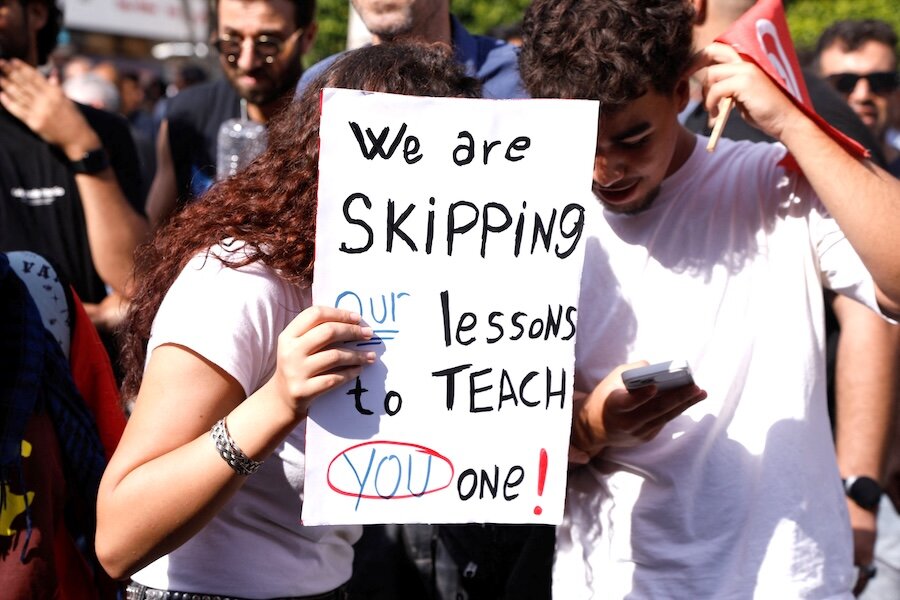
On Oct. 17, the North African nation of Tunisia saw one of its largest protests in years. In the capital, Tunis, thousands of demonstrators chanted slogans like “The people above all else” and “Work, freedom, national dignity” – despite fears of being arrested.In recent years worldwide, such anti-government protests have surged. So why should this one stand out?Because Tunisia was the spark for the Arab Spring of 2011. It was home to a mental awakening in a region that long believed Arab culture was not compatible with civic rights, that saw equality and dignity not as inherent to each individual but as only granted by self-proclaimed rulers. Tunisia was also the most successful Arab country to plant a democracy after 2011. That is, until 2021-2022, when a duly elected president, Kais Saied, took advantage of public frustrations over economic opportunities and canceled much of democracy, including an independent judiciary. Many democratic activists now sit in prison.A majority of Tunisians, fed up with their democracy’s slow pace to improve their lives, approved of Mr. Saied’s self-coup. Last year, an independent poll found this: While 67% of people still prefer democracy, 78% prioritize economic results.The problem for Mr. Saied now is that his authoritarian government has yet to improve any economic indicator. Among those between the ages of 15 and 24, unemployment has reached 35.4%. A string of protests since last year, culminating in the big one on Oct. 17, suggests Tunisians might again be recognizing that democracy after all is the best long-term provider of economic success. Research on whether one-person rule or democracy brings better long-term growth generally sides with democracy. When citizens are patient and participate in politics and fair elections, there is better deliberation to reach a consensus on how to achieve inclusive economic development.“When citizens can express grievances, participate in decision-making, and hold leaders accountable, economic policies better reflect genuine needs rather than narrow interests,” wrote scholar Ameni Mehrez, a graduate of the University of Carthage in Tunisia, for the Atlantic Council. Deepen your worldviewwith Monitor Highlights.Politics with respectGet political stories with respectful analysis.There‘s a world of new ideas in everyBooks newsletter.There‘s more to life, enrich yours withCulture & Learning weekly.Follow humanity‘s discoveries withScience & Nature stories in your inbox.Gain a spiritual perspectivefrom the stories in your inbox.Want to understand the deeper impact of critical events? Learn the Monitor‘s insight.Already a subscriber? Log in to hide ads. “Political openness creates pressure for responsive governance, reduces corruption, and builds the social trust necessary for economic cooperation.”Despotism, for a while, can sometimes create prosperity. Mussolini made the trains run on time. But as more Tunisians might be learning, the right ideas and the best people to run an economy can be elevated only when all citizens are civic equals, working together under political openness and accountable government. Or, as the slogan stated at Tunisia’s latest protest, “The people above all else.” ALREADY A SUBSCRIBER? LoginReal news can be honest, hopeful, credible, constructive.The Christian Science Monitor was founded in 1908 to lift the standard of journalism and uplift humanity. We aim to “speak the truth in love.” Our goal is not to tell you what to think, but to give you the essential knowledge and understanding to come to your own intelligent conclusions. Join us in this mission by subscribing.
In the home of the Arab Spring, democracy’s looking better
Full Article
Original Source
Read the full article at Csmonitor →KhanList aggregates and links to publicly available news content. We do not host full articles from third-party sources. Always verify important information with original sources.