
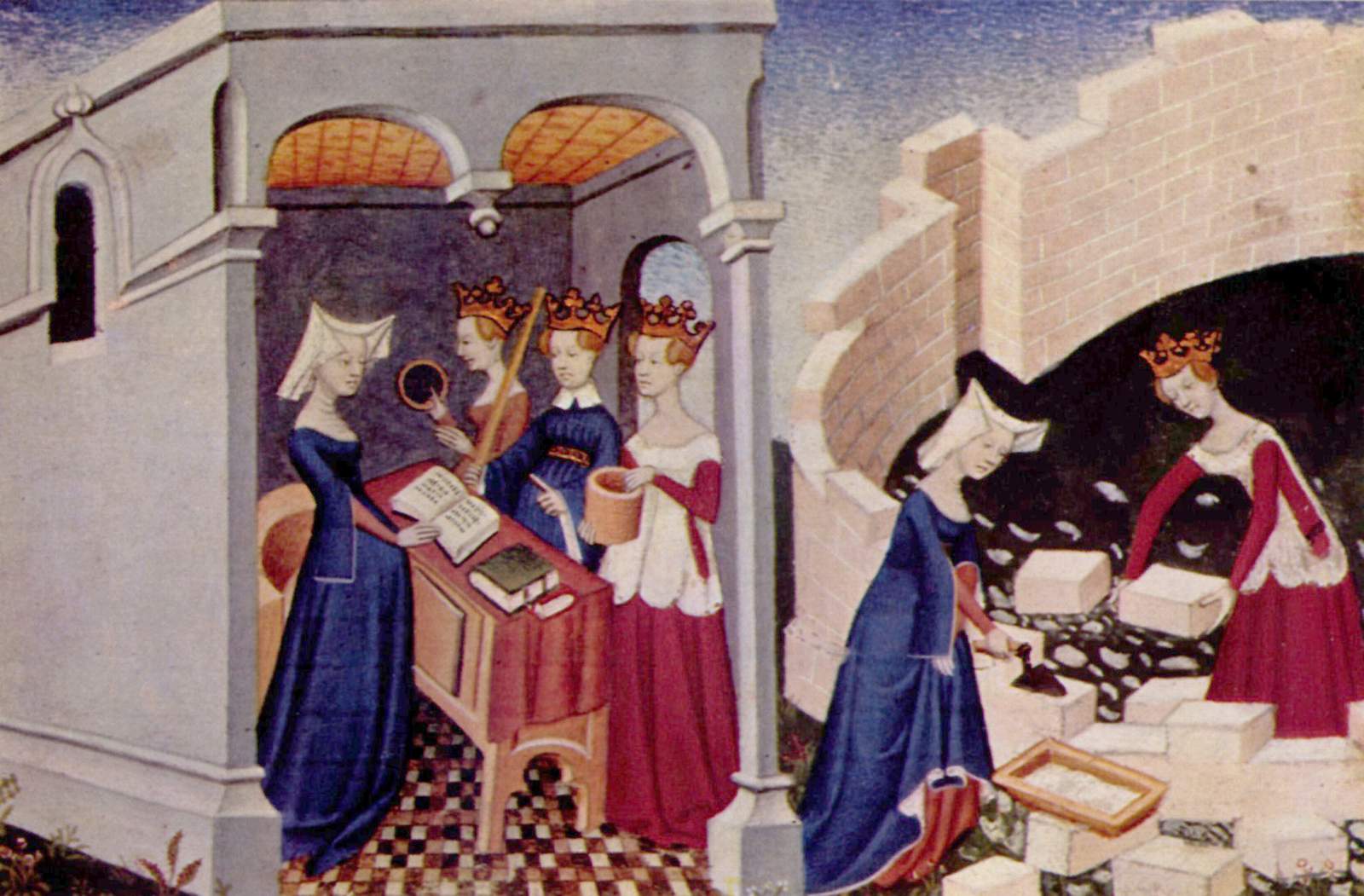
Christine de Pizan had something women in the late 14th and early 15th centuries could claim: a literary career. In 1405, she risked that career to write a work defending the dignity of her fellow women. Her groundbreaking work challenged the sexist stereotypes that were prevalent in medieval texts written by men. The widow who built a career of her own Though born in Venice, Italy, Pizan’s father was an appointed astrologer and physician to King Charles V of France. This meant she moved to Paris as a young child. There, she received the privilege of a rich, robust education in languages, science, and philosophy. Christine de Pizan. Wikipedia She married a royal secretary at the age of 15. After her husband died of the plague, Pizan was left a young widow with three children to take care of. Rather than remarrying, she supported her family by becoming a court writer and poet for French aristocrats. Pizan’s most famous work was a fiery response to one section of the highly influential The Romance of the Rose. The allegorical poem offered guidance on how a man should win the heart (and virginity) of his lover. As was customary in medieval literature, women were usually either damsels in distress or wicked temptresses. The Romance of the Rose was no different. But Jean de Meung‘s passage portrayed them as vindictive manipulators and the source of all evil in the world. Jean de Meung. Wikipedia Turning medieval misogyny on its head And thus, Pizan’s The Book of the City of Ladies was born. In it, she makes herself a narrator who laments that her gender is widely seen as an “aberration in nature.” Three “Virtues,” Reason, Justice, and Rectitude, then visit her and help her build a female-centered city. Famous women from history, mythology, and the Bible serve as the building blocks, walls, houses, and inhabitants of this metaphorical city. Each of their stories serves as a different point in Pizan’s argument that women should be valued and respected participants in society. Illustration from The Book of the City of Ladies. Wikipedia In part one, Lady Reason helps dig the foundations and build the outer walls. She shares stories of female warriors, rulers, inventors, and scholars. In part two, Lady Rectitude erects the buildings and homes using accounts of faithful wives, daughters, prophets, and heroines. And in part three, Lady Justice adds the roofs and gates. She crowns the Virgin Mary as the queen of the city, alongside female saints and martyrs. A feminist work centuries ahead of its time The Book of the City of Ladies gained immediate popularity in late medieval French royal courts. It sparked heated and nuanced conversations about women’s roles. Today, it is widely regarded as an early feminist text. Pizan continued writing for the rest of her life, often reflecting on women’s roles in society. She eventually retired from court life and spent her final years at a monastery. There, she continued to write works that remained influential even after her death. Pizan was making a case for women’s dignity long before “feminism” was even a word. And The Book of the City of Ladies remains remarkable even 600 years later. By imagining a world where women’s intelligence, courage, and creativity were uplifted, she created a feminist work centuries ahead of its time.
In the 1400s, a woman fought sexism by imagining a literary ‘City of Ladies’ built on 3 principles
Full Article
Original Source
Read the full article at Upworthy →KhanList aggregates and links to publicly available news content. We do not host full articles from third-party sources. Always verify important information with original sources.