
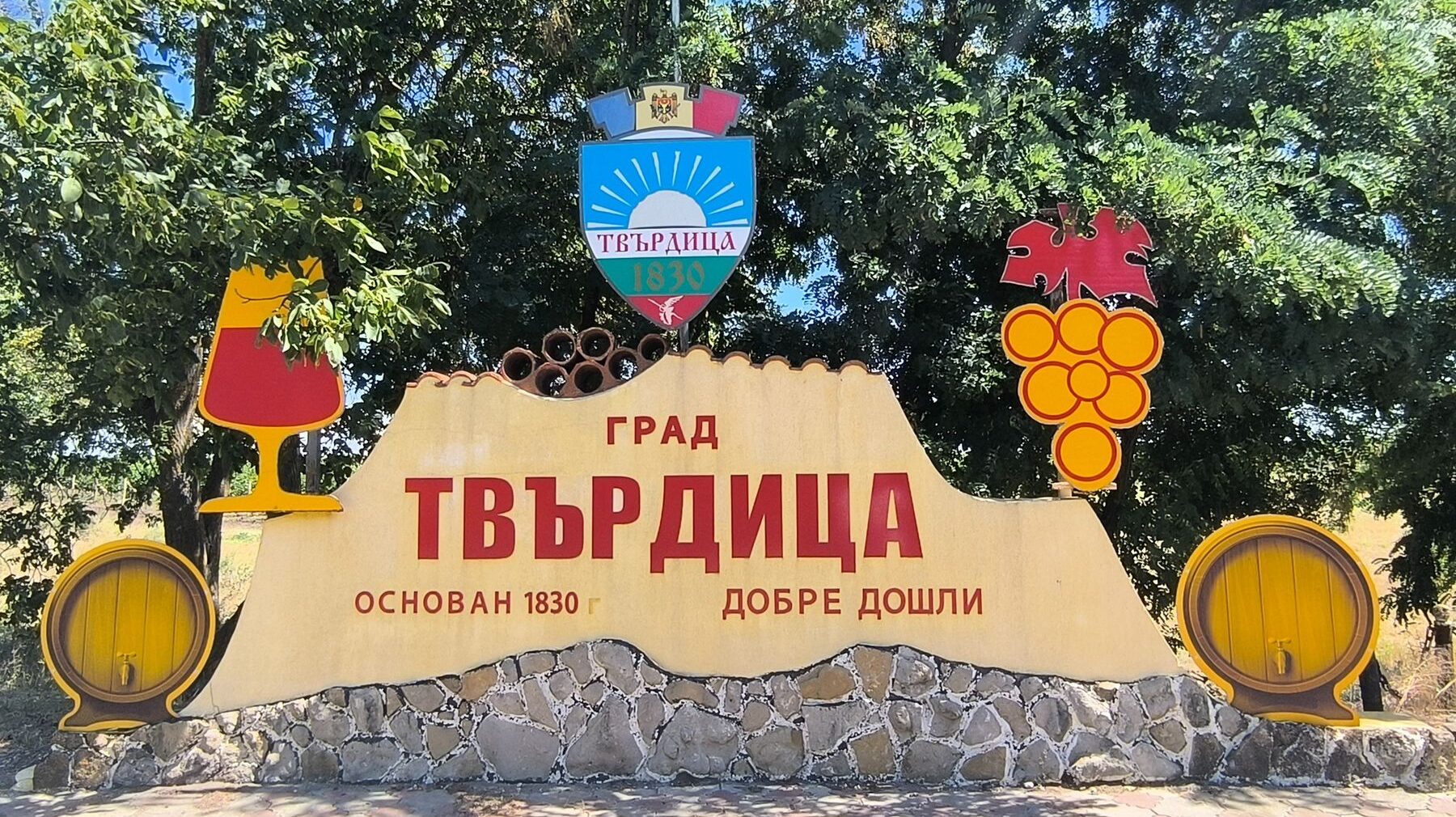
As Moldova consolidates its municipalities on its path to EU membership, the minority-populated, Russian-speaking regions in the south present challenges as questions of administrative efficiency, minority identity and territorial politics clash. On a utility pole in central Comrat, the capital of Moldova's autonomous Gagauzia region, an orange advertisement offers help with Schengen visas for Europe. Immediately below it, a Russian-language notice advertises work in Germany, France, Poland, the Netherlands, Ireland and Slovakia, with a salary of 3,000 euros. Elsewhere in the city, a legal-services company advertises help obtaining Romanian, Bulgarian or Moldovan citizenship. It is an unusual introduction to the region routinely described as Moldova's most Eurosceptic. Europe is politically contested here but economically difficult to avoid. Russian remains the language of much everyday communication, while Gagauz, Moldovan, Turkish, Soviet and, increasingly, European identities and reference points overlap across the city. Travelling through southern Moldova in August, the divisions were rarely as neat as Moldova's geopolitical reputation suggests. But the region is now facing a question considerably less flashy than whether its sympathies lie with Brussels or Moscow: how should Moldova redraw its local government borders? The government wants to consolidate hundreds of small municipalities in an attempt to create administrations better able to provide services, manage infrastructure and attract investment. More than 87 per cent of Moldova’s mayoralties serve fewer than 3,000 residents. The government’s April reform concept proposes 3,000 as a minimum population benchmark for a mayoralty and envisages consolidating Moldova’s 32 districts into 10 larger ones. A voluntary phase picked up over the summer, with hundreds of local councils adopting amalgamation decisions. At the same time, the government began preparing for a later phase of “normative amalgamation” for localities that remain outside voluntary mergers, a move that has become increasingly controversial. Moldova’s Congress of Local Authorities (CALM) supports administrative reform in principle but has accused the government of moving too quickly towards compulsory consolidation without adequate legal safeguards or consultation. The government disputes that criticism and argues that stronger municipalities are essential if local authorities are to deliver better services. In southern Moldova, however, there is another complication. Here administrative boundaries help define minority representation and identity and any attempt to redraw these lines risks making communities feel they are disappearing from the map. Where autonomy complicates reform Gagauzia exists because Moldova once solved a much more serious dispute over territory through compromise. During the collapse of the Soviet Union, fears over language policy, Moldovan nationalism and possible reunification with Romania contributed to a separatist movement among the Gagauz, a Turkic-speaking and predominantly Orthodox Christian people concentrated in the country’s south. Gagauz leaders proclaimed a republic in 1990. Unlike the conflict in Transnistria, the confrontation did not turn into full-scale war. A political settlement followed, and in 1994 Moldova established Gagauzia as an autonomous territorial unit. Gagauzia is part of Moldova but has its own assembly and executive institutions under the autonomy settlement. Thirty years later, those institutions are visible throughout Comrat. Gagauz and Moldovan flags fly together and the assembly identifies itself prominently in the Gagauz language, though Russian remains pervasive in shops, advertisements and conversation. But the region’s autonomous institutions now create obstacles to the ongoing administrative reform across the country. In August, Secretary-General of the Government Alexei Buzu said amalgamation in Gagauzia was effectively blocked because changes there must pass through the assembly, whose mandate has expired amid an institutional and electoral dispute. Elsewhere in Moldova, completed amalgamation proposals can move on to the central authorities. In Gagauzia, the assembly’s leadership has challenged Buzu’s account of the dispute, illustrating the extent to which an ostensibly technical reform has already become politically contested. Though Gagauzia is often understood from the outside through the lens of Russian influence, this situation is a reminder that the region’s identity and relationship with Chisinau is also governed through institutions that were created to protect a minority whose language, territory and political representation became intertwined during Moldova’s transition to independence. Twenty kilometres south of Comrat, the Gagauz village of Besalma provides some historical context. Its National Gagauz History and Ethnographic Museum, founded by writer, filmmaker and cultural figure Dmitrii Kara Coban, documents successive efforts to preserve Gagauz culture under different political systems; Soviet-era Gagauz publications in Cyrillic sit alongside more recent material in Latin script. The museum also features traditional clothing, photographs and records of village life. The collection makes clear that Gagauzia’s institutions emerged from a history in which cultural survival and territorial representation became closely connected. Southeast of Besalma in Ceadir-Lunga, Gagauzia’s second biggest city, different cultural layers remain visible in the streetscape. Orthodox churches coexist with Soviet memorials, while Russian, Romanian and Gagauz occupy different parts of public life. Yet beyond such symbols, the problems that prompted Moldova’s administrative reform process are looming: ageing infrastructure, small administrations and the high cost of providing services to shrinking communities. The government says eight out of ten Moldovan households without access to water or sanitation are located in settlements administered by mayoralties serving fewer than 3,000 people. That is the less ideological side of the debate. Administrative fragmentation affects whether a municipality can hire specialists, prepare investment projects, maintain infrastructure or manage a water system. Bespoke solutions for Moldova’s Bulgarians A sign saying “I’m home” next to the Gagauz Museum in the village of Besalma. Photo: Mathieu Lemoine.Crossing the boundary out of Gagauzia highlights different political issues. Tvardita is one of the principal centres of Moldova’s Bessarabian Bulgarian community. Bulgarian cultural references are prominent, alongside Russian and the familiar religious and Soviet markers found elsewhere in the south. At one public drinking fountain, a plaque records that it was built with financial assistance from the Bulgarian government through the United Nations Development Programme (UNDP). The summer opening hours are displayed in Russian. It is a small scene, but it says a great deal about how identities overlap here. Bulgaria is an ancestral homeland and foreign donor, but also an EU member state to which many residents have familial or citizenship connections. Russian may remain the everyday lingua franca without determining how someone identifies politically or ethnically. The small city of Taraclia is the main territorial centre of Moldova’s Bulgarian minority. Unlike neighbouring Gagauzia, the Bulgarians have no autonomous territory. Yet the government’s own reform concept acknowledges that the area cannot simply be treated as an ordinary district. Because around 65.6 per cent of the district’s population is Bulgarian, Chisinau has proposed a bespoke and individualised municipal structure as a way of reconciling stronger administration with preservation of local identity. In Gagauzia, formal autonomy gives minority institutions a direct role in territorial restructuring and has helped stall the process, whereas in Taraclia, where there is no comparable autonomy, Chisinau is proposing a bespoke administrative status to ensure that reform does not dissolve one of the country’s clearest concentrations of Bulgarian identity. The contrast makes southern Moldova unusually important for the national reform. It demonstrates that an administrative map is not simply a collection of units that can be enlarged according to population and expenditure. What Europeanisation looks like from the south The rural landscape of southern Moldova. Photo: Mathieu Lemoine.The case for reform is substantial. Decades of demographic decline and emigration have left hundreds of mayoralties governing small populations with limited revenue and staff. But the method is increasingly disputed. On August 25, CALM called for the suspension of plans for normative amalgamation until a clearer legal framework is adopted. It argued that some municipalities were being placed into proposed clusters and assigned administrative centres without adequate consultation. Government representatives say the process falls within their legal responsibilities and that parliament will ultimately decide Moldova’s new administrative structure. That disagreement matters beyond the technicalities of local government. If amalgamation is perceived as something imposed from Chisinau rather than negotiated with communities, administrative reform can easily become another argument about centre and periphery. This is especially sensitive in Moldova’s south, but the issue is not unique to minority communities. Local authorities elsewhere have also protested against proposed mergers. The Gagauz and Bulgarian cases simply add language, history and minority representation to an already contentious national debate. EU accession raises the stakes further. Moldova needs administrations capable of implementing increasingly complex legislation and managing larger investments. The government argues that larger local administrations will have greater capacity and specialist staff to access external funding and implement major projects. At the local level, if Europeanisation goes well, it should manifest as functioning water systems, maintained roads, public documents remaining accessible and municipalities having access to investments. That helps explain why the advertisements in Comrat are more revealing than they first appear. Moldova has documented serious attempts at Russian interference and disinformation in Gagauzia. But Russian influence, use of the Russian language, Soviet memory and Gagauz identity are not synonymous. Russian is being used to advertise for jobs in the European Union. Romanian and Bulgarian citizenships are advertised as routes to mobility. Turkey remains a cultural presence. Gagauz institutions coexist with Moldovan ones. Soviet memory remains part of the landscape. Administrative reform will succeed in the south only if Chisinau understands these nuances. Three decades ago, Moldova kept Gagauzia in the state by accepting that territorial integrity did not require institutional uniformity. Today’s challenge is less dramatic, but the underlying principle is similar. Moldova needs larger and more capable local administrations if it is to improve public services and meet the demands of EU membership. But in the minority south, administrative efficiency cannot be separated entirely from history, language and political representation. Redrawing Moldova may be necessary. Convincing its minorities that they still have a place on the new map will be the harder part. Mathieu Lemoine is a governance and democracy specialist with extensive experience in the post-Soviet space and the Western Balkans, including with the OSCE, USAID/EWMI and UNDP. He has worked on democratic reform, civil society, rule of law and public governance in Central Asia and Eastern Europe.
In Moldova’s Minority-Populated South, Redrawing Municipalities is a Tricky Task
Full Article
Original Source
Read the full article at Balkaninsight →KhanList aggregates and links to publicly available news content. We do not host full articles from third-party sources. Always verify important information with original sources.