
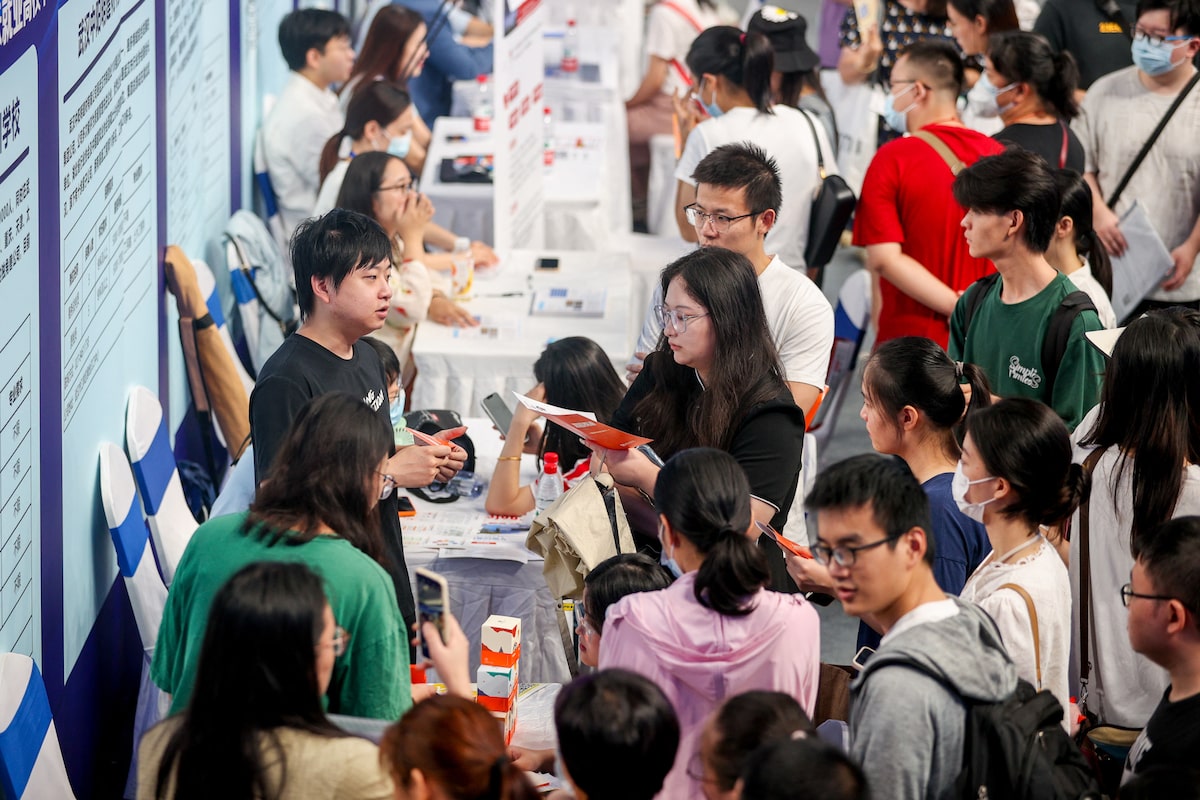
Open this photo in gallery:University graduates attend a job fair in Wuhan, China, in 2023.-/Getty ImagesReturning home to Shanghai at the start of this year after completing a degree in public administration at Toronto’s York University, Kristy Guo never expected it would be so hard to find a job. In the past nine months, she has sent out some 200 resumés, but only reached the final interview stage twice, with no job offers. Some of that is reflective of a vicious job market and high youth unemployment affecting all Chinese graduates, but Ms. Guo also sees another factor at play. “I think the main reasons are my school and major,” she told The Globe and Mail. According to a new study by researchers at Beijing Normal University and the China Development Bank, there could be some truth to this. A foreign degree, particularly from a university in Canada, the U.K. or the United States, was once seen as a golden ticket for Chinese students, but may now actually be a hindrance for many graduates. “They used to be considered elites, but now they’re everywhere,” lead author He Haoran told the state-run Beijing News this month. “This is quite evident in online discourse, with jokes about ‘watered-down master’s degrees’ implying you only have the opportunity to study abroad because your family is wealthy, without actually learning anything.” Prof. He’s team created 4,500 mock resumés and submitted them for more than 2,000 jobs. All else being equal, they found applicants with an overseas degree were 16.3 per cent less likely to land an interview than someone who had graduated from a Chinese university. Open this photo in gallery:A Harvard University poster hangs on the wall at an overseas education agency in Beijing.JADE GAO/Getty ImagesWhile brand-name schools − those of the U.S. Ivy League, Oxbridge in the U.K. − still carry significant cachet, a less well-known overseas university carries little weight with employers, the study found.York ranks 16th in the latest Times Higher Education ranking of universities in Canada, but it barely breaks the top 500 globally and is “lacking in name recognition” in China, Ms. Guo said. Ji Rurae received a master’s degree in digital media from the University of Sydney, the second-highest-ranked Australian university globally, but she too has struggled to find a full-time job back in China. “People tend to assume overseas programs are easy,” she said. “Perhaps people have grown more confident in domestic education − or developed a stronger sense of national pride.” Charles Burton: As Xi and Trump do their dance, Canada is left to wonder about its placeAccording to Prof. He’s research, this is definitely a factor. As Chinese universities have climbed the global rankings in the past decade − Tsinghua and Peking Universities, the top two schools in the country, came in at 12th and 13th this year − it’s become even more important than ever to get a good score on the gaokao, China’s notoriously difficult, all-or-nothing university entrance exam. (Chinese schools are also attracting more and more international students themselves, particularly from the developing world.)Even as the number of Chinese studying overseas spiked in the past decade, employers were growing wary of those who seemingly bought their way out of sitting for the gaokao. According to a 2023 investigation by Caixin, a Chinese business publication, many companies “have prejudices against international students, such as believing that those not from top-ranked schools went abroad because they didn’t study well at home.” Overseas graduates are often seen as more difficult to manage, a number of human resources professionals told Caixin, as they are less likely to conform and “have too many ideas.” Chinese with master’s degrees from foreign schools are particularly vulnerable to these perceptions: In China, a master’s degree typically takes three years of study, compared with just one in many Western education systems. Open this photo in gallery:Students attend a graduation ceremony at Wuhan University.Getty Images/Getty ImagesMs. Ji said the perception that overseas master’s degrees are “watered-down” and worthless is widespread and difficult to push back against, though she has had some luck with foreign companies based in China or businesses focused on overseas markets. Like many returnees struggling to find work, Ms. Ji grapples with guilt over the amount of money her parents invested in her education − far more than they would have paid had she remained in China. “I come from a very traditional family,” she said. “They believed an international degree would lead to better job prospects, as people would naturally assume you had received your education within a higher-quality system.” Now, she fears her parents will “feel disappointed” that they sent her abroad to study, so she hasn’t revealed to them the extent to which she’s struggling to find work. The number of Chinese studying overseas fell precipitously in 2020 at the start of the pandemic and has not recovered, owing to the tightening job market, the fear of degree discrimination at home − and more restrictive immigration policies in countries such as Canada, the U.K. and the U.S., all previously top destinations for Chinese students. But for all her current difficulties, Ms. Guo doesn’t regret studying abroad. “The world I saw and the experiences I gained overseas are things I don’t think studying domestically could have given me,” she said. “But I’d be wiser when choosing the school.” With reports from Alexandra Li in Beijing
In China’s tough job market, foreign degrees may be a hindrance, not a help
Full Article
Original Source
Read the full article at Theglobeandmail →KhanList aggregates and links to publicly available news content. We do not host full articles from third-party sources. Always verify important information with original sources.