
It was my 18-mile long run, the farthest I'd gone so far in my New York City Marathon training, when I felt anxiety creep into my ankles. Central Park was full of life and happiness, but I was suddenly acutely aware of every mile, every ache, and every vulnerability I couldn't outrun. “I could just stop right now,” I thought.A year earlier, I was in active treatment for breast cancer at 32. I had undergone chemotherapy, a mastectomy, and reconstruction, and was still learning to recognize my new body. Now, I was preparing to run 26.2 miles, completely topless, with my scars visible.But I pushed through the fear: This was exactly why I chose to run in the first place. Not because I’ve overcome everything or that I have nothing left to hide—but because I’m learning to show up as I am: Uncomfortable, imperfect, and still moving forward. I’m running like this in the hopes that my story might help save another woman’s life. If seeing me and learning about my journey helps her speak up or look into her own breast cancer risk, this run becomes bigger than me.In 2023, I left my career as an associate in wealth management at Merrill Lynch to raise my son. Six short months after I resigned, everything changed.I found a lump. My ob-gyn told me I was too young for a mammogram. An ultrasound came back benign. It was a third doctor, a breast surgeon, who finally took me seriously and sent me for a mammogram, a biopsy, and an MRI. She saved my life.I was leaving the gym on an ordinary Thursday when the call came. I had breast cancer in both breasts: stage 2 triple-negative cancer on one side and stage 1 ER/PR-positive cancer on the other.The world went blurry, and every sound was muffled. Was I dying? My son was only one. I couldn't leave him without a mother, and my husband without his partner. I had so much more life to live, and so much more to do. How had the first two appointments missed this?My husband, Elio, and I built my care team at Memorial Sloan Kettering Cancer Center, and together we mapped out a plan: chemotherapy, immunotherapy, and surgeries. Each decision I made along the way helped me feel a little more in control.Lauren SpieziaOne of the hardest parts of treatment was confronting how much my body had changed. When I finally had my mastectomy, I braced myself to be horrified when the bandages came off. I shed one tear. It hit me that things would never be the same and that a part of my body I'd tied to my femininity and sexuality had been changed forever. I faced a choice no woman should have to make. For me, it was this or facing my mortality.But the moment that still gets me isn't the one in front of the mirror. It was the afternoon my then-two-year-old son caught a glimpse of my chest."Mommy, you have a boo boo?” He asked. “Are you hurt? Do you need to go to the hosminal?"I had tried to protect my son from knowing what I was going through—no two-year-old should have to learn what cancer is before they learn the alphabet. But still, he could tell something was wrong. I was proud of his sympathy and awareness, but at the same time, I was heartbroken he noticed. I dreaded telling him about my cancer diagnosis—especially given my BRCA diagnosis and the unknowns about whether I had passed it along to him.Later, changing in a gym locker room for the first time since surgery, I flinched, covering my chest as I pulled off my sports bra. I never would have done that before cancer. Was I ashamed of the scars? Nervous that I looked different? Probably a bit of both. I gave myself grace for that instinctive reaction, but also promised myself then that I would no longer let shame drive how I felt about my body. My scars are evidence that I lived. They stand for tenacity, resilience, and bravery—traits I want my son to have and how I want him to remember me.During treatment, I set a goal to run my first half marathon a few months after my mastectomy. It kept me focused and gave me something to look forward to, something beyond appointments, medications, and the uncertainty of treatment. Crossing the finish line felt powerful. I thought of all the work that I’d put in to get there and the many training sessions where I chose to show up for myself every day.But shortly after, I was disappointed to learn I would need to continue oral chemotherapy to help reduce the risk of recurrence. This pushed my recovery timeline back and meant I’d have to wait longer for my reconstructive surgeries. So I set another goal: if I could run 13.1 miles, I could run 26.2 the following year, when I’d be done with treatment and surgeries.I decided I would also run topless, putting on display the very thing I vowed to never hide. No shirt, no bra. To prevent chafing and provide makeshift support, I plan on using special styling tape donated by NOOD.I would do it for the women who might have questions they want to ask their doctors, who feel like something isn’t right but keep minimizing their concerns. And I would also do it for the other survivors out there. I hope that by seeing me run, they also feel more comfortable in their bodies, scars and all.I set my sights on the New York City Marathon, running with Fred’s Team, Memorial Sloan Kettering Cancer Center’s charity partner. I even created a subteam, Team Laklak, named after the beauty brand I co-founded during my cancer journey, offering science-based makeup that’s still full of color and fun. I’m proud that we’ve raised $45,000 to date for the very hospital that saved my life. It feels like such a full-circle moment that the beauty company I dreamed up while sitting in treatment chairs there can now give back to other women in this way.I’m not the first woman to run a marathon topless, but I will be the first in New York City. In 2024, Louise Butcher also ran the London Marathon, showing off the scars from her mastectomy and flat closure reconstruction for similar reasons. I chose to reconstruct with implants—and I’m not sure if people will find my run more taboo or sexualized because of it. They shouldn’t. Louise and I faced the same disease and underwent similar treatments.Wave MediaOn November 1, I'll finish my 26.2 miles back in Central Park, the same park where I once thought, “I could just stop right now.”My story is about more than learning to embrace my body after cancer. It's also about what can happen when women are dismissed, when they question their instincts, or when they assume they are too young to be at risk.Breast cancer doesn't discriminate by age. Approximately one in eight women in the United States will be diagnosed in their lifetime, and a diagnosis can happen well before the age many women associate with routine screening. I was fortunate to find a breast surgeon who listened to me and pursued further testing, but not every woman knows what questions to ask or where to turn when something doesn't feel right. A breast cancer risk assessment tool can be a useful place to start. While it cannot diagnose cancer or replace medical advice from a physician, it can help women better understand their personal risk and discuss whether additional evaluation or screening may be appropriate.Whether we're navigating cancer or chasing a marathon finish line, we will all have moments when we want to stop. We may not feel fearless or ready. We may not know exactly what comes next. But we can take the next step, ask the next question, and learn to trust ourselves along the way.I'm running topless because I no longer want to hide my scars. I'm running because I'm still here and because I can. But most of all, I'm doing this in the hope that another woman will feel a little more empowered to take charge of her own story.Lauren Spiezia is a breast cancer survivor who carries the BRCA2 mutation and the founder of Laklak Beauty, a clean cosmetic brand built from her experience as an oncology patient. More at laklakbeauty.com/run.
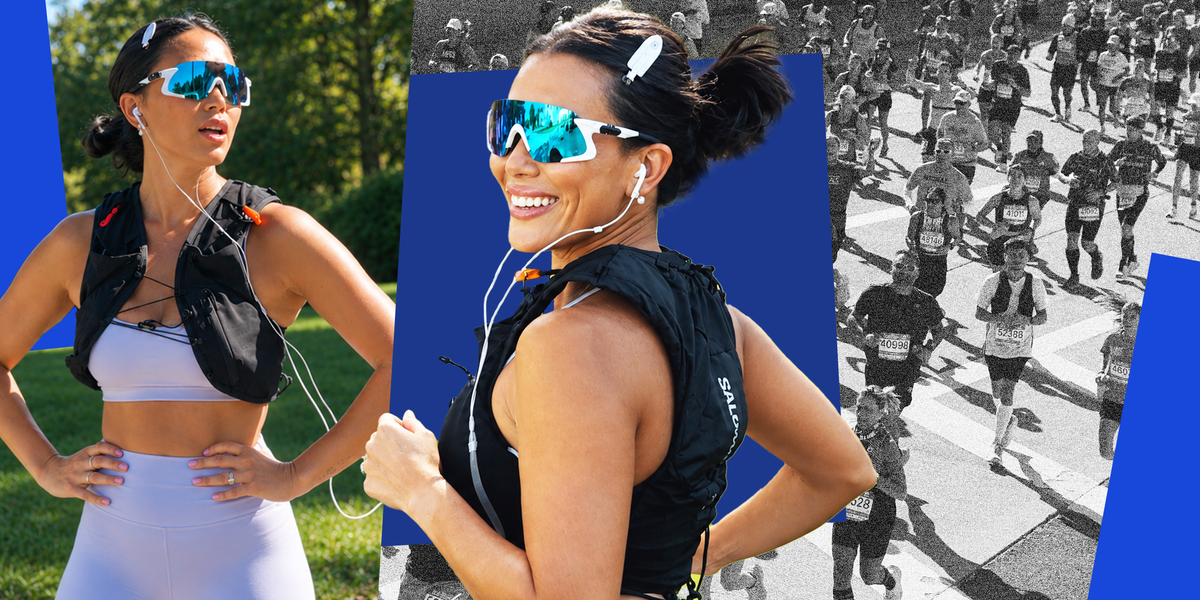
I’m Running the New York City Marathon Topless. The Reason Is Not What You Think.
Full Article
Original Source
Read the full article at Womenshealthmag →KhanList aggregates and links to publicly available news content. We do not host full articles from third-party sources. Always verify important information with original sources.