
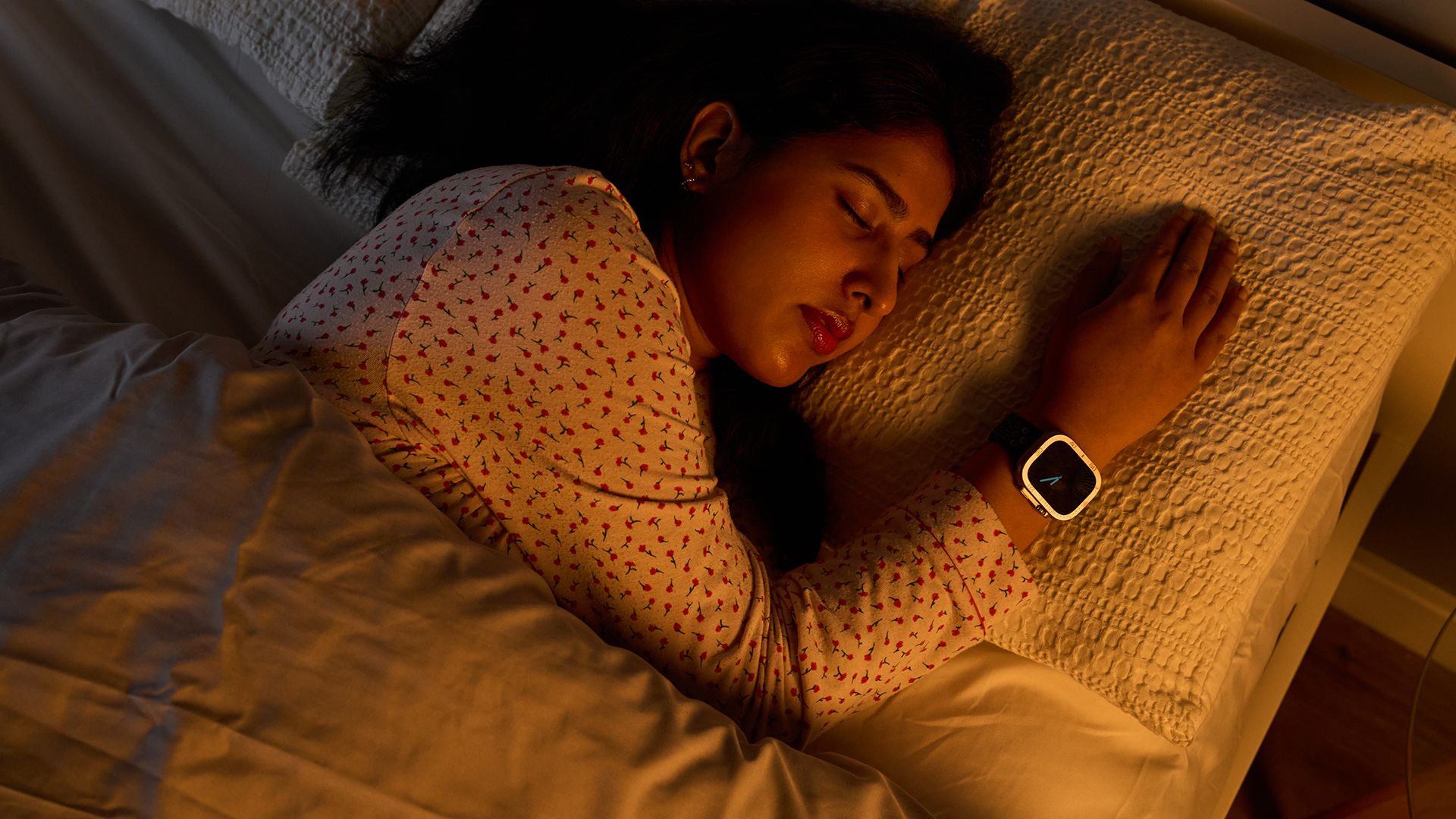
(Image credit: Future) Deep sleep (also known as slow-wave or N3 sleep) is one of four sleep stages we cycle through every night. It's where your body carries out repair work and produces high levels of growth hormone. Essentially, it's where a lot of 'the magic happens'. For most healthy adults, deep sleep should make up 10-20% of their overall nightly sleep.According to my Apple Watch 12, deep sleep makes up around 23% of my nightly sleep on average, which is already in the upper tier. However, I'm still dealing with stress-fuelled 3 a.m. wake-ups, and because deep sleep is associated with a higher tolerance to stress, I've been wondering if more deep sleep is the answer to helping me sleep through the night.To test this, I've adopted a new, simple 10-minute daily habit that science says can help you get more deep sleep. After just 6 days this habit has helped me go from 23% to 28% deep sleep (roughly an extra 38 minutes) a night.The habit? Daily exercise. In fact, a study by the University of Texas indicates that getting as little as 10 minutes of moderate to vigorous exercise per day could help you get more deep sleep.Here Dr. Jeffrey Durmer, a neuroscientist, neurologist, and sleep medicine physician explains how it works and why you should try it if you keep waking up through the night.The daily habit helping me get more deep sleep (Image credit: Future)At first, I started a daily exercise regime by accident. Walking my son to school four times a week is a 30 minute leisurely round trip through a beautiful wooded valley, or a 15 minute white-knuckle cycle ride that leaves me gasping for air on the uphill leg. Guess which one he prefers.People who don’t usually exercise may see an especially strong effect, because even a short and intense workout raises their adenosine levels beyond what they normally experienceDr. Jeffrey Durmer, neuroscientist, neurologist, and sleep medicine physicianOnce he went back to school in September, our twice-daily cycle ride commenced. And, in a way, I was happy to get the workout. I know I should make time for exercise, but I rarely do — so this felt like a routine I could stick to. Not that I had much of a choice. However, I soon noticed that these short bursts of exercise were having a positive impact on my sleep. Falling and staying asleep is something that I can struggle with, but I found myself feeling ready for sleep come bedtime and, occasionally, waking up feeling more refreshed than usual.Get instant access to breaking news, the hottest reviews, great deals and helpful tips. (Image credit: Future)When I read the study this week that linked a minimum of 10 minutes of daily exercise to longer time spent in deeper sleep, I wanted to compare that to my own experience.I track my sleep with an Apple Watch, so I was able to see that, compared to a sedentary period in August before starting my daily exercise regime, my time spent in deep sleep had increased by 5% on average. That sounds like a paltry amount, but for me 5% equates to an extra 38 minutes of deep sleep per night. According to Dr. Durmer, there's a good reason why I — someone who previously rarely exercised — had such a significant uptick in time spent in deep sleep. "This study shows that even a small amount of exercise can increase deep non-REM sleep, the stage that drives much of the brain and body’s restoration," explains Dr. Durmer, Chief Medical Officer of Happy Health."People who don’t usually exercise may see an especially strong effect, because even a short and intense workout raises their adenosine levels beyond what they normally experience." (Image credit: Future)How 10 minutes of daily exercise helps you get more deep sleep "Exercise and sleep have a two-way, virtuous relationship: better sleep improves performance, and regular exercise improves sleep," explains Dr. Durmer, who works with elite athletes to help them sleep better in order to unlock better physical performance.Here, we take a closer look at how regular exercise can help increase the time spent in deep sleep.1. It increases your 'hunger' or drive for sleepFrom the moment we wake up, our sleep pressure begins to build, enabling us to fall asleep at the right time.Also referred to as our homeostatic sleep dive or sleep hunger, sleep pressure is largely dictated by a neurotransmitter called adenosine. (Image credit: Future)"When we exercise, our bodies burn ATP, our main energy source, and that releases adenosine," says Dr. Durmer."Adenosine naturally builds up over the day, and as it accumulates in the brain, it activates receptors that make us sleepy. Exercise speeds up that build-up, which helps us fall asleep."As exercise becomes a habit, it strengthens both the daily adenosine cycle and the regularity of sleep and wake times, reinforcing the virtuous cycle between the two."2. It reduces stress and anxiety For me, stress is a big disrupter of my sleep, making it harder to both fall and stay asleep. However, as Dr. Durmer explains, exercise can help reduce stress for better sleep. In turn, we sleep better and we're better equipped to deal with stress, which perpetuates the positive relationship between sleep and exercise."Exercise also shifts the body toward parasympathetic, or 'rest and digest,' dominance afterward, so the early stages of sleep tend to be deeper and less disrupted," says Dr. Durmer."That deep non-REM sleep is when the body does much of its repair work: releasing growth hormone, calming inflammation, supporting immune function, and improving insulin sensitivity."Keeping a regular sleep-wake schedule adds to these benefits by supporting energy storage in the muscles, cardiovascular health, and nervous system balance."3. It anchors your circadian rhythm I cycle my son to school in the morning, come rain or shine. In addition to the exercise, part of the benefit of this on my sleep is the sunlight exposure. This helps cement my circadian rhythm, which is my body's internal clock. Dr. Durmer explains that the harder you work, the better the sleep benefit. But if you can only do one thing, spending time in natural light in the morning is the most important, as this helps regulate key sleep hormones."Any exercise is better than none for improving sleep and keeping a regular sleep-wake cycle," he explains. "On days you can’t work out, get outside in the sunlight, especially in the morning, and take a short walk to keep your body moving." Follow Tom's Guide on Google News and add us as a preferred source to get our up-to-date news, analysis, and reviews in your feeds. Nicola is the Sleep Editor at Tom’s Guide. With a career in journalism spanning two decades, Nicola brings experience to the team and the knowledge of what makes a great article, whether that’s a how-to mattress cleaning feature, a deep dive into melatonin gummies, or an in-depth mattress review. As a sleep editor, few better understand how important a decent mattress is to the overall quality of our sleep, and precisely how our sleep impacts our physical and mental health. As well as tackling the vast topic of sleep, Nicola joins the raft of expert mattress specialists at Tom’s Guide, who test and compare a wide range of mattresses in order to guide readers towards the very best options on the market.
I’m getting 38 minutes more deep sleep a night thanks to this 10-min habit — and it fixed my 3 a.m. wake-ups
Full Article
Original Source
Read the full article at Tomsguide →KhanList aggregates and links to publicly available news content. We do not host full articles from third-party sources. Always verify important information with original sources.