
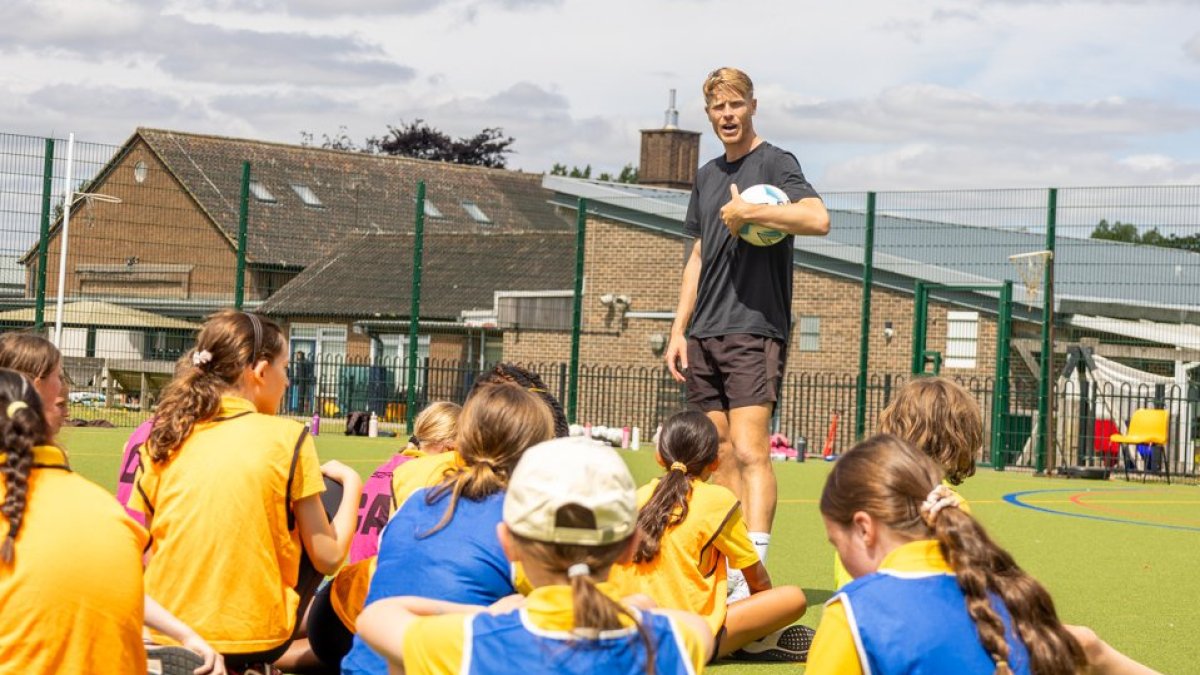
I’m a newbie football mum. Recently, my seven-year-old son Xavi, who previously showed no interest in the game, has started playing and his friendly matches have become one of the highlights of my week. Recently, I caught myself giggling as I saw a dad on the opposing team coach his son from the sidelines, shouting instructions to “run with the ball” with a fervour that suggested his small boy was at the very least in the FA Cup final. Then I saw how overwhelmed his son looked and it no longer seemed funny. What I didn’t know, as a complete newcomer, is that this is not unusual. In fact, Joshua Paul, founder of Fit4Football coaching business and one of the UK’s most popular football coaches, tells me this happens every week on the sidelines. He has had to ask parents to leave the match for shouting at their children. “I offer a trial session for children,” says Paul, who runs his coaching business from Slough. “I’m not analysing the child, believe me. I’m analysing the parent’s behaviour: whether they get lippy, whether they start telling me how to coach.” By being selective, he says he’s created “a lovely community of like-minded parents”. Shorts Paul believes passionately that sport teaches children invaluable life lessons. His team-talk videos, which range from “How to deal with trash talk” to “Great things take time”, have won him hundreds of thousands of followers on Instagram. They’re aimed at football fans and football parents, of course, but the messages can often feel profound whoever you are. “Of course, we’re not coaching football, we’re coaching life skills,” he tells me. “We’re coaching communication, listening, asking questions, focus, kindness.” He teaches children about losing matches and handling disappointment. “I tell players, ‘If you want to be successful at football, then you have to get good at losing because losing is inevitable,’” Joshua says. “Winners lose all the time and take lessons away from the loss. I’m not asking you to like it, but I am asking you to learn how to lose, to move on quickly, to shake hands, to be a good loser and to get back to work the next day.” He believes that as an adult, we know we’ll grow through rejection and difficult periods of life. But as a child, we don’t know what’s coming yet. “I’m telling them, ‘You’re going to be okay, this experience is going to help you’.” He is clear that the best way for parents to support their children’s footballing dreams is to be their biggest fan. “You’re there to tell them they’re great and keep them motivated. They don’t need another coach. They don’t need another teacher,” he believes. “If they get in that car and fear they’re going to get told off, then you’re down the wrong path. No kid has ever quit football because their parent didn’t give them enough advice or didn’t coach them enough. They give up because they say their parents were too involved.” The healthiest attitude is one he’s seen in The Netherlands. “I went to Holland to coach children from an academy, some of the best players,” he remembers. “Their parents stood on the sidelines, drinking wine, breaking bread, chatting about the day’s events. A child got injured and the parent didn’t even break conversation, because they understand it’s the coach that deals with it. The kid got lifted up by his two teammates; they rubbed him down and he was okay.” After a bad game, the best thing parents can do is to show support. “Give them a milkshake or something lovely and tell them, ‘You did great. I’m proud of you, whatever.’ I’m a successful coach because from day one, my dad said to me, ‘I’m proud of you. You can be whatever you want’.” He doesn’t blame parents who let their competitiveness get the better of them, given the aggression still on display among fans at professional matches. Those parents screaming from the sidelines “will have been spoken to like that by their coach or their dad. All we can do is start to dilute the water a little bit.” Joshua Paul says parents must accept their child for who they are, however much you might have harboured stadium dreams Despite the downsides of certain elements of football culture, Paul is delighted with the overall transformation in the game since he was at school in the 2000s. “At school, girls did dance, boys got offered football,” he remembers. “Inclusivity means we’ve doubled the sport. This generation sees the Lionesses, the confidence of Chloe Kelly.” He says that outdated stereotypes are constantly shattered, such as the cliche that all the best footballers come from rundown areas because they “have a hunger to escape”. At the same time, he believes more children who aren’t talented players are enjoying football and sport more generally as people understand the positive benefits for mind and body. “The children that would have stayed in at lunchtimes and maybe been in the computer room are getting encouraged to go outside and get fresh air a little bit more as well,” he says. What if your child doesn’t like football – or, like my eldest daughter, just doesn’t seem keen on sport in general? Paul says parents must accept their child for who they are, however much you might have harboured stadium dreams. However, he says there’s something out there for everyone and the benefits of sport are undeniable. “Without a goal, we are all wandering around. If there’s a sport that she really likes, then focus on getting good at that. As she grows through that, it will carry her into other areas because it’s all connected. His coaching business has the “really cheesy” tagline “Don’t try and be the best, just try and be your best”, which removes comparison. “When we hone in on you and what we can offer the world, then we start to achieve the goal to be your best, feel your best, act your best, play your best,” he explains. His sessions focus on inclusion and importantly fun. “I don’t do substitutes. I don’t do teams. We just play for an hour and a half. I wanted to create a safe space where you come, have fun, let your hair down and learn a little bit.” I genuinely feel more positive and enthusiastic after chatting to him and really hope I might have a “winner’s mindset”. “Everything is out of your control, apart from how you behave and what you do to improve and get better,” he says. “Focus on yourself. A loser will focus on everything that could go wrong, all the glass half-empty stuff. A winner understands that mistakes happen, you’re not perfect and you’re strong enough to get over them.” Joshua Paul’s coaching business is Fit4Football or on Instagram @fit_4_football
I’m a football coach – this is how to help your child handle disappointment
Full Article
Original Source
Read the full article at Inews →KhanList aggregates and links to publicly available news content. We do not host full articles from third-party sources. Always verify important information with original sources.