
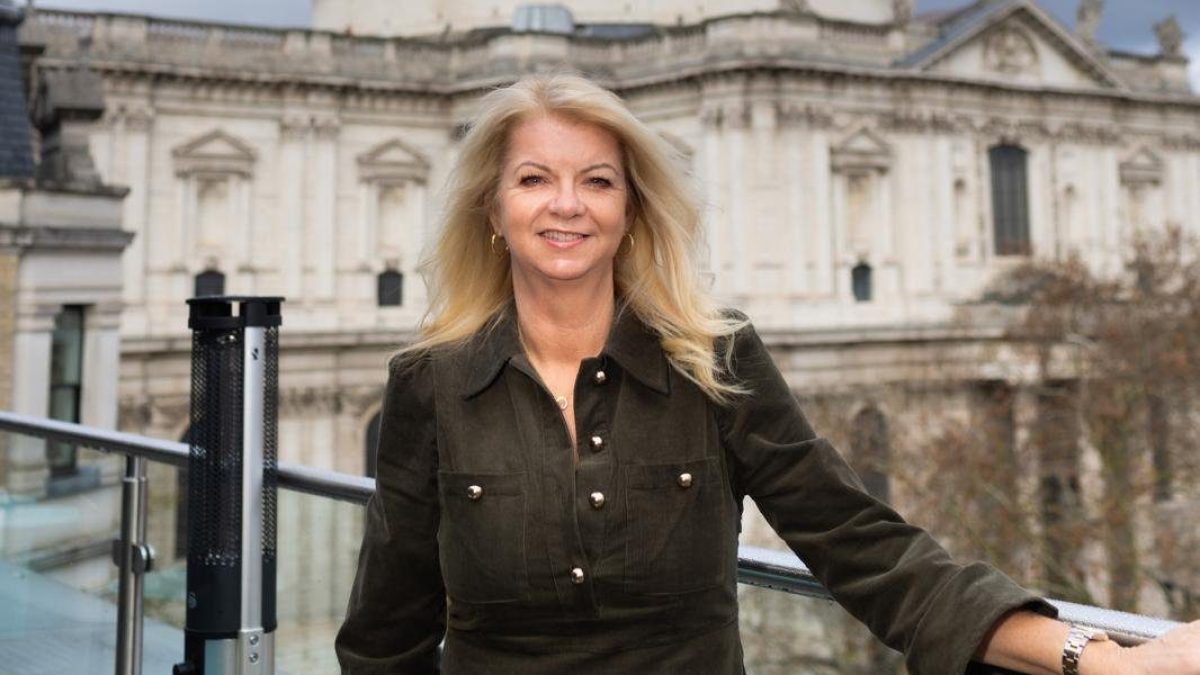
The second season of The Celebrity Traitors is set to begin this week, with a new crop of famous faces preparing to lie, deceive and torment their fellow players. This year’s all-star line-up includes actors Michael Sheen, Richard E Grant and Bella Ramsey, musicians James Blunt and Leigh-Anne Pinnock, journalist and broadcaster Amol Rajan and Love Island host Maya Jama. And it’s not just bragging rights they’ll be battling for: the victor is set to scoop a jackpot of up to £100,000 for a charity of their choice. Ardross Castle in Scotland is the setting for one of television’s most delicious presentations of human behaviour in its most exposed form. Surrounded by suspicion and high-stakes decisions, contestants are constantly watching each other for clues of treachery. But how much can facial expressions, gestures and movements really tell us about a person’s genuine motives? Adrianne Carter, a body language expert with more than 25 years’ experience, decodes how we can work out who is telling the truth, who might be bluffing – and who are the real Traitors in our lives… Shorts Someone insists they’re ‘fine’, but you’re not so sure “When someone tells you they’re fine and they’re not, they aren’t really lying to you so much as protecting themselves, so I’d look for the places where the body language hasn’t caught up with the words. The smile is often a giveaway, because a genuine smile reaches the eyes and fades slowly, whereas a polite one switches on and off at the mouth. You might also see the lips pressed together, a little one-sided shoulder shrug, or self-soothing such as rubbing an arm or touching the neck. Rather than pushing, I’d simply say: ‘You don’t have to talk about it now, but I’m here,’ because that takes the pressure off and people very often come back to you.” Your colleague takes credit for your idea “You already know the idea was yours, so the question isn’t whether they’re lying but whether they knew what they were doing, because people genuinely forget where an idea came from far more often than we’d like to think. The first second after you challenge them tells you a great deal. Genuine surprise is brief, with the eyebrows lifting and the face opening up, and it’s usually followed by something like: ‘Oh, was it yours?’ Someone who knew is more likely to show a flash of fear or shame, with the gaze dropping and the lips pressing together, before recovering and claiming it was ‘a team effort’ or developing a sudden interest in the bigger picture. That shift from ‘I’ to ‘we’ is often the moment they’re quietly conceding the point.” Someone gives you too much information “Over-explaining isn’t proof of deception; honest people who are nervous about not being believed over-explain all the time. What I’d listen to is the shape of the story rather than the length of it. Truthful accounts are usually a bit messy, they come out of order and include odd little details that don’t matter, whereas a rehearsed story tends to be neat, linear and told in the same way every time. Rather than looking for lies and truth, look for signs of comfort and discomfort.” The contesants in season two of The Celebrity Traitors (Photo: Cody Burridge/BBC/Studio Lambert) Someone maintains that they weren’t talking about you, but you’re not so sure “This is one of my favourites, because the tell is very often not in the person you’re talking to, but in the glance they give the other person who was in on the conversation. People check in with each other when they share a secret, and that quick look, sometimes with a suppressed smile or pressed lips, is very hard to control. Notice, too, how quickly the denial arrived. A genuine ‘No, we weren’t’ usually comes with a bit of confusion, whereas a guilty one tends to come fast, a little too firmly, and before you’ve even finished asking.” Your friend suddenly changes the subject “Everybody thinks liars can’t look you in the eye, but people who are lying often hold more eye contact than usual, because they know that’s what we’re watching for. Evasion is far more interesting, and the thing I’d pay attention to is what was said just before the swerve, because that’s the topic that made them uncomfortable. Watch for a small shift in the body at the same moment, such as the feet or torso turning away, or a sudden busyness with a phone or a drink. I wouldn’t pounce on it, however – I’d let it go and come back to the same subject gently later on. If they swerve again, you know it’s something that matters to them.” Someone keeps contradicting themselves “I would look at the story before the face on this one, but with one important caveat, which is that memory isn’t a recording and honest people contradict themselves on small details all the time. What matters is whether the core of the story shifts, and even more than that, what happens when you point out the inconsistency. An honest person will usually say something like: ‘Oh, now you’ve said that, I’m not sure’ – admitting that uncertainty actually makes them easier to trust. Someone who is lying tends to tighten up, get more certain or produce a new explanation that fits perfectly – and that tidiness is often more revealing than the original contradiction.” ‘Gut instinct is far less reliable with strangers,’ says Adrianne Carter Your date seems almost too keen to impress you “Charm isn’t evidence of honesty, it’s evidence of effort. There is nothing wrong with effort on a date, so I’d be looking at whether the interest rather than the charm is genuine. Genuine interest asks you questions and actually listens to the answers, and you’ll see the feet and body pointed towards you and a smile that comes and goes naturally with the conversation. When somebody is performing, it’s all transmission and no reception, the stories are about them, and the smile arrives on cue. I’d also watch how they treat the waiter, because charm tends to be switched on for the person who matters and off for everybody else.” Someone says ‘trust me’ “‘Trust me’ is a request, not evidence, and in my experience people who are trustworthy rarely need to say it, because they’re already showing it. I’d ignore the words completely and watch what the body is doing while they’re said. A small head shake while saying ‘trust me’ is a lovely example of the body disagreeing with the mouth, as is a one-sided shoulder shrug, which tends to signal that the person isn’t fully committed to what they’re telling you. It’s also worth asking yourself why they felt the need to say it at that particular moment, because we tend to reach for reassurance when we sense the other person doubting us.” Someone becomes unusually defensive “Defensiveness tells you that someone feels threatened, not that they are guilty. Being disbelieved when you are telling the truth is embarrassing, and innocent people often react far more strongly than guilty ones, who might have prepared for the question. What I’d look at is the strength of the reaction and whether it’s out of character for them. Anger shows in narrowed eyes, a tight jaw and the head coming forward, whereas fear shows in raised, drawn-together eyebrows and the body pulling back. Fear of being caught and fear of not being believed can look very similar, so defensiveness should only ever start, never end, a conversation.” Host Claudia Winkleman will be overseeing proceedings in season two of The Celebrity Traitors (Photo: Cody Burridge/BBC/Studio Lambert) You have a gut feeling “Your gut instinct is really very fast pattern recognition, so it is useful when you have lots of experience of that person or that situation, and far less reliable with strangers. We also judge comparatively, so the same person can seem more or less trustworthy depending on who’s standing next to them. The Traitors shows this beautifully, because the Faithfuls so often banish on gut feeling and get it wrong, since what we actually read in someone is certainty rather than honesty. For this reason, I would trust your gut as a prompt to look more closely and then ask yourself what you saw that made you feel that way.” The calmest person in the room is not necessarily the most honest person “The best Traitors aren’t the best liars – they are the most certain. Someone who has committed to a story can be far calmer than an innocent person who is anxious about being doubted, and so it is often the nervous Faithful who gets banished. If you want to look past the calm, watch whether it moves with the conversation. Genuine calm still reacts, so the face softens, tightens and flickers as things are said, whereas a controlled calm stays almost too still, with less of the natural fidgeting we all do and an expression that doesn’t change even when the conversation turns towards them.” The pile-on “Suspicion in a group travels through the body long before it’s spoken, and the Round Table – or its real-life equivalent, whatever that group setting might look like – is the perfect place to see it happen. When a name comes up, watch who looks at whom first, because that glance often shows you where the doubt started and who has already formed an alliance. You will see people gradually turn their torsos and feet towards the person under suspicion, and start mirroring the posture of whoever is leading the accusation. Meanwhile, the accused will often begin to self-soothe – touching their face or rubbing their hands – which the group reads as guilt when it’s really just stress.”
I’m a body language expert – my golden rules for spotting a liar
Full Article
Original Source
Read the full article at Inews →KhanList aggregates and links to publicly available news content. We do not host full articles from third-party sources. Always verify important information with original sources.