
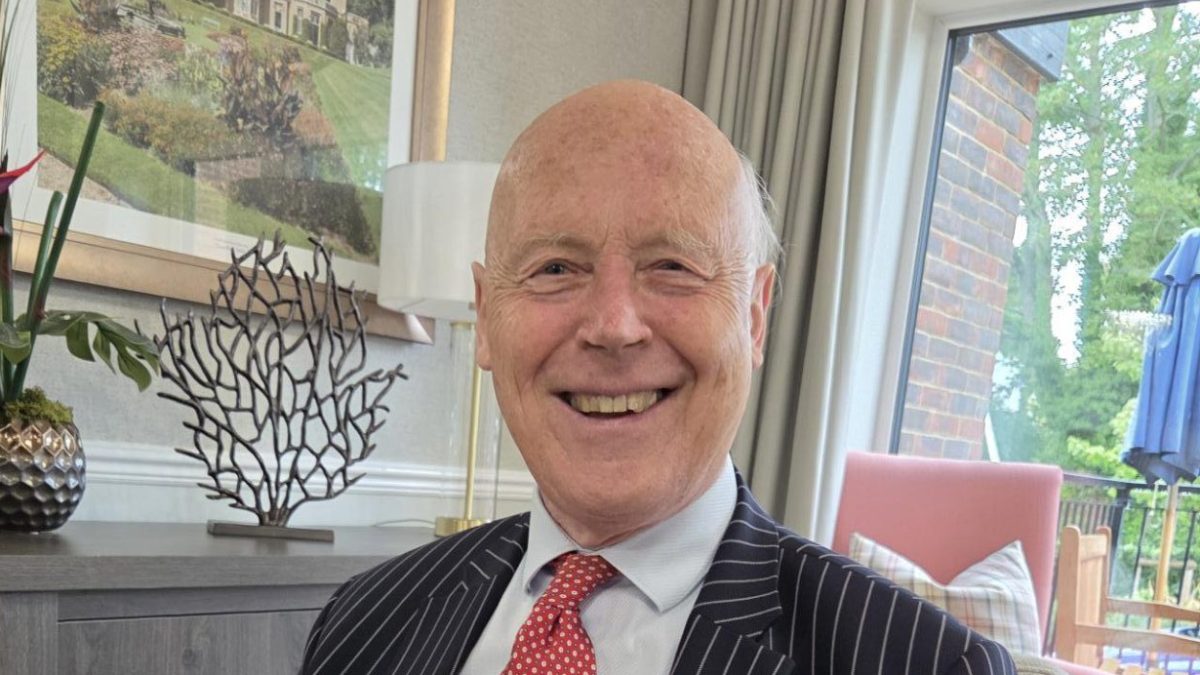
Tim Gould retired from his insurance company job 10 years ago – but just a few years later took up a new job as he “would not have survived financially” without an income. After more than five decades at Lloyd’s of London, the former broker now gives tours of its award-winning building in the capital to students and aspiring insurance professionals four days a week. He said: “I retired in 2016, when I was 68. Then Covid-19 came along, and I felt there was no point returning to full-time work after that. Shorts “I work four times a week. I was originally an insurance broker but after retiring I started taking tours of the Lloyd’s building and showing people how it all works. “I enjoy meeting and talking to people, which I think is very important. It keeps me active and gives me the opportunity to meet new people.” His decision to continue working is partly financial. Despite having a £750,000 pension, he has not used it yet and has delayed taking his state pension. Thousands of people choose to defer taking the state pension as it rises by 5.8 per cent for every year it is delayed, resulting in a boosted payment later in life. Instead, Tim, a father of two, currently lives off his earnings from giving the tours. The income also means he can maintain a lifestyle that includes regular holidays, weekends seeing friends, trips to the opera and stays in hotels. The work takes him from his home in Oxted into London and he spends around £30 a day on travel and food when he is working. He said: “Having an income means I can afford good holidays and help to look after my 12 grandchildren.” Increasingly, UK workers are choosing semi-retirement – reducing their hours to two or three days per week while supplementing their income from pensions and savings. For example, if you need £25,000 per year and earn £12,000 from part-time work, you only need £13,000 from your pension and savings – requiring a pot roughly half the size of full retirement. His working life is a far cry from his former career as an insurance broker, which began at Lloyd’s in 1966. Over more than five decades, he brokered insurance for Hollywood actresses, racehorses and much more. Now, his role is to explain how the “extraordinary” marketplace he knew for most of his working life operates to the next generation. He says the social benefits of continuing to work, like making new friends and maintaining old friendships “keeps you healthier”, and are just as important as the money. Property can be one of the biggest expenses for people in later life but Tim considers his home, at Churchill Living’s Charrington Lodge, reasonable value. His two-bedroom retirement apartment was £615,000 to buy and comes with a £5,367 annual charge. Council tax and electricity are paid separately. He explained: “It is wonderful being here. I moved in when my wife was ill, and sadly she passed away shortly after we moved. “The support I received from the residents, the sales team and our lodge manager has been invaluable. It is a very convenient location, close to the shops and restaurants and, most importantly, the train station.” There is also a substantial property gain behind his financial position. Born in Malta, because his father was in the Navy, he bought a home there in 2003 for £80,000. The property was not privately rented out and family, friends and colleagues stayed there instead, with their contributions covering running costs. Following his wife’s death in 2019, he sold it for £400,000. There is no immediate end date for Tim’s working life, he said. “I would like to carry on for as long as I can, but I will review things when I reach the age of 80.” Why semi-retirement is growing Several factors drive this trend including: Pension freedom – since 2015, you can flexibly access your pension from 55 (rising to 57 in April 2028), making phased retirement practical. Rising state pension age – with state pension age currently rising from 66 to 67, many people cannot wait that long to stop completely. Health and wellbeing – studies consistently show that staying active and socially connected can improve health in later life. Financial reality – many people simply do not have enough saved for full early retirement.
I’m 78 with a £750,000 pension but still work as a tour guide four days a week
Full Article
Original Source
Read the full article at Inews →KhanList aggregates and links to publicly available news content. We do not host full articles from third-party sources. Always verify important information with original sources.