
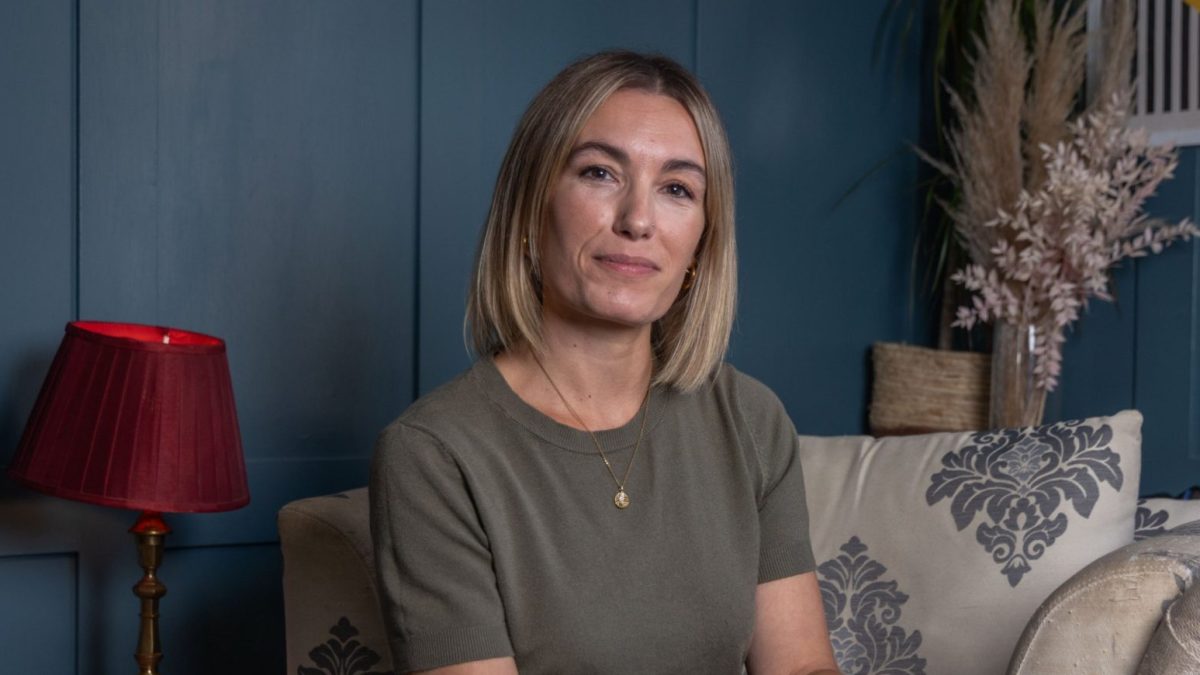
Divorce, once rare and stigmatised, has become mainstream – 42 per cent of marriages now end this way, meaning nearly half of us who get married can expect to experience it in our lifetime. Just as every marriage is different, so is every divorce. In this column, divorcees reflect on their life-changing experience. Helped by the benefit of hindsight, they share advice and reflections. Lindsey Hayes, 44, was unable to afford the family home without having her ex-husband’s name on the mortgage. Here she reflects on the trap of renting, and why it’s increasingly common for midlife women. On paper, I rent as a consequence of being divorced. My situation is not unique: mid-life women are far more likely to move into social housing long-term after divorce, while men are more likely to return to homeownership. A report from Legal & General found that, after a marriage ends, women’s household incomes plummet by 50 per cent on average, compared to a 30 per cent drop for men, while 24 per cent of women report struggling financially after their split, versus 16 per cent of men. Seven years ago my marriage ended and although my ex wanted to sell the house from under me, after a long and expensive battle, I managed to buy our family home. Not buy him out. Buy the house from him. Buying him out wasn’t an option as I was never included on the mortgage or the deeds, meaning that it was never really “our” house. Shorts Having moved mountains to buy the house, it soon became clear that the business I had at the time would not recover from the cost of my divorce, so in an effort to not spend my children’s younger years constantly worrying about money, I decided to sell and downsize to try and steady the ship. The short version of that story is that at the last minute my buyer dropped their price, meaning I couldn’t afford the house I was moving to, and as interest rates were set to increase and I didn’t want to lose my buyer completely, I had little choice but to rent for a while. And here I am four years later, still renting, without much hope of that changing any time soon. The rent cost for the place I found after selling was vastly more expensive than paying my mortgage had been, and although I begrudged paying it, I thought it would only be in the short term. It was during those wild, post-Covid days, when rentals were being snapped up before they’d even been listed. Bidding wars for rental properties were something I had never experienced when I had last rented 14 years prior. It was a brutal place to find myself, having to offer an extra £100 a month just so the landlord didn’t rent it to the next person who walked through the door. While the “single person tax” is not an actual tax, it is the price that we, the single people, pay for living in a world designed for two people. This burden is becoming more urgent. According to new data from the Office for National Statistics, average rents increased in England by 4 per cent in the 12 months. With two incomes to absorb that, it’s not ideal, but probably does not put you at your affordability ceiling. As a single-income household, such as mine, it could and, if I’m honest, already is.It is now much harder to absorb this ever-increasing cost of living alone. Things would be much easier if there was another income, another name on the tenancy, someone to not only split the cost with but also share the worry about it over dinner. But there is no other person for me to navigate this with. And the longer I’ve done this alone, the more I have come to realise that there is an invisible cost to single living that never gets mentioned alongside the rent figures. ‘I have watched friends quickly step into new relationships and shared living arrangements. I can’t help but wonder whether the motivation was financial,’ says Lindsey Hayes (Photo: David McHugh) It isn’t just the rent. When there are two adults bringing in money to a household, there is the opportunity to split everything from the rent down to your Netflix subscription. With one adult earning, the same costs still need to be met but with half the money available. And in fact, when the single person is a woman, her income is potentially even less than her male counterpart, thanks to the gender pay gap. Even where there is an allowance for being a single person, as with council tax, there is only a 25 per cent reduction, which makes no sense at all. The truth is, it is a terrifying place to be and leaves me feeling very exposed. I had an interesting conversation with a girlfriend recently. Also divorced. Also struggling financially. Unlike me, she has met someone new and has started to consider living with them, which surprised me, as having worked so hard to find my peace and create a life that finally feels like mine, I can’t imagine wanting to disrupt that by living with someone. But then I considered other friends who have reached this side of divorce; I have watched a lot of those friends very quickly step into new relationships and shared living arrangements. And if I’m honest, I can’t help but wonder what the real motivation behind those decisions was. Was it love or was it money? It’s not that I think any of them are consciously choosing a partner because the maths works better with two names on a lease. But there is no denying that it does, and therefore that financial pressure does have a way of fast-forwarding the timeline for relationships. And I say this with zero judgement, because whilst it isn’t something I want, the alternative of battling on in a world of costs designed to be borne by two incomes is indisputably hard. The reality behind the rising rental costs is not just the financial impact; it’s the decisions one has to take in order to survive it. Moving from the area where your life is to somewhere a little more affordable. Finding someone to move in with and share those costs. Or, and this is always my own go-to solution, getting more resourceful at finding ways to earn money. But when there are only so many hours in the day and avenues to explore, I have to wonder: how much more resourcefulness do I have in me?
I’m 44 and divorced – I lost our family home and fear I’ll be renting till I die
Full Article
Original Source
Read the full article at Inews →KhanList aggregates and links to publicly available news content. We do not host full articles from third-party sources. Always verify important information with original sources.