
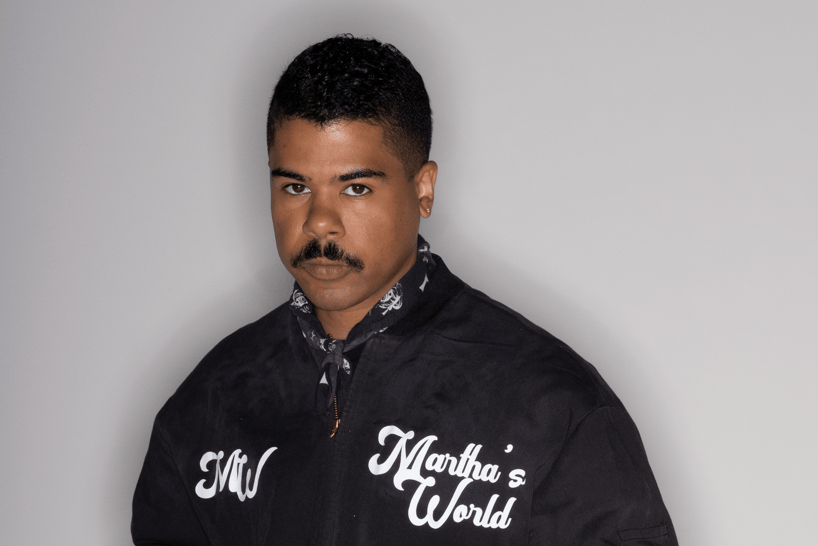
In the most transformative cases, hallucinogenic drugs can come with a troubling personal revelation and debilitating comedown. For iLoveMakonnen, they came with a relocation: During a “psychedelic journey” about 10 years ago, while considering a move from New York City, he noticed his pet dogs chomping on a chew toy bearing an Oregon symbol. “I’m like, ‘This must be a sign,’” he tells Variety over Zoom. Luckily, the cosmic signal aligned with the practical one: “I looked it up. ‘Oh shit, they got some shit I could afford there. I’m out.’” Following his relocation to his current home of Portland, one could say he never fully returned. After breaking out with his drowsily melodic single “Tuesday” and signing with Drake’s OVO Records in 2014, Makonnen became both an emblem of late blog-era spontaneity and a cautionary tale of maze-like industry politics. His sound — a narcotized flurry of dazed melody and weirdo drug raps — made him a forebear for a generation of eclectic SoundCloud rappers like Lil Yachty and others. He might be the only rapper who’s ever collaborated with YoungBoy Never Broke Again, Drake and the late Lil Peep, who called Makonnen an influence. He was also one of the first mainstream rappers to come out as a gay man. His voice and aesthetic brought him into the spotlight, but after a series of half-hearted retirements and at least one cross-country move, he seems to be mostly cool being out of it. In Portland, Makonnen, who says he’s looking to move to Atlanta in the near future, has gotten used to life away from the chaos of the music industry scene in the Big Apple. Things look very different — they’re peaceful. Quieter. A little more lonely. “I’m not here for socializing with people,” he says. On the days he does interact with Portlanders, he finds them to be quirky and inclined to keep to themselves. Free of obvious celebrity, the Makonnen of 2026 enjoys walks through Laurelhurst Park or Unthank Park. If he’s not working or taking a walk, he’s chatting it up with an AI bot, the ultimate judgment-free foil. “[It’s] just [me] coming up with crazy concepts in my head that other humans would usually shoot down and tell me I’m crazy,” he says. When he’s not doing that, he’s stocking shelves at a local supermarket. And he’s enjoying it. After all, what’s not to like about giving people the supplies they need? When I ask Makonnen how his shelf-stocking skills compare to any coworkers, he brushes off the notion of making any comparisons. But he takes pride in the work. “I just want to be more helpful to my community,” he says. Makonnen might not be hunting for national attention, but when he posts social media videos of himself on the job, he gets it. In August 2025, he appeared in TikTok videos of himself flipping burgers at Little Griddle during a fundraiser for fire-damaged Burn Money Studios. The viral clout — one work video earned over 1.3 million TikTok views — boosted its patronage, although Makonnen says his popularity eventually interfered with its regular operations. But for Makonnen, the work is more than just Internet novelty or pocket change he can spend on occasional gambling trips to Las Vegas. “I like to take on the other role, the other side. If everybody looks at me as if I’m some rich man, I want to see what it looks like [if I’m seen as] a peasant,” he says. Outside that layer of perceptual experimentation, there’s something more existential at play. “I’m feeling useful as a human again,” he adds. “I’m not useful in music anymore.” If Makonnen feels like he no longer fits into the hip-hop landscape, that clearly hasn’t stopped him from making a lot of music. Dating back to 2021, he’s dropped intermittent spurts of inspired projects laced with glitchy electronic synths and conflicting feelings. His expanded catalog has never reached the commercial heights of his earlier work, but it’s distinct enough that it’s a shock to hear he isn’t receiving offers for label deals or, really, much of anything. Even his slot as a co-headliner at “Pride in Demand: Portland Queer Takeover” felt like a grim reminder of a clout deficiency. “It was one of my least-attended shows ever,” he says. It’s just one example of what he says is a problem that shouldn’t be one: “I’m gay, I’m colored. I’m from America, [I’ve] got a Grammy-nominated song. It’s like, [I] fit in so many markets where a lot of people can’t go. And it’s like, ‘We still can’t book you.’” It’s unclear how much Makonnen still wants stardom. But tracks like his newly released single “Lie 2 Me” suggest an enduring talent. The track, which features longtime collaborator and rapper-producer Key! (21 Savage, Playboi Carti), is framed in new-wave synths and emotions that flutter as violently as his supple tenor. For the track, Makonnen sings his way through romantic turmoil: “Kiss me like you mean it tomorrow / Not just when we’re fucked up and the lights low.” In his own words, it’s situationship music. For a man who fell out of love with the rigors of the music industry, it’s also a course correction. “I enjoy making music with Key!” he says. “It feels like therapy. It doesn’t feel like a job.” Makonnen’s new Key! collaboration, which belongs to their forthcoming joint album, “Over It,” feels like a return to more innocent times, before rap became a career and the notion of him working a day job was a worst-case scenario. But the truth is, he’s already lived through a haze of bad outcomes: the death of his friend and collaborator Lil Peep; conversations with estranged, seriously ill relatives who finally managed to tell him they were proud. “I’m hearing a lot of apologies, maybe 15 years too late,” he says. He’s more isolated in Portland, but there’s a clarity that comes with it: “I feel like I’m alone. I’m on Earth. This is my thing. If I’m not throwing the party at night, inviting everybody, nobody’s showing the fuck up.” That feeling extends to his place in hip-hop, too, where he believes coming out as gay led to his ostracization. As far as we’ve come, the rap world still doesn’t welcome the LGBTQ+ community as readily as it should. And so his own decision to come out wasn’t just about him. “Look at how many gay artists there are now, and look at how much they’re fucking with all this,” he says. “I’m doing this for the kids after me. I’m not doing this for me.” The thing is, there’s a downside to that honesty: “The only regret is being real, because the world ain’t real.” And even if it was, Makonnen says he knows it wouldn’t necessarily get him a trophy. “Being real is not awarded… I’m not gonna be able to be a star… so I’m gonna go do my real life.” As an early architect of a sound he never got to fully cash in on and an openly queer artist who emerged in an era that wasn’t ready to fully accept him, Makonnen is used to building things he might never get to — or never choose to — enjoy. “Before I was a celebrity, I’ve always experienced being in the service industry,” he tells me. “So I know about servicing more than being serviced.”
ILoveMakonnen on Transitioning From Buzzy Rap Star to TikToker With a Day Job — and Still Chasing His Passion for Music
Full Article
Original Source
Read the full article at Variety →KhanList aggregates and links to publicly available news content. We do not host full articles from third-party sources. Always verify important information with original sources.