
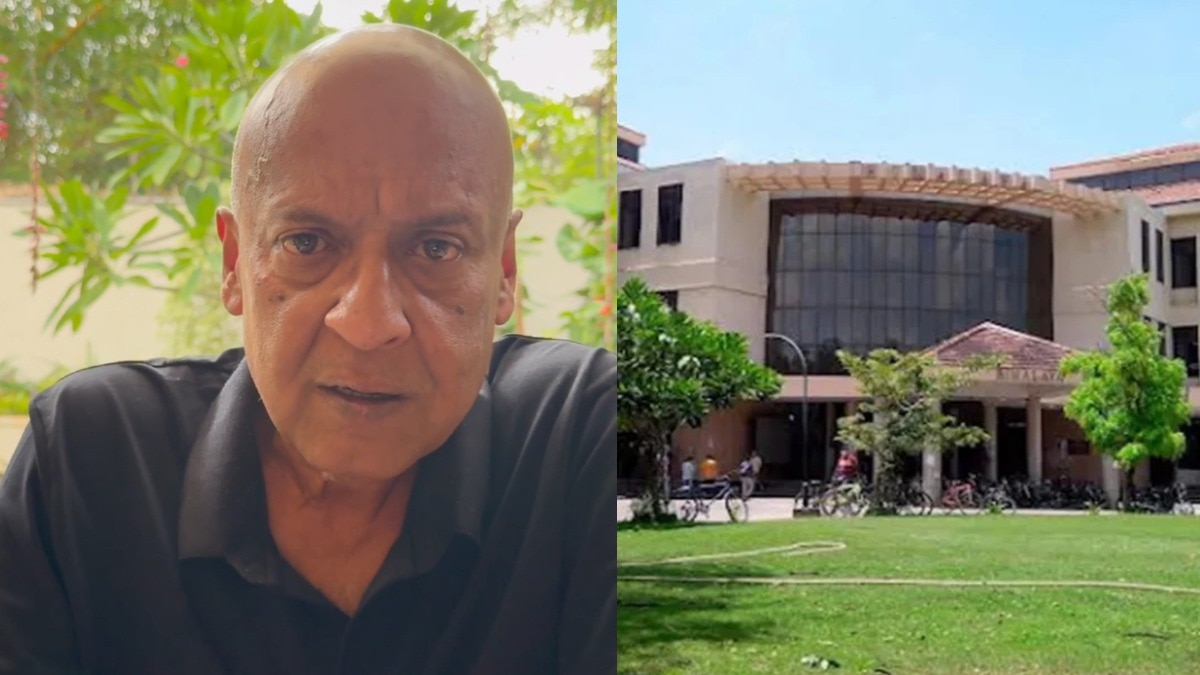
In a post on X, IIT Madras alumnus Ramesh Srivats recalled how student hierarchies in the 1980s shifted from entrance rank to branch, GPA and career plans. His account, offered in a satirical vein, describes these changing measures as an informal order of campus life, distinct from caste by birth and open to change with a student's performance and course of study.In a satirical account of how the idea of “caste” was understood within the IIT of his time, Srivats reflects on his years at IIT Madras in the 1980s. (Image: Ramesh Srivats/X)“I studied in IIT Madras in the 80s and believe me, fully caste-conscious place.” The statement may sound blunt when first read. But Ramesh Srivats, an IIT Madras alumnus who studied there in the 1980s, used the word “caste” in a different sense. In a post on X, he described the changing hierarchies he remembers from his student days, from JEE rank to branch, then to GPA and, finally, to the direction of one’s career.Srivats’s remarks came amid the row over alleged caste discrimination at IIT Bombay following the suicide of second-year BTech student Sahil Wakode on September 18. Wakode was found dead in his hostel room after he was allegedly caught using a mobile phone during a mid-semester examination.Wakode's family has alleged caste-based harassment, and filed an FIR against Professor Doolla, who was the invigilator during the alleged cheating moment. IIT Bombay has said that no disciplinary action had been initiated against him at that stage, and the matter is now being investigated.'CASTE HIERARCHY'– MEANT TO BE SOMETHING DIFFERENT FOR IITiansAgainst this background, Srivats recalled what he described as the informal order at IIT Madras in his time. In a satirical account of how the idea of “caste” was understood within the IIT of his time, Srivats reflects on his years at IIT Madras in the 1980s. His account uses the term in a different sense from its conventional social meaning, describing instead the informal academic and professional hierarchies that developed among students.He recalls how these hierarchies shifted over the years, moving from JEE rank to branch, GPA and, eventually, career prospects, and presents them as part of the competitive culture of campus life.When ‘caste’ changed every year at IIT Madras. (Check out the full video by Srivats)But this order did not remain for long. Within six months, according to Srivats, rank had given way to branch. Computer Science stood at the top, followed by Electronics, Electrical, Mechanical and other branches.He recalled failing Physics in his first year and having to repeat the course during the summer. He went to meet the professor with a friend who had also failed.The professor asked Srivats which branch he belonged to.“Computer science.”“Computer science? What are you doing here?” the professor asked, according to Srivats.The professor then asked his friend.“Metallurgy, sir.”“Ah, then there is a reason why you are here,” Srivats recalled the professor saying.By the second and third years, however, branch too had lost its place in the hierarchy, he said, as students largely remained within their own branches.Then came GPA.THE ‘CASTE’ THAT CHANGED EVERY YEARSrivats described this hierarchy not simply as one of higher and lower marks, but as a two-dimensional arrangement. Those who obtained high GPAs without much study were, in his telling, the “genius” group.Those who studied hard and obtained high GPAs were the “cash cow”. Those who studied much but received low GPAs were placed in another category. At the bottom was the student who neither studied nor obtained good marks.Srivats placed himself in the last group, saying he deliberately never studied enough for anyone to prove that he could have topped had he tried.By the fourth year, he said, even GPA was forgotten. What mattered then was where a student was headed.He recalled a classmate who had secured admission to a university in the United States. The classmate took his friends out for a treat, and Srivats remembered joking that he had already acquired an American accent despite not having travelled far from Madras.The hierarchy then turned towards future plans: admission abroad, IIM, employment and further study.That, Srivats said, was the “caste system” of his IIT years.There was, however, one distinction he drew. The hierarchy changed with the year. It was not, he said, determined by family.“Nobody asked, nobody cared,” he wrote.His recollection ends with a comparison between the changing hierarchies of his student years and the present discussion of caste.“The bad thing,” he wrote, was the obsession with hierarchy. The good thing, in his account, was that the hierarchy could change.- EndsPublished By: Rishab ChauhanPublished On: Sep 23, 2026 14:03 IST
IITian recalls 'caste system' at IIT Madras in the 80s: JEE rank, branch, GPA
Full Article
Original Source
Read the full article at Indiatoday →KhanList aggregates and links to publicly available news content. We do not host full articles from third-party sources. Always verify important information with original sources.