
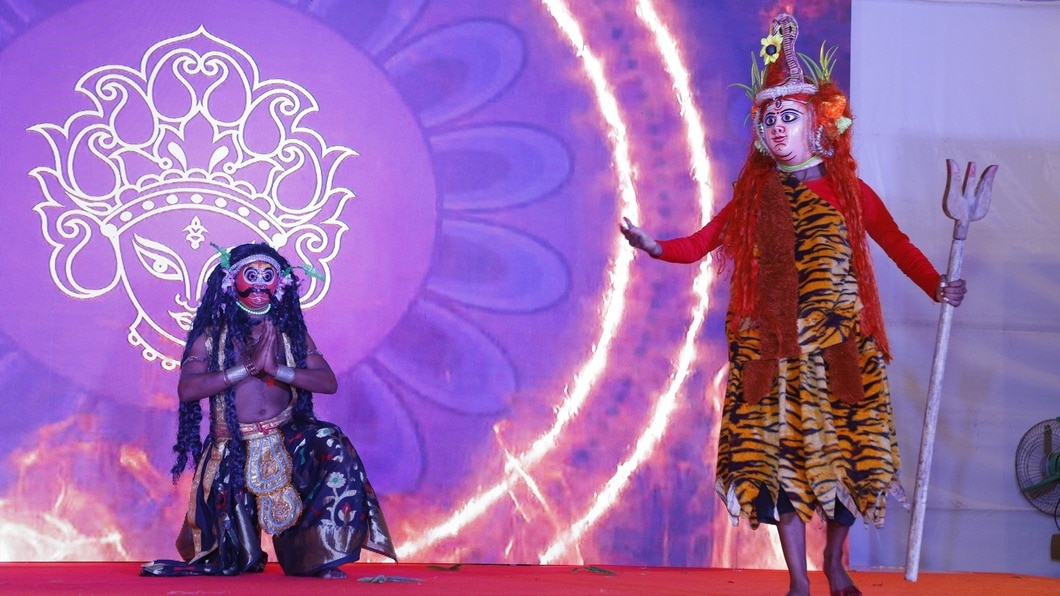
Bengal’s folk dances, Baul music and traditional rituals marked the fourth year of Durga Puja celebrations at ICON Utsav in Lodha ICON, Bengaluru’s Thanisandra. The event brought residents together through performances, food and community activities, with a focus on introducing younger generations to Bengali culture.The celebrations drew on Bangaliyana, a sense of Bengali identity expressed through rituals, music, food and familiar objects from everyday life.For families living away from West Bengal, the annual Puja offers a way to maintain those ties and pass them on to their children.At the centre was Maa Durga in her traditional sabeki form, reflecting the classic aesthetic of Bengali Durga Puja. The pandal dcor featured the hathpakha, a traditional hand fan associated with Bengali households. Its use connected the celebrations to memories of home and the objects that remain part of Bengal’s cultural identity. CHHAU, RAIBENSHE AND BAUL MUSIC TAKE CENTRE STAGEFolk performances formed a major part of ICON Utsav 2026, bringing different aspects of Bengal’s cultural traditions to the celebrations.Chhau presented mythological stories through dramatic movements and expressive characters. The Purulia style is closely associated with West Bengal and was among the traditions highlighted at the festival. Raibenshe, Bengal’s martial folk dance, followed with vigorous movements and coordinated group performances. Its emphasis on strength and physical skill offered residents a different experience of the region’s folk culture.Baul music turned the focus towards humanism, spirituality and the search for meaning beyond social divisions. Together, the performances introduced audiences to traditions that extend beyond the rituals usually associated with Durga Puja.Priyam Mandal, president of ICON Utsav Durga Puja, said this wider experience of Bengal was central to the event.“At ICON Utsav, we want people to experience Bengal not only through Puja rituals, but through the power of Chhau, the wisdom of Baul, the energy of Raibenshe and even the quiet familiarity of a hathpakha. When children encounter these traditions first-hand, culture stops being something they merely hear about and becomes something they carry forward,” Mandal said.FOOD AND FESTIVITIES BRING RESIDENTS TOGETHERAnandomela brought residents together over food and shared experiences, reflecting the community spirit of a traditional Bengali neighbourhood Puja. It gave families a chance to participate beyond the rituals and stage performances.Dhunuchi Naach, the ritual dance performed with incense burners, was also part of the festivities, bringing another familiar element of Bengali Durga Puja to the Bengaluru celebrations.Organisers said the event welcomed residents from different linguistic and regional backgrounds. Alongside its focus on preserving Bengali traditions, the Puja offered other communities an opportunity to experience them through music, dance, food and rituals.For children growing up away from West Bengal, these activities made traditions they might otherwise know through family stories part of their own experience.The emphasis was on participation, allowing the next generation to encounter the culture directly and build its own connection with it.- Ends
ICON Utsav celebrates four years of Bengali culture and Durga puja in Bengaluru
Full Article
Original Source
Read the full article at Indiatoday →KhanList aggregates and links to publicly available news content. We do not host full articles from third-party sources. Always verify important information with original sources.