
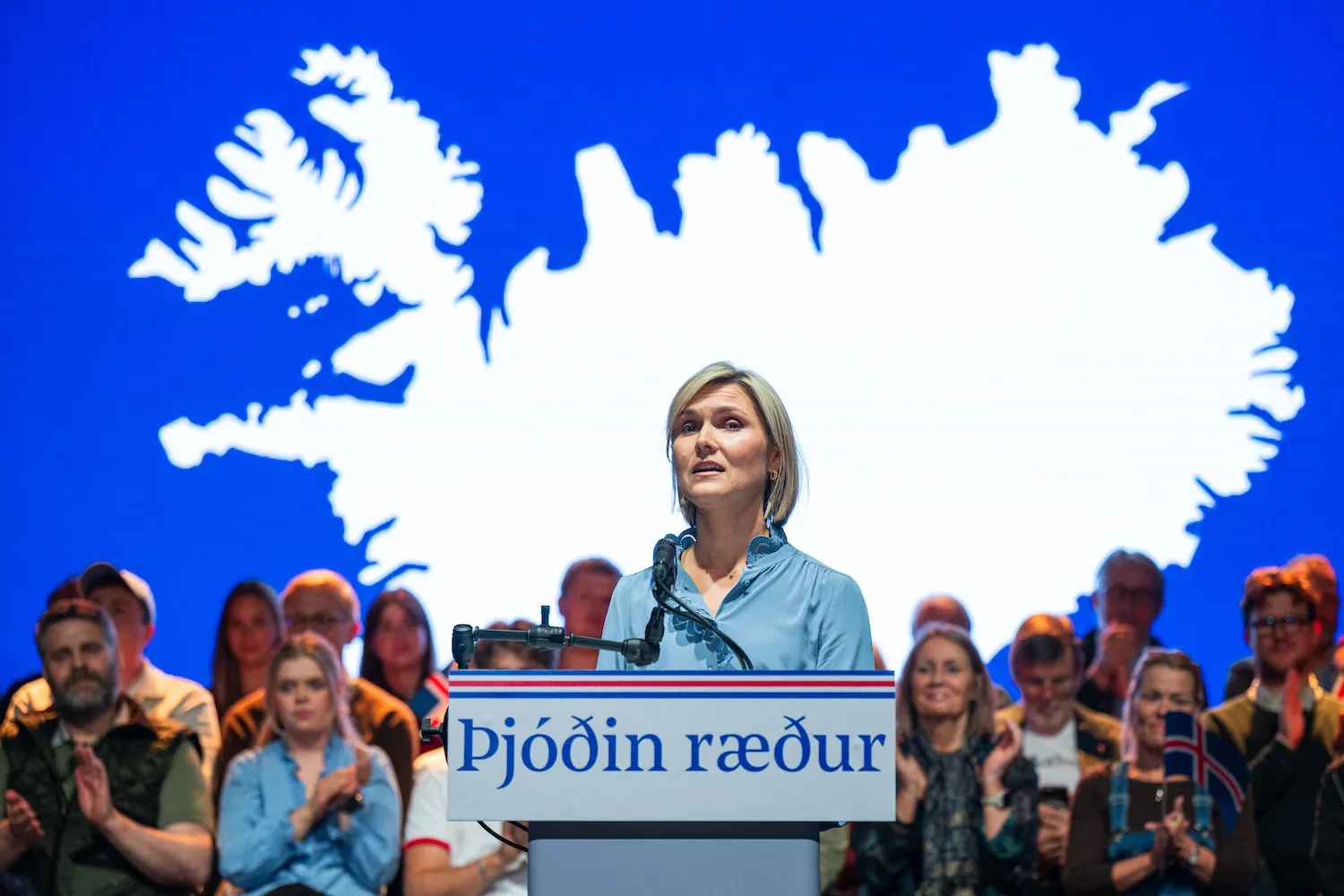
Welcome back to World Brief, where we’re looking at an upcoming referendum in Iceland, more potential flooding in Nepal and Tibet, and looming trilateral defensive drills against North Korean threats. Will Iceland Start Fishing in a Larger Pond? Icelanders will head to the polls on Saturday to vote on whether to restart talks to join the European Union. As U.S. President Donald Trump’s repeated threats to seize neighboring Greenland loom over Reykjavik, the tiny Nordic nation is considering discarding its genial global reputation to seek European protection from the White House’s imperial-esque ambitions. Welcome back to World Brief, where we’re looking at an upcoming referendum in Iceland, more potential flooding in Nepal and Tibet, and looming trilateral defensive drills against North Korean threats. Will Iceland Start Fishing in a Larger Pond? Icelanders will head to the polls on Saturday to vote on whether to restart talks to join the European Union. As U.S. President Donald Trump’s repeated threats to seize neighboring Greenland loom over Reykjavik, the tiny Nordic nation is considering discarding its genial global reputation to seek European protection from the White House’s imperial-esque ambitions. Following the 2008 global financial crisis, Iceland applied for EU membership. The process stalled within just a few years amid concerns that it could lead to the country losing sovereignty over its territorial fishing waters. However, accession talks have been brought back to the table as the Arctic transforms into a hotbed of critical mineral competition and a focal point of the Trump administration’s foreign-policy agenda. Trump triggered a NATO crisis in January, when he threatened to take control of resource-rich Greenland either through economic coercion or military force. NATO chief Mark Rutte eventually convinced the White House to back off, negotiating a framework deal that included greater U.S. access to the Danish territory. However, the incident cast light on Europe’s weakening relationship with Washington, and it exposed new vulnerabilities in the Nordic region. “The international system we have lived with since the end of World War II is shaking,” Icelandic Foreign Minister Thorgerdur Katrin Gunnarsdottir wrote in a recent report on the value of European alliances. Those in favor of joining the EU, including Icelandic Prime Minister Kristrun Frostadottir, argue that membership will not only boost the country’s security but also strengthen its economy. Maintaining the Icelandic krona is “costing us a ton,” Frostadottir told The Rest Is Politics podcast last month, adding that joining the eurozone will bolster investment and foster stability. Those who oppose accession fear that it could cost Iceland both its identity and its sovereignty, including its control over the country’s fisheries. And they maintain that EU membership is not vital for the country’s growth. Iceland already ranks in the top 10 countries globally for GDP per capita; unemployment remains low; and welfare programs provide universal healthcare, preschool, and equal paid family leave. Gallup polling shows a razor-thin margin: 48.4 percent in favor of reopening accession talks and 51.6 percent against, according to a new survey published on Friday. If Saturday’s referendum passes, then the Icelandic government will still need to negotiate the terms of a possible accession deal with the EU. Should such a deal be agreed to, a second national referendum would need to be held on whether to approve it. Today’s Most Read China’s Success Is Forcing a U.S. AI Rethink by Robert A. Manning and Giulia Neaher Is Europe Ready for a New Era of Russian Dirty Tricks? by Christian Caryl Why Iceland Might Finally Join the EU by Gloria Dickie What We’re Following Sweeping devastation. Around 93,000 people in Nepal need assistance after a catastrophic flash flood on Wednesday tore through part of the country along its border with Tibet, the International Federation of Red Cross and Red Crescent Societies said on Friday. More than 500 people have been killed and at least 1,900 others remain missing in Nepal, according to authorities. In Tibet, Chinese officials have raised the recorded death toll to five people, with 558 others missing, though it is unclear if these numbers overlap with Nepal’s. More than 30,000 Nepali security forces have been deployed for relief missions. However, the destruction of critical infrastructure, including bridges and roads, has made access to rural areas nearly impossible. And fears of new flooding have complicated attempted rescues across the affected zone. In Nepal and Tibet, local authorities temporarily paused rescue operations on Friday after a lake formed by the floodwaters began overflowing into nearby rivers, but operations resumed within just a few hours after the threat eased. Still, Nepal’s disaster management authority urged emergency workers on Friday to immediately evacuate “if risk is observed,” and the head of the United Nations in Nepal warned response teams to be “very, very cautious.” Freedom Edge drills. Japan, South Korea, and the United States will hold trilateral military exercises in international waters next month, Seoul announced on Friday. Dubbed Freedom Edge, the annual five-day defensive drills are intended to test readiness against North Korean nuclear and missile threats. Last week, Washington cut short its Ulchi Freedom Shield military exercise with Seoul, citing Trump’s “very good relationship” with North Korean leader Kim Jong Un and South Korea’s failure to adequately help the United States combat Iran. Then on Monday, the White House canceled a joint amphibious landing drill with U.S. and South Korean troops that was scheduled for September. Some experts believe that the scale-downs were part of a larger strategy to convince Kim to rejoin denuclearization talks. However, Pyongyang’s continued ire over Washington’s involvement in the region—even in a downsized format—suggests that such de-escalation efforts have proved to be ineffective, prompting the White House to go ahead with the Freedom Edge exercise. The deaths of kings. On Friday, Norway mourned the death of King Harald V, who died at age 89 while battling a bacterial blood infection. His son, Prince Haakon, will take the throne. Harald’s 35-year reign was notable for his marriage to a commoner, Sonja Haraldsen; for renovating the Royal Palace in Oslo; and for inspiring patriotic unity after two coordinated terrorist attacks in July 2011 killed 77 people, marking the country’s deadliest peacetime atrocity. As the country’s first Norwegian-born monarch since the 14th century, Harald’s time in power was also riddled with scandal. Documents released by the U.S. Justice Department this year detailed a yearslong friendship between convicted sex offender Jeffrey Epstein and Norwegian Crown Princess Mette-Marit, Harald’s daughter-in-law. The revelation undermined Mette-Marit’s perceived suitability as a future queen and triggered calls for the monarchy’s abolition. Meanwhile, Uganda on Thursday confirmed the death of a tribal monarch, Tooro King Oyo Nyimba, at age 34. Known as the “boy king,” Oyo became the world’s youngest reigning monarch when he took the throne of the tribal kingdom of Tooro in western Uganda in 1995 at just 3 years old. According to Tooro Prime Minister Calvin Rwomiire Akiiki, the identity of Oyo’s heir will be formally revealed at a later time. Oyo’s death on Thursday shocked Ugandans, who did not know that Oyo was being treated for an unspecified illness abroad. “This is very difficult to comprehend,” Ugandan Deputy Parliament Speaker Thomas Tayebwa said, noting that Tooro authorities had recently maintained that Oyo was in critical condition but alive. The ancient Tooro kingdom has no political authority, but its monarchs wield power as custodians of tribal culture. What in the World? In a video released on Sunday, Colombian President Abelardo de la Espriella announced he would order the country’s immigration service to begin doing what? A. Draft strict new immigration legislation B. Accept a greater number of refugees from Venezuela C. Receive deported migrants from the United States D. Conduct raids with Colombian police Odds and Ends Ukrainians can’t get enough of President Volodymyr Zelensky’s new four-legged friend. The wartime leader took a step back from his usual schedule on Tuesday to snuggle with a 3-month-old American pit bull terrier, gifted to him by retired U.S. boxer Terence Crawford. Named Freya after Zelensky’s other pet project, Freyja—Ukraine’s proposed missile defense system with Europe—the puppy represents Kyiv’s efforts to win a battle of visuals amid repeated Russian strikes. Notably, Freya’s grandfather survived Russia’s devastating Bucha massacre in 2022. And the Answer Is… D. Conduct raids with Colombian police Recent government data suggests that there are hundreds of thousands of Venezuelans who have fled economic and political crises to Colombia—and now they have to worry about deportation, FP’s Catherine Osborn writes in Latin America Brief. To take the rest of FP’s weekly international news quiz, click here, or sign up to be alerted when a new one is published.
Iceland’s EU Ambitions
Full Article
Original Source
Read the full article at Foreignpolicy →KhanList aggregates and links to publicly available news content. We do not host full articles from third-party sources. Always verify important information with original sources.