
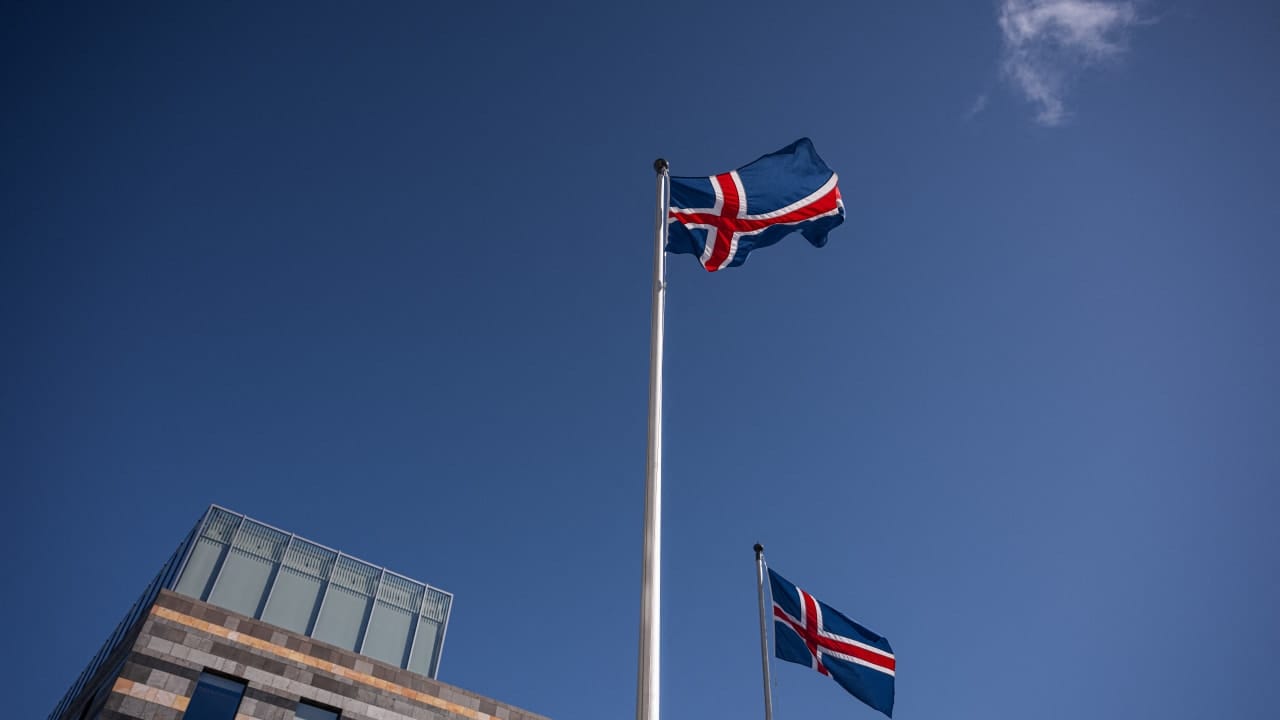
Iceland first applied to join the EU in 2009, amid a financial crisis that hit the country's small, exposed economy especially hard, and talks ended under a Eurosceptic government in 2013.Follow us on GoogleAn Icelandic flag flies outside Reykjavik City Hall in Reykjavik, Iceland, on August 27, 2026, two days ahead of a national referendum on whether Iceland should resume European Union accession negotiations.(photo credit: Jonathan NACKSTRAND / AFP via Getty Images)AUGUST 29, 2026 12:40Updated: AUGUST 29, 2026 12:42Icelanders voted on Saturday on whether to reopen membership talks with the European Union, with islanders split down the middle after a campaign focused on the cost of living, security, sovereignty, and control over fishing waters.The race is too close to call. A Gallup poll on Friday suggested a narrow majority opposed reopening negotiations, a slight shift from earlier surveys that pointed to a narrow lead for supporters of renewed talks."Yes" campaigners backing talks say joining the bloc could ease high interest rates and offer more security in a world unsettled by the war in Ukraine and US President Donald Trump's threats over another Arctic island, Greenland."No" campaigners argue EU membership would threaten the island's sovereignty and fishing waters."Today is our encounter with history," Iceland's former President Olafur Ragnar Grimsson, a campaigner against EU membership, said in a post on social media.Olafur Ragnar Grimsson, Chairman Arctic Circle and former President of Iceland, attends the Arctic Circle Assembly at Harpa Concert Hall on October 10, 2019 in Reykjavik, Iceland. (credit: Matthew Eisman/Getty Images)Should voters say "yes," that would only open the way to discussions with Brussels. Iceland would then have to hold a second referendum, likely several years later, on whether to join the EU.Old questions, new urgencyIceland first applied to join the EU in 2009, amid a financial crisis that hit the country's small, exposed economy especially hard. Talks ended in 2013 when a Eurosceptic government shelved the process.Renewed geopolitical turmoil has brought fresh urgency to an issue Icelanders have debated on and off for decades.Foreign Minister Thorgerdur Katrin Gunnarsdottir, who has been backing 'yes', told Reuters last week that Saturday's vote boils down to a simple question: can Iceland still afford to stand apart in a world where old certainties are crumbling?"The international order that underpinned our security and prosperity for decades is under serious pressure," she said. "In times like these, small nations need to think carefully about where they stand and who stands with them."Interest rates, cost of livingDebates inside Iceland have focused more on interest rates, fishing rights and the cost of living than on security.Iceland has grappled with persistently high inflation and rates that made mortgages punishingly expensive, and supporters of a "yes" vote say EU membership, and possibly adoption of the euro, could offer some relief. Iceland's central bank rate stands at 8.00%, against 2.25% at the European Central Bank."It would not solve Iceland's structural faults, but it could become a catalyst to a more healthy economy," said Vilhjalmur Hilmarsson, chief economist at Viska, one of Iceland's largest labor unions.Opposition leader Gudrun Hafsteinsdottir, who has led the "no" campaign, has argued the economic case is overstated."These are not problems that Brussels will solve for us. These are problems that Icelandic politicians must solve," she said.Fisheries as sticking pointUnder EU rules, fishing quotas are based on historical fishing patterns among other things. Some officials argue that would let Iceland keep control of its waters, since no EU country has fished there for decades.Opponents aren't convinced. "I know that the European Union will come up with some promises of some flexibility, especially in the beginning, but we know that it will not be for good," Hafsteinsdottir said.A foreign ministry memo estimates accession talks could start by the end of 2026 and take 18 to 24 months, if Saturday's vote favors reopening negotiations.Iceland must also hold a general election by November 2028, adding a further layer of political uncertainty to any negotiating timetable that stretches into that period.Polling stations opened at 8:00 a.m. local time across the nation of roughly 400,000 people. They are due to close at 9:00 p.m. local time.Follow us on Google
Iceland votes on whether to start EU membership talks, results too close to call
Full Article
Original Source
Read the full article at Jpost →KhanList aggregates and links to publicly available news content. We do not host full articles from third-party sources. Always verify important information with original sources.