
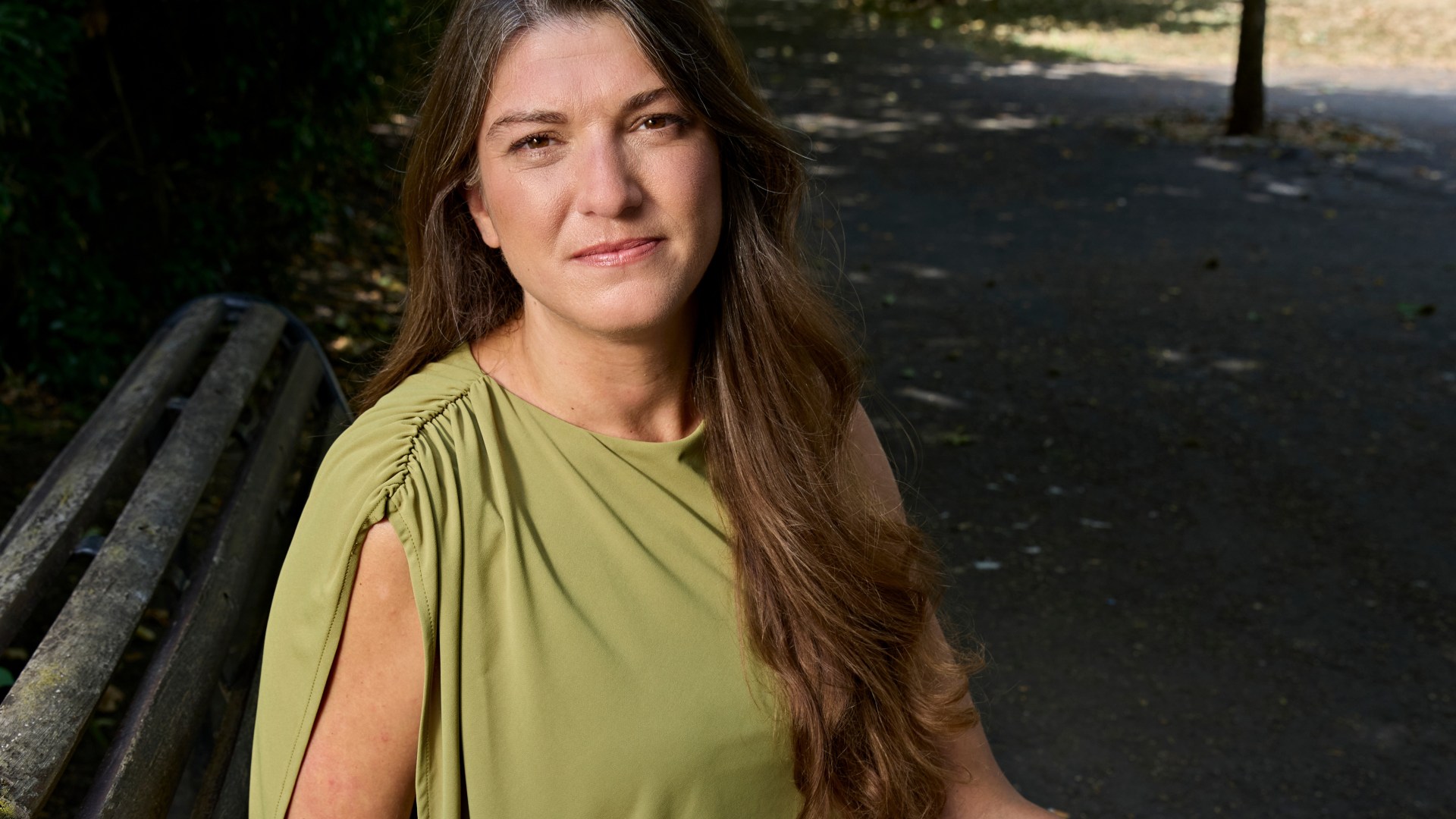
FOR 15 years Carrie Clark religiously took the medication she was prescribed in the wake of her dad’s death. That was, until she began to question if it was making her feel worse, not better. What she didn’t expect when she came off the drug, prescribed more than 24.4 million times in England in 2024, was to be plunged into a state of terror so severe she was “frightened of absolutely everything all the time”. After months of no answers, Carrie was found to be suffering a little-known but not rare condition that can leave people suicidal. Carrie Clark’s life spiralled into a living nightmare when she came off her prescribed medication after 15 years Credit: Lorna Roach News Group Newspaper Carrie, above with her partner Sanjay, says she was ‘frightened of absolutely everything all the time’ for months Credit: Supplied by Carrie Clark For Carrie, the scariest thing of all was that she had no idea what she was afraid of. “There was nowhere I could go to feel safe,” Carrie told Sun Health. “When I was out of the house, I was scared of being outside, and when I was in the house, I was scared of being inside.” Nothing could soothe the 37-year-old as she paced around her home, scratching at her crawling, burning skin, worrying her partner, Sanjay, 37, a tech consultant. Carrie, a research assistant from Cheltenham, says: “I would try to watch something easy and light-hearted like The Simpsons, but I could never get to the end of an episode because I would panic. “I love to read, but I had an overwhelming sense that something terrible would happen if I finished the part I was reading.” It would be tempting for doctors to assume she was suffering a mental health relapse, having come off her antidepressants. Rather, she had a little-known syndrome called akathisa, which can be can be a side effect of mental health medications. or triggered by withdrawal from it. “I spent a lot of time torturing myself trying and failing to manage these agonising symptoms that I was told were all in my head,” says Carrie. Akathisia makes patients feel constantly on edge, described by the Royal College of Psychiatrists as “a feeling of inner restlessness and inability to stay still”. It’s not rare, but is “under-recognised”, says Dr Mark Horowitz, who treats patients with the condition at the National Psychiatric Drug Deprescribing Clinic at North East London NHS Foundation Trust (NELFT). He tells Sun Health: “Akathisia is one of the worst and most dangerous consequences of too rapid reduction of psychiatric drugs, like antidepressants and antipsychotic drugs. “It is a distressing state characterised by intense inner restlessness, agitation, a feeling of terror and an urge or compulsion to move. “Sometimes people describe it as their ‘nervous system being on fire’.” She was diagnosed with a little-known syndrome called akathisa, which can be triggered by withdrawal from mental health medications Credit: Lorna Roach News Group Newspaper Carrie was diagnosed with bipolar aged 15 after her dad’s death, but has questioned the legitimacy of her diagnosis Credit: Supplied by Carrie Clark Carrie says: “It’s impossible not to move and the fear you feel is almost indescribable. “It’s called a chemical terror – a physical state of fear – and you are frightened of absolutely everything all the time, while knowing it is ridiculous. “Even walking down the street, I would be so frightened that I was about to see something awful or that something bad was about to happen. I was on permanent high alert and nothing I did made me feel safe.” Akathisia is not officially recognised as a medical condition, so there are no concrete estimates of how common it is. Carrie is currently symptom-free but the experience of akathisia will stay with her forever Credit: Supplied by Carrie Clark Carrie’s first akathisia episode struck in 2020 Credit: Lorna Roach Akathisia Alliance, an online campaign group, also says the syndrome is “dangerously under-recognised”. What makes it tricky to identify is that the symptoms can resemble a ‘rebound’ of a mental health condition – much like other antidepressant withdrawal symptoms, including trouble sleeping, confusion and headaches. Dr Horowitz says the symptoms of akathisia are very different from, and more severe, than the mental health condition itself. “Some people describe these symptoms as the worst and scariest experience of their lives,” he says. “This up-ends their lives as such people are unable to work for long periods, rely on friends and family to look after them. “People become highly suicidal. The symptoms are often mistaken for a mental health condition like agitated depression, mania or even psychosis because most doctors are not aware that coming off psychiatric drugs can cause this effect.” The problem is further compounded because doctors may increase the dosage of medication causing the issue. “People in this state can be very sensitive to new drugs, and so prescribing more drugs can lead to worsening of their symptoms, and can occasionally be life-threatening,” says Dr Horowitz. Carrie was diagnosed with bipolar aged 15, six months after her dad’s death, but has questioned the legitimacy of her diagnosis. “In hindsight, I don’t believe I ever had bipolar disorder,” she says. “I believe I was suffering from trauma as a result of my dad’s sudden death. My diagnosis was never once reviewed or checked; I was put on these medications, and that was that.” Carrie’s first akathisia episode struck in 2020, at which point, she had been on antidepressants for 16 years and the antipsychotic drug quetiapine for 13 years. Akathisa is not rare, but is ‘under-recognised’, says Dr Mark Horowitz, who treats patients with the condition Credit: supplied Carrie reached a crisis point around four months into her nine-month akathisia episode and collapsed on a walk Credit: Lorna Roach Single, jobless and living at home with mum in her 30s, she felt frustrated that despite her medication, she was at her lowest ebb. She decided to come off the antidepressant sertraline, against doctors’ advice, but stayed on the antipsychotic. “It didn’t make sense to me that I had been taking all these medications and I felt worse than I had in my life,” she says. A month later, Carrie recalls: “I was in bed one night and woke up with that stiff feeling you get when you’ve been lying in the same place for too long. “Normally, you can turn around and move to a different spot and the relief sets in. But when I turned, the relief never came and that feeling of stiffness lasted for the entire time.” Some doctors compare the restlessness to tics seen in patients with Parkinson’s disease or restless leg syndrome. Carrie would fight the urge to move, but it was an “all-consuming” effort. She describes it like a stiffness throughout the body that you can’t get rid of. Carrie says: “I couldn’t do any work – I would sit at my computer for about five minutes before I had to get up and walk around.” After three months, Carrie restarted sertraline in a desperate attempt to rid her symptoms, and gradually, over six weeks, she felt better. However, neither she nor GPs connected the dots – that she had been experiencing sertraline withdrawal. In February 2023, she had stopped sertraline again because she and Sanjay wanted a child; Antidepressants can be used during pregnancy but a discussion with a doctor is necessary. Carrie says episodes made her feel fear that is ‘almost indescribable’ Credit: Lorna Roach SYMPTOMS OF AKATHISIA Akathisia symptoms are typically broken into the internal experience, and the behaviours. Internally, someone may have: Intense inner agitation; a feeling of terror, severe discomfort (mainly in the legs) Irresistible urge to move Psychological distress; Impatience, irritability, panic Inability to relax The behaviours they may show include: Pacing Restless legs; Shifting weight standing, tapping feet, uncrossing and crossing legs Body rocking or shifting Squirming or fidgeting When her symptoms erupted again, doctors considered everything from vitamin deficiencies to diabetes, and neurological disorders. They ran a battery of blood tests, neurological tests, and she was sent for an MRI, but everything was clear. Carrie was ultimately told she was suffering from panic attacks. While she managed to hold down her job, she regularly missed important meetings in London. Her friends, family and Sanjay were supportive but it was very obvious to them that there was something seriously wrong with her, Carrie says. She reached a crisis point around four months into her nine-month akathisia episode, when she collapsed on a walk around a park near home, one she had been to many times before, with Sanjay. “I lost my mind,” Carrie recalls. “When I got home, I belted around the house, screaming and crying, pulling at my clothes and beating my fists on the wall. “I still didn’t know what was happening and it suddenly hit me that this wasn’t going away. “It wasn’t until I visited a psychotherapist who looked very closely at my medication history [that we] realised the correlation between my symptoms and sertraline. “I researched withdrawal conditions and found akathisia.” Carrie returned to sertraline and it took 18 months for her to feel better. But her ultimate goal is still to come off them, as well as the antipsychotics, believing she does not have bipolar. She has been “microtapering” since January, whereby the dose is reduced by as little as two per cent at a time. So far, she has only experienced tinnitus, which lasted around four months. The NHS warns patients taking antidepressants must only stop the medication with the help of their doctor. Dr Horowitz authored a landmark textbook for how to safely come off antidepressants, the Maudsley Deprescribing Guidelines. Maudsley Hospital in London is the largest mental health training institution in the UK. He says: “For people considering stopping antidepressants, the key message is not to be frightened of coming off them, but to do so carefully. “Coming off psychiatric drugs like antidepressants over months or longer, often using a liquid version of the drug with a technique called hyperbolic tapering – outlined in the Maudsley Deprescribing Guidelines – reduces the risk of these catastrophic outcomes.” Carrie is currently symptom-free but the experience of akathisia will stay with her forever. She says: “I still have trauma flashbacks. If I’ve sat in one place for too long and I get stiff, I’m plunged back into those feelings of discomfort [because stiffness is a symptom]. “What I went through will never leave me.”
I was left in the grips of ‘chemical terror’ after STOPPING common drugs…I lost my mind & ran around the house screaming
Full Article
Original Source
Read the full article at Thesun →KhanList aggregates and links to publicly available news content. We do not host full articles from third-party sources. Always verify important information with original sources.