
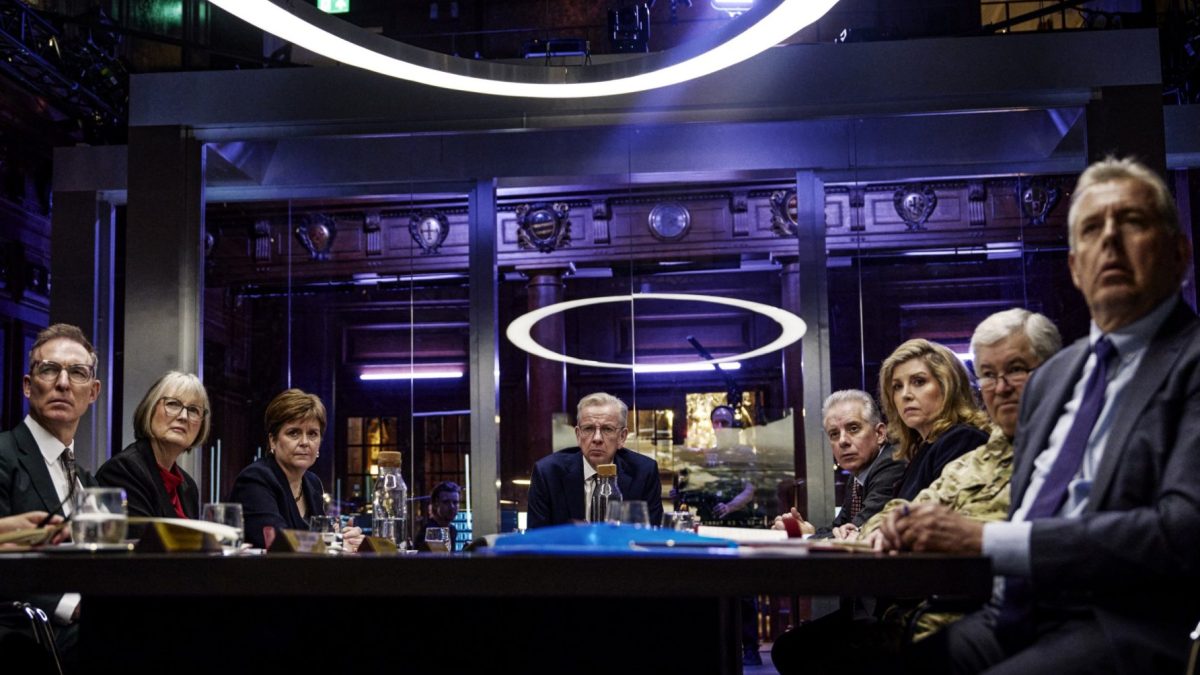
In his speech at the UN General Assembly, Andy Burnham said the UK was setting up a new centre to “stem the poisonous tide” of disinformation coming from hostile states. Burnham said the UK and its allies had been subjected to an “industrial-scale assault” by hostile countries, including Vladimir Putin’s Russia, and warned that Russian agencies were using “every means at their disposal” to spread lies and disinformation. It was the latest warning of the threat that Putin’s Russia poses to the West. But could Russia directly attack Britain? And if it did, would the UK be able to defend itself? That’s one of the questions being posed by a televised wargame being broadcast this week. Shorts Britain’s limited options when faced with a belligerent Russia came as a shock to the former cabinet ministers playing a fictional UK government in Sky’s The Wargame. But they shouldn’t have done. The warnings over Britain’s hollowed-out Armed Forces, and its lack of civil defence at home, have been sounding loud and clear for years. The four-part drama, whose first episode aired on Monday night, plays out what would happen if Russia saw Britain as soft and vulnerable enough that it could target it as Nato’s weakest point – and what British leaders and commanders would be able to do about it. With two other long-term Russia specialists, I played the “Red Team” for the series, acting out possible Kremlin decisions and inflicting them on a startled “Blue Team”, a fictional British cabinet led by Michael Gove as prime minister and the formidable Penny Mordaunt as defence secretary. We were presented with actions the production team needed Russia to take to move the plot towards Thursday’s dramatic series finale – and our job was to see if they could fit plausibly into Russia’s doctrine, capabilities, objectives and decision-making, and then launch them at the UK. That’s a role I’ve played before in real life – helping organisations like Nato understand the Kremlin’s thinking and its options, in wargames played out behind closed doors instead of on Britain’s TV screens. It comes after decades of studying and explaining why and how Moscow does what it does. Keir Giles, pictured, warns that it’s never been more urgent to start taking the needs of national defence seriously In this wargame, we could also add our own ideas for how Putin might go about spoiling the British cabinet’s day. So we helped ourselves from the buffet of malevolence at the Kremlin’s disposal – and it swiftly became clear that not only was that far more than would fit into four hour-long TV shows, it was far more than the Blue Team could cope with. Some of the things we threw at Britain made it through into the final cut. Others – like challenging British interests elsewhere in the world in order to distract the government or the Armed Forces at a critical moment – never even made it into Blue’s discussions. They were already overloaded with the dilemmas being presented to them by Moscow and being forced into progressively worse decisions to deal with them. So you won’t see in The Wargame how Britain could face a Russian political or military challenge to its overseas bases in Gibraltar or Cyprus, the targeting of British civilians and servicemen across Africa, or Moscow’s diplomatic manoeuvring with countries in Europe and beyond. You also won’t see the launch of powerful long-range attack drones at data centres, airports and other key infrastructure from ships of Russia’s shadow fleet in the seas off Europe. The fictional cabinet already had enough difficulty realising, when they finally decided they needed to call the Americans for help, that, of course, the Kremlin team was going to have called them first. Other gameplay didn’t make it into the final cut for dramatic reasons, or because it was just too intricate to fit into a TV show. The behind-the-scenes diplomatic work that would lead the United States to call for British restraint and de-escalation instead of accepting that the UK had a right to retaliate would make for a lot less exciting television than images of explosions and arguments between British politicians. But it’s all part of how Russia would seek to outmanoeuvre the UK – or any other country it decided to challenge in order to try to bring down Nato as a whole. The Wargame focuses on a military confrontation. In reality, Moscow’s strategy would be far broader, and an attack on all available political, diplomatic and information fronts. Former ministers, military leaders and strategists were thrust into a simulated crisis in the Sky TV series, revealing the gaps in our defences (Photo: Justin Downing/Sky UK) The show paints a grim picture. It’s designed to ram home the consequences of three decades of thinning out British defence capability. When the chief of the defence staff, played by General Sir Richard Barrons, asks: “I need to know what the current state of our sea, land, air and missile defences are”. The reply is: “We’ve got bugger all.” Barrons has been ringing the alarm bells over dangerous defence gaps for years. He was one of the key authors of the 2025 Strategic Defence Review that the Labour government commissioned, but then ignored. The series provides him with plenty of “I told you so” moments – with the hope they won’t be repeated in real life. But The Wargame also highlights the results of the UK’s almost complete absence of large-scale civil defence and crisis resilience systems and preparations, after they were demolished with astonishing speed at the end of the Cold War. Those are systems that some other countries in Europe take for granted, and will rely on to keep society functioning and people alive if their country comes under attack or suffers some other kind of major disaster. They include organised shelter, evacuation routes and reliable information systems – all the things the Wargame British cabinet belatedly discovers are missing when needed. The fact that the UK has nothing comparable means that when faced with a crisis, all the fictional government can do is tell people to stay home and point them to its “Prepare” website – when it’s already too late to prepare. That’s not to say the storyline should be taken literally, especially the cliffhanger final episode this Thursday. The UK does have options, and it does have allies – with or without the current unpredictable alignment of the United States. And a real cabinet might not be as easy to bamboozle into taking the worst possible choice at any given moment as the Blue Team were. But with warnings mounting of possible Russian escalation against Europe this winter, it’s never been more urgent to start taking the needs of national defence seriously. Burnham’s determination to prioritise benefits and welfare spending at home over protecting the country against threats from abroad is a shocking dereliction of the first duty of any government. What The Wargame team hopes is that the series will help persuade people that this needs to change now, before it’s too late.
I wargamed how Putin could attack the UK. We are making it easy for him
Full Article
Original Source
Read the full article at Inews →KhanList aggregates and links to publicly available news content. We do not host full articles from third-party sources. Always verify important information with original sources.