
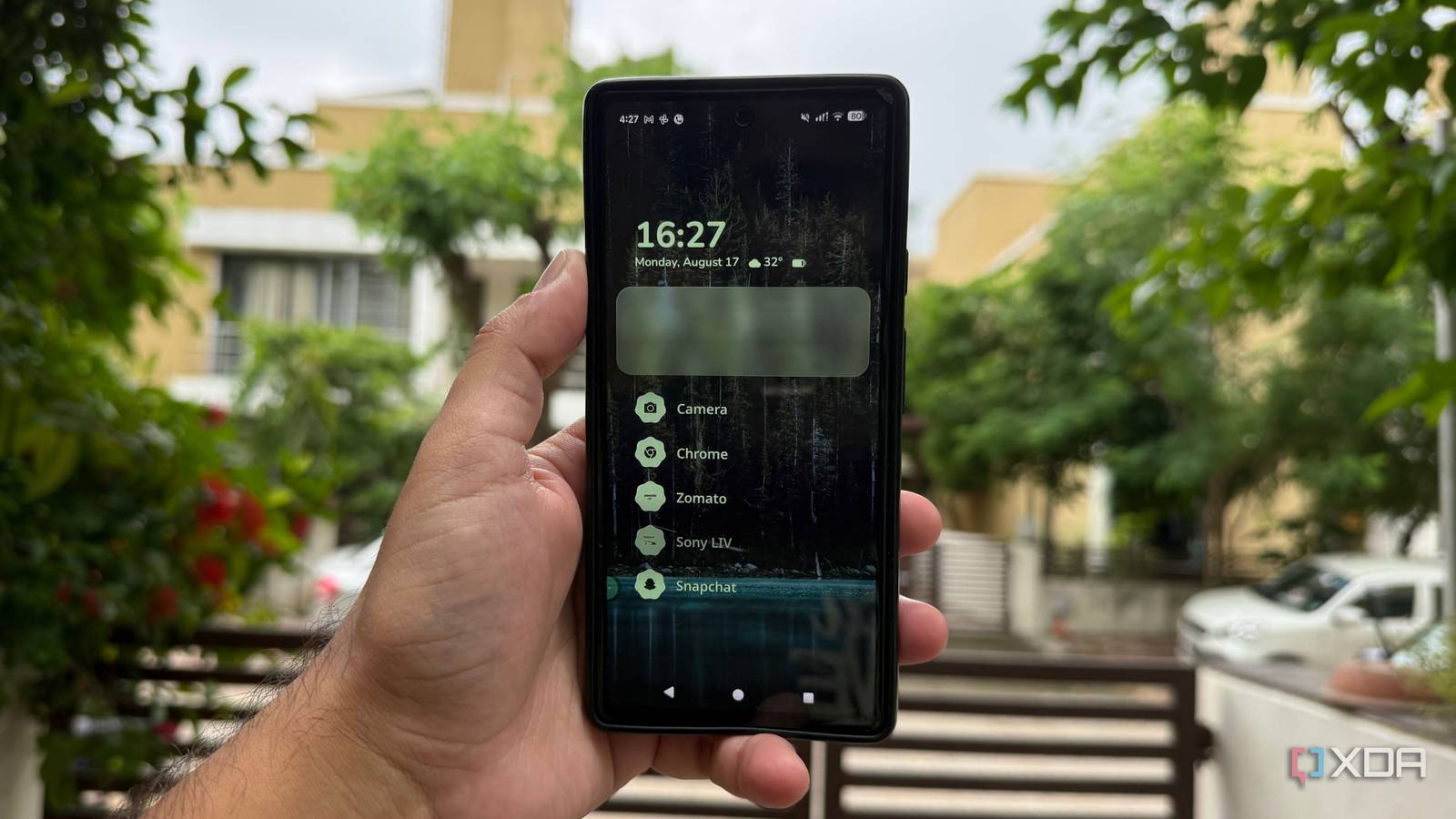
Published Aug 23, 2026, 4:00 PM EDT Beginning his professional journey in the tech industry in 2018, Yash spent over three years as a Software Engineer. After that, he shifted his focus to empowering readers through informative and engaging content on his tech blog – DiGiTAL BiRYANi. He has also published tech articles for MakeTechEasier. He loves to explore new tech gadgets and platforms. When he is not writing, you’ll find him exploring food. He is known as Digital Chef Yash among his readers because of his love for Technology and Food. I've used plenty of Android launchers over the years, but most eventually start to feel the same. You install one, spend an hour changing icons and wallpapers, and then go back to using your phone like before. I wasn't looking for another launcher with endless customization options. I wanted something that would actually make using my phone feel a little more interesting. While exploring some lesser-known Android apps, I came across Mango Launcher. It wasn't a name I had seen often, but after trying it on my Pixel, I quickly realized this launcher was doing things differently. And honestly, I wasn't expecting to enjoy it this much. What is Mango Launcher? Say goodbye to boring Pixel Launcher Mango Launcher is a relatively new Android launcher that takes a different approach to the traditional home screen. It is designed to give you more freedom over how your home screen works and feels. It keeps the basic idea of a launcher familiar, but adds a more experimental approach to customization and navigation. The best part is that Mango doesn't feel like one of those launchers where every setting is hidden behind another menu. The interface feels simple enough to understand, while still leaving room to experiment with how I want my phone to work. It is actively being developed, and new ideas are being added as the launcher evolves. I'm still exploring everything Mango has to offer, but my first impression has been surprisingly good. It feels different without trying too hard to be different, and that's what made me want to keep using it. A phone home screen should not be boring More control without making the launcher complicated The biggest reason I kept using Mango is the amount of control it gives me that I was missing in the default Pixel launcher. I can use any icon pack, change icon shapes, pick different fonts, set my own accent color, or let Mango pull one from my wallpaper. I can also rename or hide individual apps, which is useful when I want a cleaner setup. The layouts are where Mango gets more interesting. I can use a regular grid or list, but there is also a physics-based layout where my app icons behave like balls. They move, collide, pile up, and respond when I tilt or move the phone. I don't need it for productivity, but it makes opening the home screen much more fun. There is also a Pie layout that opens a radial app menu when I swipe, giving me another quick way to launch apps. Then there is Scribble. I can draw a letter to search for an app or create custom drawings that open an app, website, or system action. I can literally draw a shape instead of searching through my apps. Mango also gives me a dedicated widget screen with multiple pages, a flexible grid, resizing, and widget stacks. I can even place widgets inside app folders. Speaking of folders, each one can hold apps, widgets, and shortcuts together. The app drawer is equally flexible. I can search for an app and automatically open the first result, or use the one-handed alphabet scrubber to jump through my apps. I also get notification badges, daily wallpapers, gesture controls, and a few smaller touches that make the whole setup easier to personalize. It's still a young launcher It still has room to grow Mango is promising, but it still has some rough edges. Since it is a relatively new launcher, a few parts of the experience don't feel fully polished yet. The smaller user base is another limitation. There aren't many tutorials, guides, or community discussions available, so finding help for a specific issue can be harder than with more established launchers. Some features are also more fun than practical. The physics-based layout is a good example. I enjoyed trying it, but I don't see myself using it every day. Another thing to keep in mind: some of Mango's features are locked behind its paid tier. The price is relatively small, so it isn't a major issue for me, but you will need to pay if you want access to everything. Mango is still being actively developed, so I expect these areas to improve. For now, the rough edges and paid features are minor compromises for a launcher that offers this much customization. Mango made me enjoy my Pixel again After using Mango for a while, I can see why this small launcher caught my attention. It doesn't feel like something I installed just to change a few icons. It changes the way I interact with my phone and makes everyday moments feel less routine. I also like that Mango doesn't take itself too seriously. It gives me room to experiment, keep things simple when I want, and change my setup whenever I get bored. Mango Launcher Mango Launcher is a fresh Android launcher that combines creative customization, playful layouts, flexible widgets, gestures, and unique ways to interact with your home screen.
I switched to this underrated Launcher, and my Pixel finally feels fun again
Full Article
Original Source
Read the full article at Xda-developers →KhanList aggregates and links to publicly available news content. We do not host full articles from third-party sources. Always verify important information with original sources.