
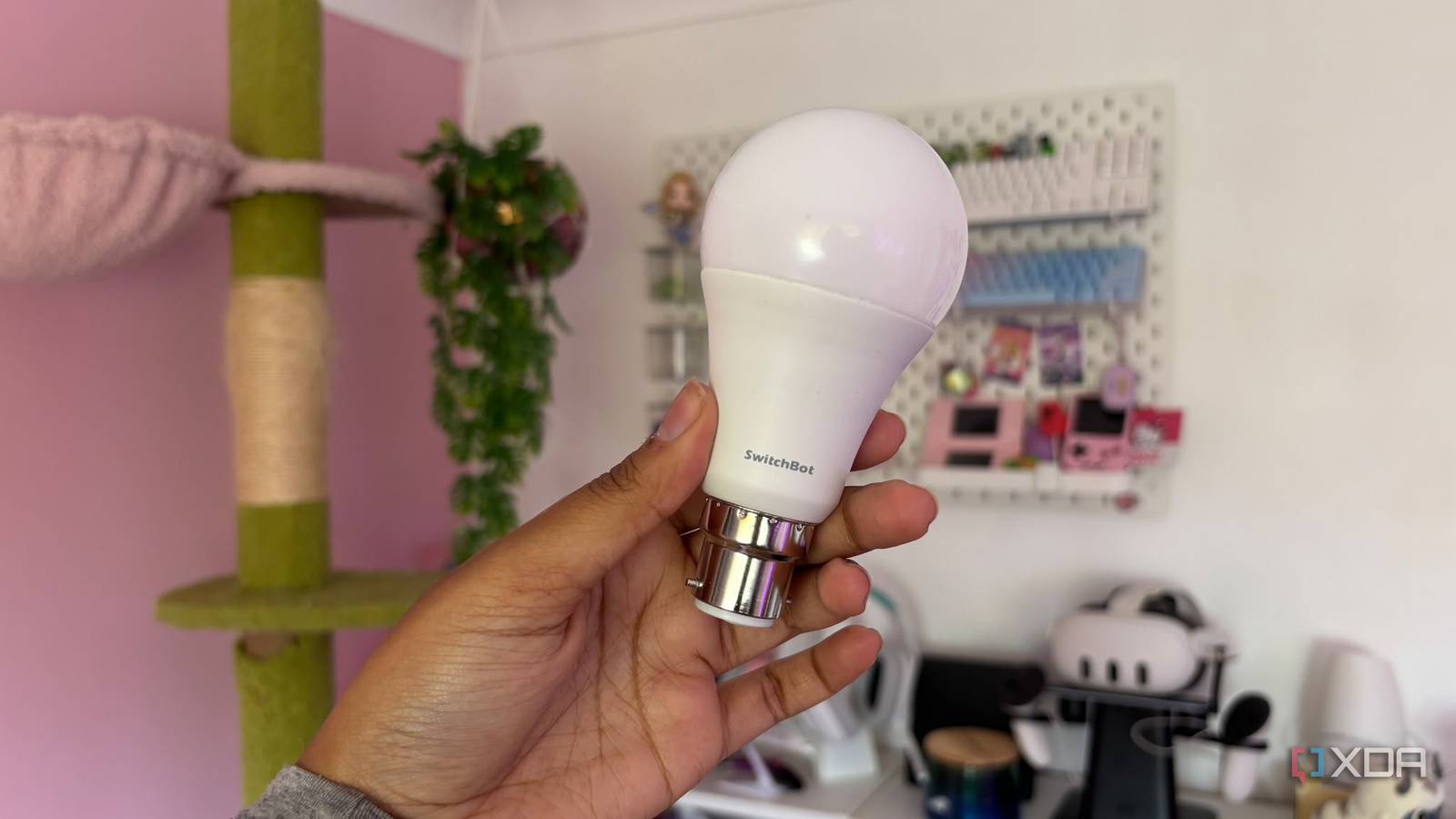
Published Sep 17, 2026, 2:30 PM EDT Jasmine is Software and PC Hardware Author at XDA with years of tech reporting experience ranging from AI chatbots right down to gaming hardware, she's covered just about everything. Whether it's breaking news about the latest AMD NPUs or creating video tutorials on social media platforms, Jasmine has contributed to the world of AI and tech in a variety of ways including interviewing the CEO of Razer, AMD's Director of Product Marketing and the VP of Lenovo. Passionate about gaming and PC technology, she has built countless computers, keyboards and other peripherals - knowing them inside and out. When you swap over to a smart home, it doesn't really feel like an upgrade when you're standing in the dark for 3 to 5 seconds while your smart bulbs think about turning on. It's so easy to start your smart home journey with cheap colorful Wi-Fi smart bulbs. They seem great out of the box, but realistically they clutter your router's DHCP table, saturate your 2.4 GHz Wi-Fi channels, and tether every single color change and automation to a corporate AWS server halfway across the country. Ripping out every single Wi-Fi cloud bulb and replacing them with standard Zigbee 3.0 bulbs tied to a local coordinator allows you to decouple your home from corporate servers, eliminate wireless latency, and build an air-gapped lighting system that executes automations instantaneously and never fails. You're causing issues with your network And your bulb takes ages to switch on The SwitchBot Hub 3 (R) is an excellent example of a smart hub that is useful within your smart home, provided you have other devices in the SwitchBot ecosystem. Wi-Fi smart bulbs essentially destroy your home network. This is because they require a full network stack, including IP assignment, DHCP handshakes, TLS handshakes, and keep-alive packets, just to toggle a light on or off. That doesn't sound like much with a single bulb, but with 30 to 40 Wi-Fi smart devices actively beaming on your home 2.4 GHz spectrum, it can create massive co-channel interference and degrade your router's performance for your main devices (like your laptops, phones, and streaming boxes). There's also the cloud round-trip penalty because the path of a simple cloud automation goes from the motion sensor to the vendor cloud app to an AWS server in Virginia to a vendor API to your local router and then to your Wi-Fi bulb. Every link in that chain adds latency, jitter, and potential failure points. If any single microservice goes down, your light switch essentially stops working. There's also the risk of your hardware becoming e-waste if there is firmware abandonment. Consumer cloud bulb manufacturers treat firmware maintenance as an afterthought. Remember, they release a newer hardware revision and older bulbs can be abandoned to security vulnerabilities and broken integrations. The product you've spent money on and installed in your home can become obsolete in a second. The technology behind Zigbee How exactly does Zigbee work? Zigbee feels like a revolution once you've spent so long using cloud-based smart home products. This is because you get sub-second local mesh intelligence. Instead of bulky IP packets, Zigbee passes tiny raw 25- to 127-byte data frames over local hardware addresses directly to a local USB coordinator. There are no cloud roundtrips or TLS handshakes and no external WAN dependencies. There's also the benefit of the self-healing mesh topology. Unlike Wi-Fi endpoints that all compete to talk directly to a distant router, mains-powered Zigbee bulbs act as an active routing node or repeater. The more Zigbee lights you install, the denser and more robust your home's mesh network becomes. A bulb across the house passes packets along a multi-hop mesh path instantly. You also get the benefit of universal interoperability. Unlike a lot of Wi-Fi-based products, any certified Zigbee 3.0 bulb pairs natively with any open coordinator like Home Assistant, Hubitat, ZHA, or Zigbee2MQTT without ever needing a vendor app or an account sign-up. Your phone doesn't need to be clogged with third-party apps just to control all the devices in your smart home. Your automations will finally feel smart As well as a range of other benefits The real-world payoff is unbreakable, reliable automations throughout your home. Execution is instantaneous due to the fact that it's local. You get a sub-50ms motion trigger. Walking into a dark hallway triggers a Zigbee motion sensor that talks directly to the local coordinator, which instantly fires the Zigbee bulb group. The light turns on before your foot crosses the threshold, matching the feel of a hardwired mechanical switch. Instead of waiting for a cloud-based round trip, you also get rid of the trickle-down lighting effect. In a lot of cloud setups, turning on a group of six ceiling lights can result in a ragged popcorn effect as commands trickle down sequentially over the internet. Local Zigbee multicast groups allow a single broadcast frame to toggle dozens of bulbs simultaneously in exact unison. It doesn't feel like you're waiting for each bulb to turn on one by one, and you also get seamless manual override harmony. Because local Zigbee bulbs don't lose smart functionality when toggled via physical wall switches (when paired with smart modules or decoupled switch states), guests and family members can still use the physical switches without breaking automation states, the way that occurs with cloud-based devices. You shouldn't have to spend time waiting for your lights to turn on A smart home should be smart Smart lighting was never meant to be a cloud service, and turning on a light bulb shouldn't leave you waiting in the dark for up to five seconds. Instead, turning on a light bulb should feel like a fundamental household utility that should function with the same reliability as indoor plumbing, independent of whether your internet is working or a tech startup's servers are online. By replacing cloud Wi-Fi bulbs with local Zigbee alternatives, you can experience the speed, privacy, and absolute reliability of a truly local smart home.
I stopped using cloud smart bulbs after finding Zigbee local control, and my automations never fail anymore
Full Article
Original Source
Read the full article at Xda-developers →KhanList aggregates and links to publicly available news content. We do not host full articles from third-party sources. Always verify important information with original sources.