
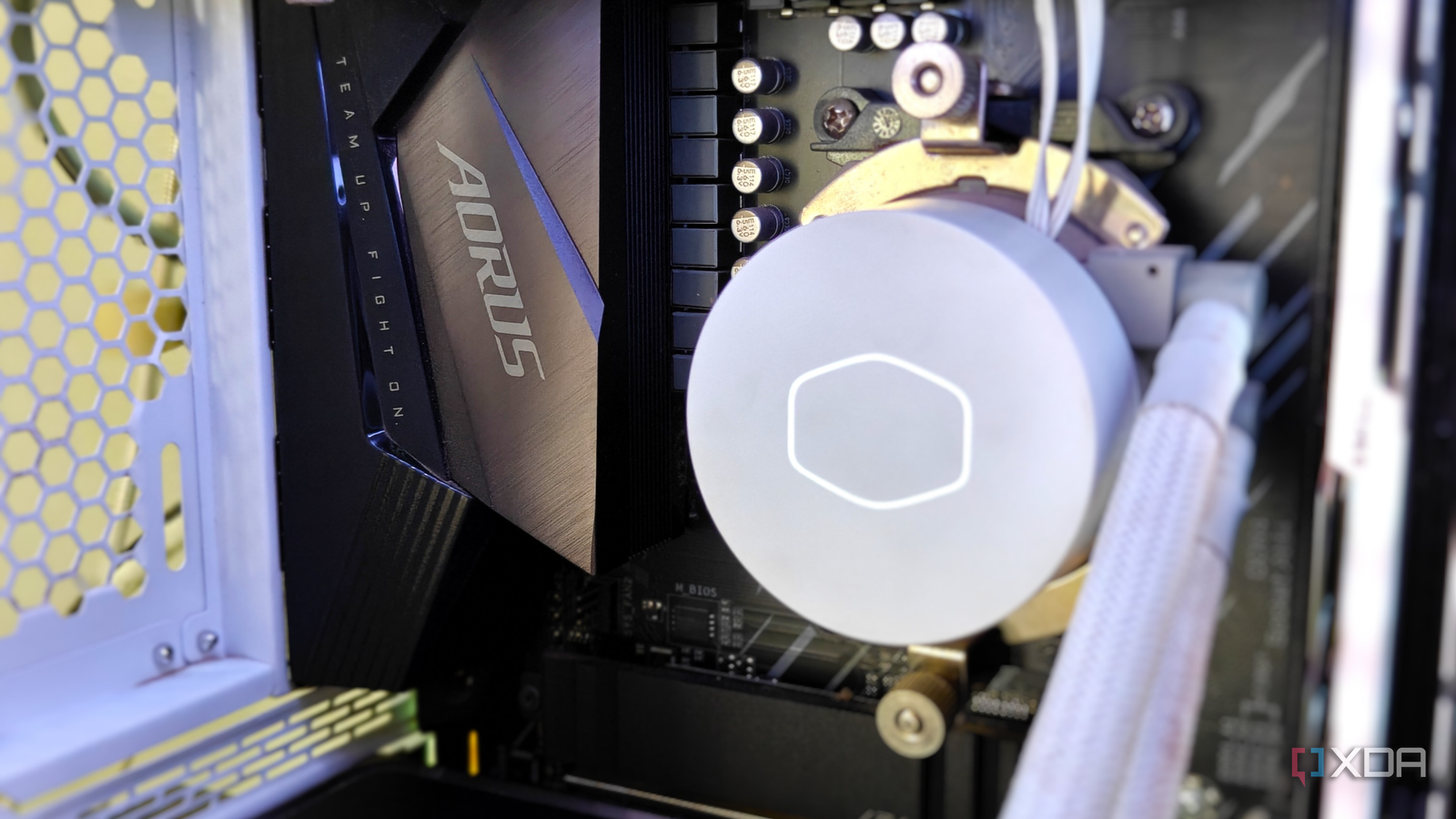
Published Sep 28, 2026, 4:30 PM EDT After a 7-year corporate stint, Tanveer found his love for writing and tech too much to resist. An MBA in Marketing and the owner of a PC building business, he writes on PC hardware, technology, and Windows. When not scouring the web for ideas, he can be found building PCs, watching anime, or playing Smash Karts on his RTX 3080 (sigh). Wi-Fi may be secondary on a PC, but there are times when it comes in handy. If you're building a PC today, having wireless connectivity and using it rarely is still better than not having it at all. When you're buying a motherboard, you have a choice between a board with built-in Wi-Fi and one without. Most people pick the former for convenience, but it's often the wrong choice. I've used a motherboard with onboard Wi-Fi for four years, but for my next PC, I've decided to buy a regular board and add a discrete Wi-Fi card instead. A PCIe network card offers the same feature, but provides you with greater flexibility, upgradability, and performance. Four years ago, I picked a Wi-Fi motherboard I had the option to buy something cheaper I was putting together my current build back in 2022 after using a Ryzen 5 1600 PC for five years. I could have gone with a cheaper motherboard for the AM4 build, but since I had never used a Wi-Fi model before, I spent extra on a B550 Aorus model. It had onboard Wi-Fi 6E connectivity with a discrete antenna, and I was looking forward to using the feature. I may have used the onboard Wi-Fi only a handful of times, but I was glad my board had wireless connectivity. Ethernet is my daily driver, but I have made use of Wi-Fi on the few occasions when my ISP was carrying out network maintenance. Using a mobile hotspot was the only way I could have finished my work on time on those days. Moreover, I've moved my PC between rooms and houses twice in the last four years, and I was left without Ethernet for days on both occasions. Without onboard Wi-Fi, I would have been forced to buy a separate Wi-Fi adapter. After four years, however, I've realized that pairing a regular motherboard with a decent Wi-Fi adapter would have been the better choice. A PCIe Wi-Fi card beats whatever your motherboard ships with It's purpose-built for high-performance networking Modern motherboards have come a long way in terms of Wi-Fi hardware, but most models still feature inferior adapters compared to PCIe Wi-Fi cards. The Intel and Realtek chipsets seen on mainstream motherboards work well for most scenarios, but even a $25–$35 Wi-Fi 7 adapter is a better investment than paying extra for onboard Wi-Fi. These PCIe cards have better heatsinks, robust drivers, and better antennas, not all of which can be found on most motherboards. These features boost your Wi-Fi performance by avoiding overheating and providing consistent connectivity even under heavy traffic. You're also not stuck with your motherboard's Wi-Fi chipset forever. You can upgrade your PCIe Wi-Fi card for newer standards or more throughput — you stay in charge. Most motherboards have Wi-Fi now, but a dedicated card may still make sense Power users can justify the expense For the average user, a motherboard with onboard Wi-Fi might be the simpler choice. After all, it's almost impossible to buy a decent motherboard that doesn't have the feature these days. That said, you can still find a comparable model without onboard Wi-Fi to save some money while adding a PCIe Wi-Fi 7 card for around $30. More than the value argument, it's the performance and flexibility of a discrete Wi-Fi card that has convinced me to stop buying Wi-Fi motherboards. Enthusiasts who want newer or stronger hardware than what's on their motherboard will even add a separate Wi-Fi card to bypass their onboard adapter. Besides, users who can't use a wired connection (for whatever reason) rely on Wi-Fi as their primary connectivity mode, and will benefit from the performance of a PCIe Wi-Fi card. It's not that modern motherboards have poor Wi-Fi; the point is that discrete Wi-Fi adapters operate in a different league. EDUP PCIe WiFi 7 Card BE6500 Onboard Wi-Fi is fine, but you can do better For the right user, adding a discrete PCIe Wi-Fi card to their PC promises real benefits over onboard Wi-Fi. You can realistically buy a motherboard without Wi-Fi and pair it with a Wi-Fi 7 card to enjoy the best performance, reliability, and flexibility, while saving money at the same time.
I stopped paying extra for motherboards with Wi-Fi built in, and a $30 PCIe card does it better
Full Article
Original Source
Read the full article at Xda-developers →KhanList aggregates and links to publicly available news content. We do not host full articles from third-party sources. Always verify important information with original sources.