
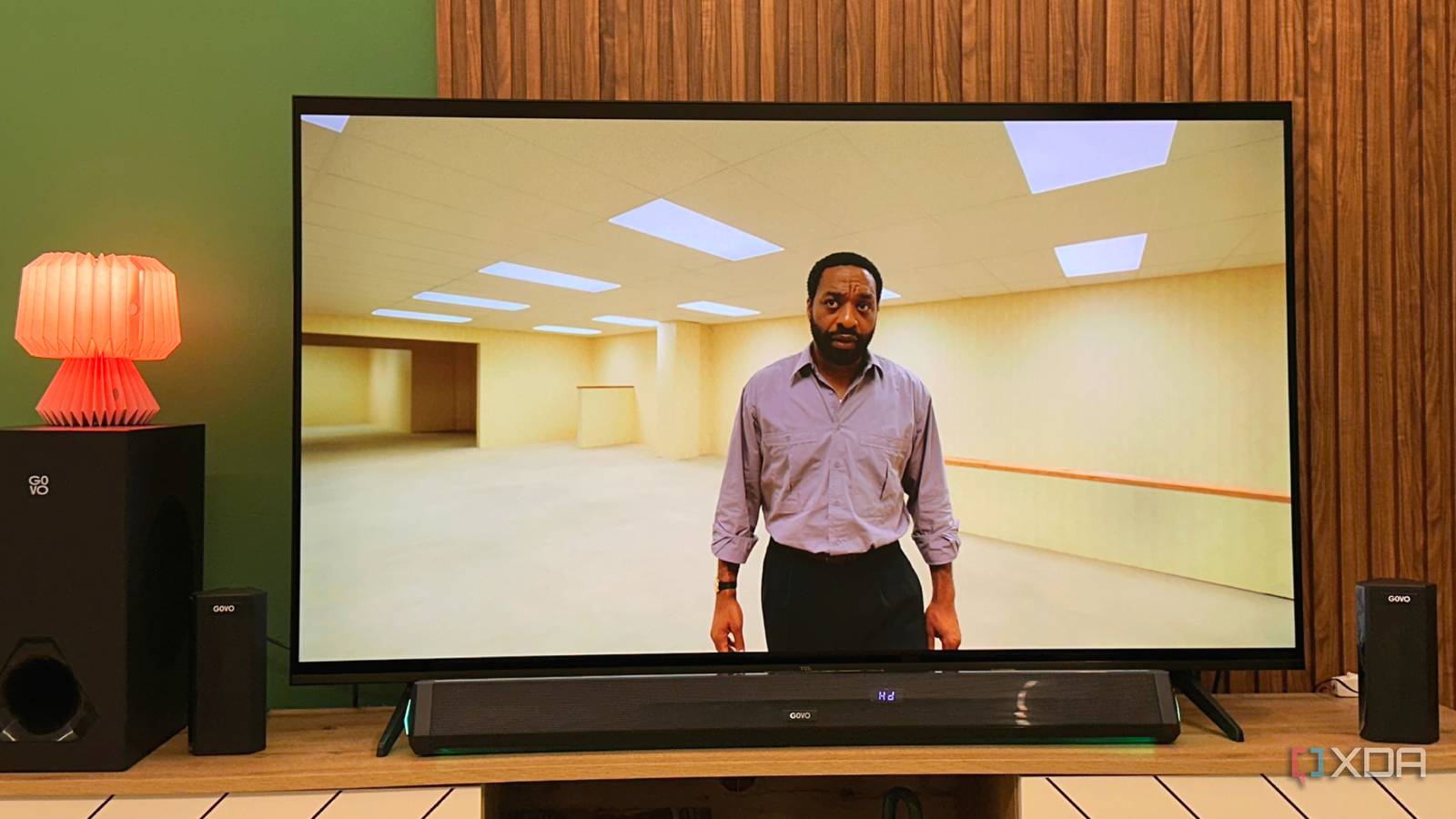
Published Sep 13, 2026, 6:00 PM EDT Gaming has been Samarveer’s greatest passion, and the Literature graduate in him takes immense joy in dissecting games for their themes, messages, and impact. Samarveer holds a deep appreciation of gaming, and considers the platform to be the most immersive and impactful across all media. He can be found engaging with gaming communities online, always ready to debate the finer points of ray tracing or itching to write an 8-page collegiate thesis on any game that impacts him emotionally. For years now, I've treated 4K as the finish line, but it has proven elusive. A better encode leaves me wanting a higher bitrate, and then I want the sharpest upscaler, and it ends with me yearning for an OLED TV rotting in my wishlist. There's always been another improvement to chase, and rightly so. After all, these upgrades do matter, and they feel meaningful." As enjoyable and engaging as this chase for the next refinement always is, I never stopped to ask myself if those differences were actually making my movies more enjoyable. It turns out, what I truly needed to start paying attention to was sound, which, sadly, I'd been treating as an afterthought. I'd been optimizing the easiest thing to quantify More pixels don't automatically mean a better movie When it came to my movies and TV shows, and how I experienced them, I had been optimizing the easiest thing to quantify — pixels. 4K gave me a real upgrade over 1080p (obviously), and it's the most quantifiable upgrade. Somewhere along the way, though, I made the same mistake many users do: I started treating resolution like a personality trait. If an upscaler had another setting, I absolutely had to try it after work. Clearly, I was convinced my movies needed an IT department. The problem is diminishing returns. At a sensible viewing distance, once your display is genuinely 4K and large enough for that resolution to matter, another tiny improvement in sharpness won't transform the experience. The seating distance and screen size do matter, and enormously so, which is why a "4K" tag on a piece of media won't tell you everything you need about perceived detail. Since I did flirt with visual improvements, I realized other parts of the image matter just as much — if not more — than resolution. HDR, contrast, black levels, motion, color accuracy, mastering, and especially compression can change what you actually perceive. I chased specifications because they were easy to compare against other 4K movies in my collection. The question, however, was whether my setup was removing distractions from the movie, and once I actually began focusing on that, resolution stopped being the bottleneck. Then I fixed the part I had been ignoring Better sound made the same movies feel bigger It was frankly embarrassing how little attention I had paid to my audio chain while I'd been over-optimizing and micromanaging my video formats. I could talk all day long about my movies' resolution, bitrate, HDR format, and its codec, but I'd been perfectly happy to use my TV's built-in speakers the entire time. The first step was buying a 5.1-channel sound system, but that only scratched the surface. The satellite speakers still sat next to the TV in the usual place — wherever I could find room on the TV unit. Once I fixed the positioning and calibration, the first noticeable improvement was dialogue, which immediately became easier to follow — I no longer had to reach for the volume control every few minutes. The bigger revelation was everything around the dialogue. Quiet scenes developed a new texture of their own, and background ambiance became actually identifiable instead of becoming an undifferentiated wall of noise. Sound effects in my movies gained real direction and weight, while bass moments began sounding incredibly clear. The ideal listening position forms an equilateral triangle with your speakers, away from the back wall. Despite diving down this rabbit hole, though, I wouldn't dare call myself an audiophile. Sound-related factors like speaker placement, listening position, room acoustics, sensible levels, proper crossover settings, and competent room correction must always matter even to the average user who doesn't care about exotic cables or expensive accessories. For the first time in a long while, fixing my sound system with better placement and actually caring about the seating positions in front of the TV gave me a genuine, palpable upgrade that genuinely felt like I had now reached a new level of quality, and astonishingly, it had nothing to do with my movies' quality or codecs. I stopped upgrading and started fixing The best upgrade might already be sitting in your room Turns out, you can enhance your entire home viewing experience without improving your panel or media resolution. All you need to do is give your system a once-over and ask if any speaker is badly positioned, or if the room itself may be swallowing dialogue. The subwoofer shouldn't have to fight the room, either — a lot of folks position it aesthetically instead of basing the decision on the best sound quality. There's very little point in buying hardware to solve a setup-centered problem. The same applies to the picture itself. Instead of obsessing over another display or higher-resolution source, I'd rather make sure the TV is calibrated and the HDR is behaving correctly. Another equally important thing to worry about is that I'm sitting at a sensible distance — some pretty glamorous upgrades can come from removing the dumb thing you were doing. This is why expensive gear can often disappoint, because a pricey speaker in the wrong corner is still in the wrong corner. I still appreciate 4K. I just no longer worship it. I want my money, time, and tinkering to improve the overall experience. Hisense HS2100 2.1 Soundbar Brand Hisense Connectivity Auxiliary, Bluetooth 5.3, HDMI, Optical Audio Input, USB Power 240W Audio Channels 2.1 Knowing when to stop turned out to be the best upgrade for me Once you learn how much can be improved, everything starts looking like a problem. Softer images become upgrade opportunities, newer formats become excuses to replace something perfectly functional. Before long, watching a movie becomes another benchmarking exercise with an ever-present voice in my head saying I should probably be enjoying myself more. It isn't like I've completely stopped caring about picture quality, though. I've just become more interested in whether an upgrade changes the experience enough to justify my money, effort, and troubleshooting. Ultimately, the goal was never to build the most technically impressive cinema in my living room. It was to forget I was sitting in one.
I stopped chasing 4K and started fixing my audio, and films got better immediately
Full Article
Original Source
Read the full article at Xda-developers →KhanList aggregates and links to publicly available news content. We do not host full articles from third-party sources. Always verify important information with original sources.