
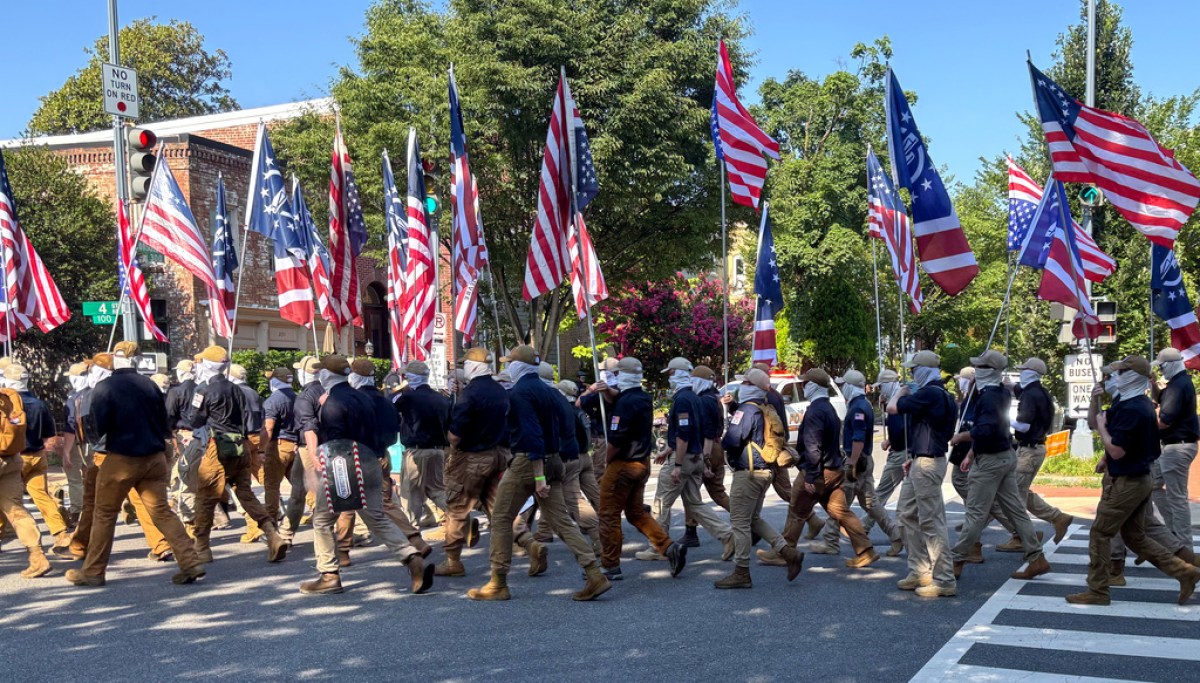
In 2015, a Jewish advocacy organization called my office and asked whether we could put Nazis on a college campus. Not real ones. Hired ones. Before I explain why I turned it down, I should say the harder thing: The tactic was sound. It would have worked.Here is what it would have produced. Twenty people on a recognizable part of a well-known campus on a weekday afternoon, with imagery unambiguous enough that nobody needs a caption to understand what they are looking at. Students film it because students always film it. The first clip is online within the hour, and we did not post it. A horrified 19-year-old did. That is exactly what makes it credible. By that evening, large accounts on the left and right are sharing it for their own reasons. By the next morning, the university has issued a statement. Within days, there is a real chance of national coverage and congressional offices asking what is being done about antisemitism on American campuses. That was the objective. It was achievable, and it would have cost a fraction of what the organization was already spending on an approach that was not working.That is what has stayed with me. The request was not stupid. It was a correct reading of how attention works. Nuance does not travel well. A carefully sourced report on campus antisemitism may get polite attention from people already following the issue. A photograph of something ugly can cross the country before anyone has had time to ask what they are actually looking at. Once you understand that, the temptation to skip persuasion and go straight to shock is hard to resist. Requests like this are not as rare as they should be. I have been approached about staging counterprotests whose real purpose was to get the other side on camera looking unhinged. I have been asked for people who would say inflammatory things at a public meeting so somebody else could be blamed for saying them. More than once, I have been asked for demonstrators who would appear to belong to a movement they had nothing to do with. The calls have come from the left, the right, and corporations with no politics beyond their share price. The calculation is usually the same: If your opponent will not provide the outrageous image you need, someone can be hired to play the part.I cannot tell you what share of the swastikas, nooses, threats, and menacing demonstrations that go viral in a given year are authentic. Neither can someone looking at a photograph online. I assume the overwhelming majority are exactly what they appear to be. My point is not that most incidents are staged. It is that I know some people try to stage them because they call me for pricing. Once the picture is circulating, there is no way to tell which is which just by looking.I run Crowds on Demand, which makes me easy to dislike before I have said anything. People hear “professional protest company” and picture a billionaire phoning in an order for chaos, actors carrying signs they do not believe in, and an owner who will run any campaign if the check clears. Most days, the work looks much more ordinary: tenants who cannot get a landlord to respond, policyholders fighting a denied claim, or a small business being ground down by somebody with better lawyers. We help people get in front of the person who has been ignoring them. The demonstrators need to understand and believe the grievance because the illusion falls apart the moment a reporter asks a basic question.I have organized plenty of campaigns designed to make powerful people deeply uncomfortable, and I do not apologize for that. This was different. I did not immediately say no. I told the group I would think about it, and I did for longer than I am comfortable admitting. What changed my mind was that I could not answer a simple question about my own plan: Once that photograph exists, who controls what it means?Nobody does. I can control who gets hired, what the signs say, where people stand, and when everyone goes home. I cannot control what happens after the image leaves the campus. Someone shares it as proof that the school is overrun with Nazis. Someone who actually agrees with what is in the frame sees it and decides he is not alone. Someone on the other side decides confronting people like that is justified and goes looking for someone close enough. None of those people were in my planning meeting, and none of them will ever learn that the demonstration was staged.A fake Nazi rally can attract real Nazis. That is not a hypothetical I came up with afterward to sound principled. It is the obvious risk when you put Nazi imagery on a college campus and hope every person who sees it understands that you did not mean it. The campaign could have gotten its millions of views and then kept going without us.I did not lecture the people who called me. Sanctimonious indignation is not really my style. Instead, I urged them to aggressively document real incidents of antisemitism alongside other acts of discrimination and bigotry, then put those images in front of the campus community. Show people the real face of bigotry and build a broader coalition against it. They wanted an approach that would break through faster.That 2015 call was not the last one. As recently as 2023 and 2024, I was approached with a remarkably similar idea, and over the years, I have received plenty of other requests built around the same premise: If reality is not outrageous enough to break through, create something that is.The incentives have gotten worse. Social media systems built around engagement can amplify moral outrage and emotionally charged political content, while creators can sometimes profit from the attention those systems generate. Artificial intelligence now makes it easier to produce convincing synthetic or manipulated material and harder to evaluate at a glance. The people who called me in 2015 did not misunderstand the system. They understood it perfectly. That is the problem.READ HITLER’S 1920 PLATFORM AND TELL ME HE WAS A CONSERVATIVESocial media companies do not need to decide which political views are legitimate. They should, however, stop rewarding deliberate deception as if it were authentic political activity. If a platform knows an event, image, or campaign was fabricated to mislead the public, continuing to amplify and monetize it only makes the next staged outrage more attractive.I turned down the Nazi rally. Someone else, somewhere, may not.Adam Swart is the founder and CEO of Crowds on Demand, a professional advocacy and demonstration firm he founded in 2012. He has appeared on Fox News, Fox Business, NewsNation, Newsmax, and other national outlets discussing protest movements, advocacy, and public pressure.
I refused to stage a fake Nazi rally. Someone else won’t
Full Article
Original Source
Read the full article at Washingtonexaminer →KhanList aggregates and links to publicly available news content. We do not host full articles from third-party sources. Always verify important information with original sources.