
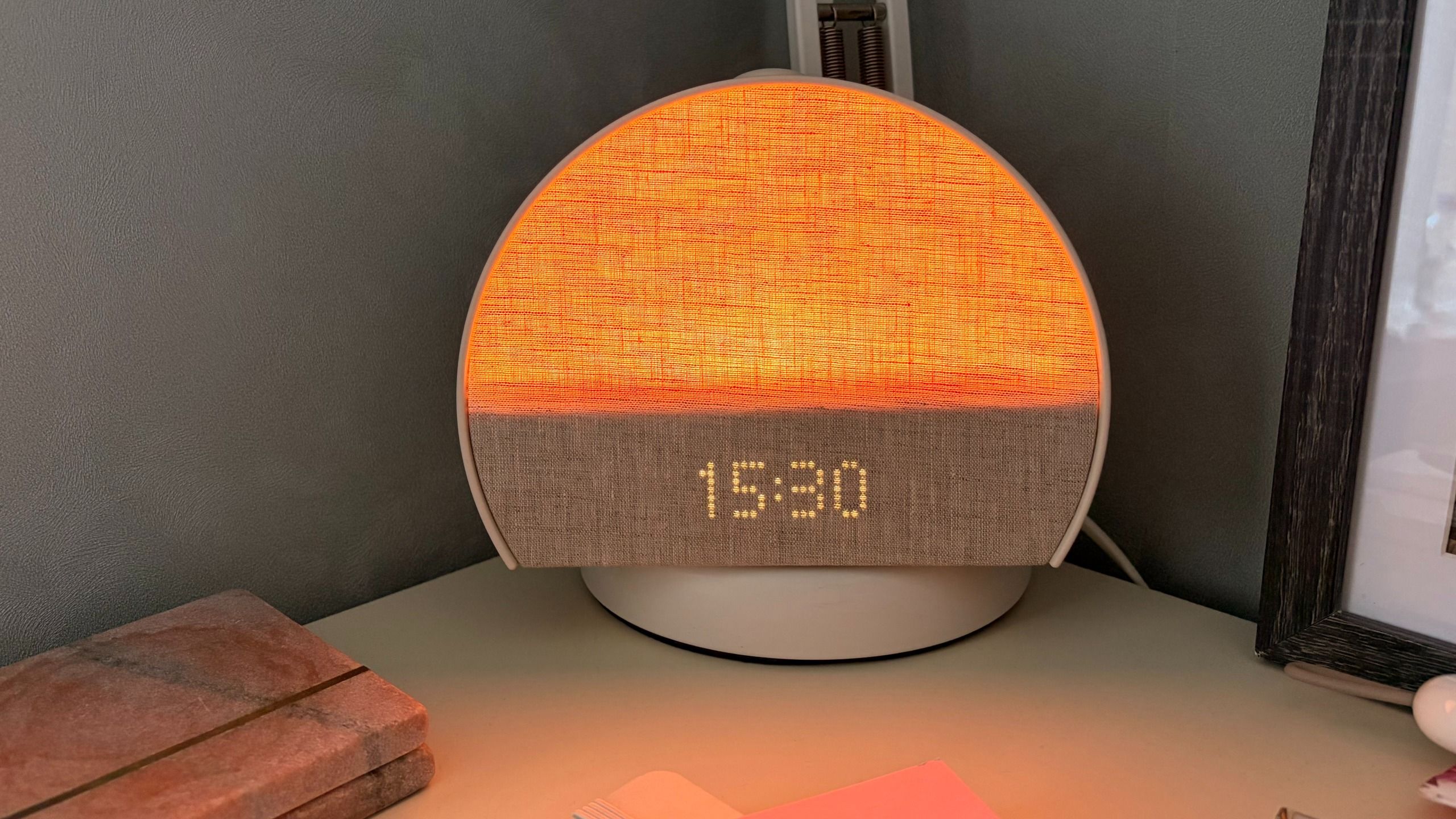
(Image credit: Tom's Guide) I’ve always struggled with sleep. I’ve never been able to nap as most people can, and once my head hits the pillow, I’m usually wide awake—not the best sleep routine. And trust me, I’ve tried it all. From lavender pillow sprays to hot showers before crawling under the sheets, nothing seems to make me sleepy.The only time I ever fall asleep is when I’m in a moving vehicle. This tells me two things: 1. That I’m probably the worst person to have in the passenger seat on a road trip, and 2. A combination of white noise from the road, vibrations, and motion knocks me completely out.To dive deeper into how I can improve my sleep quality, I started using an Oura Ring, and this shows me how my daily activities and even what time I eat can influence the number of Zs I’m getting each night. I also recently added the Hatch Sleep Clock to my nighttime routine, and now I’m getting eight hours of sleep almost every night. So what is this super pairing actually doing? Let’s find out.Why the Hatch Sleep Clock? (Image credit: Tom's Guide)I upgraded from my Hatch Restore 3 to the Hatch Sleep Clock because it can track habits, and I wanted to know if there was something else I should be doing during my wind-down routine to fall asleep. Admittedly, there’s not much difference between the software for the Sleep Clock and the Restore 3, but the Sleep Clock tracks your sleep, and it held the key to my sleepless nights.The Hatch Sleep Clock uses motion sensors to understand your movements at night and denote your sleep stages into core, REM, and deep. I have to say, at first I thought it wouldn't be accurate, but the data I get back is almost identical to my Oura Ring, even though it doesn’t track any physical metrics like heart rate or breathing regularity.Because the clock could track my sleep, it recommended wind-down routines that would benefit my sleep patterns. It’s a very intuitive device without being too intrusive. As soon as I started seeing my sleep scores climb higher and higher in my Oura app. Oura can show me what affects my sleep during the day, but the relaxation comes from the Hatch.More than the Oura Ring (Image credit: Future)I never take my Oura Ring off. This tiny device has taught me so much about my body that I appreciate everything it tells me and take it on board as if it’s gospel. But the catch is that it can only tell me what’s going on and what’s wrong, not why. That’s why the ring needs the Hatch as a partner in crime.Get instant access to breaking news, the hottest reviews, great deals and helpful tips.According to the CDC, 14.5% of adults in the U.S. have trouble falling asleep, and women are more likely than men to have trouble falling asleep. But once they’ve fallen asleep, 17.8% of adults have trouble staying asleep. Advice from Harvard Medical School says good sleep hygiene can help you fall asleep and improve sleep quality. Sleep hygiene includes practices like structuring a bedtime routine and creating a comfortable sleeping environment.The Hatch Sleep Clock has helped me create that environment, and now I look forward to getting into bed every night to wind down with calm, red-toned lighting, white noise, and my book. Maintaining this structure, as recommended by the Hatch, has meant my body and mind now understand the routine. My heart rate lowers and my thoughts clear.The accuracy is shocking (Image credit: Future)When I plugged in the Hatch Sleep Tracker, I really didn’t have high hopes. Why? Well, I honestly didn’t understand how a motion sensor could detect my REM and deep sleep. Surely it needs some biometrics to get the full picture. Oh, how wrong I was.When I checked the app in the morning, it mapped my whole night’s sleep, and it matched my Oura Ring's sleep analysis almost perfectly.There are only a couple of minutes between the time spent asleep on both devices, but wake-ups and deep sleep are logged accurately, as you can see. (Image credit: Hatch / Oura)Using both the Oura Ring and the Hatch Sleep Clock has helped me build a routine and use advice from both apps to figure out what works best for relaxing. My sleep has improved so much in the last few months, and I owe it all to this duo. Follow Tom's Guide on Google News and add us as a preferred source to get our up-to-date news, analysis, and reviews in your feeds. More from Tom's GuideMy doctors couldn't figure out what was wrong with me — then my Oura Ring uncovered a surprising heart conditionWhen I’m lacking motivation, this is the walking workout I use to build cardiovascular fitness, stronger legs, and look after my heart healthFitbit Edge vs Fitbit Charge 6 — which Google fitness tracker wins? Ashley is a staff writer on the the Reviews team at Tom’s Guide. She has a master’s degree in Magazine Journalism from Cardiff University and a BA in Journalism, Media and Sociology. She has written for titles including Women’s Health UK, writing health and wellness stories, and Virgin Radio UK, specializing in entertainment news and celebrity interviews. She has reported on a variety of topics including music, literature, motorsport, entertainment and health. She has previously reviewed live music events, books, and wellness products but discovering the top audio equipment on the market is what she does best. When she is not testing out the latest tech, you can find her either curled up with a cup of tea and a good novel or out hiking.
I paired my Oura Ring 5 with the Hatch Sleep Clock to track my nights for 2 months — here's why it's become the ultimate combination
Full Article
Original Source
Read the full article at Tomsguide →KhanList aggregates and links to publicly available news content. We do not host full articles from third-party sources. Always verify important information with original sources.