
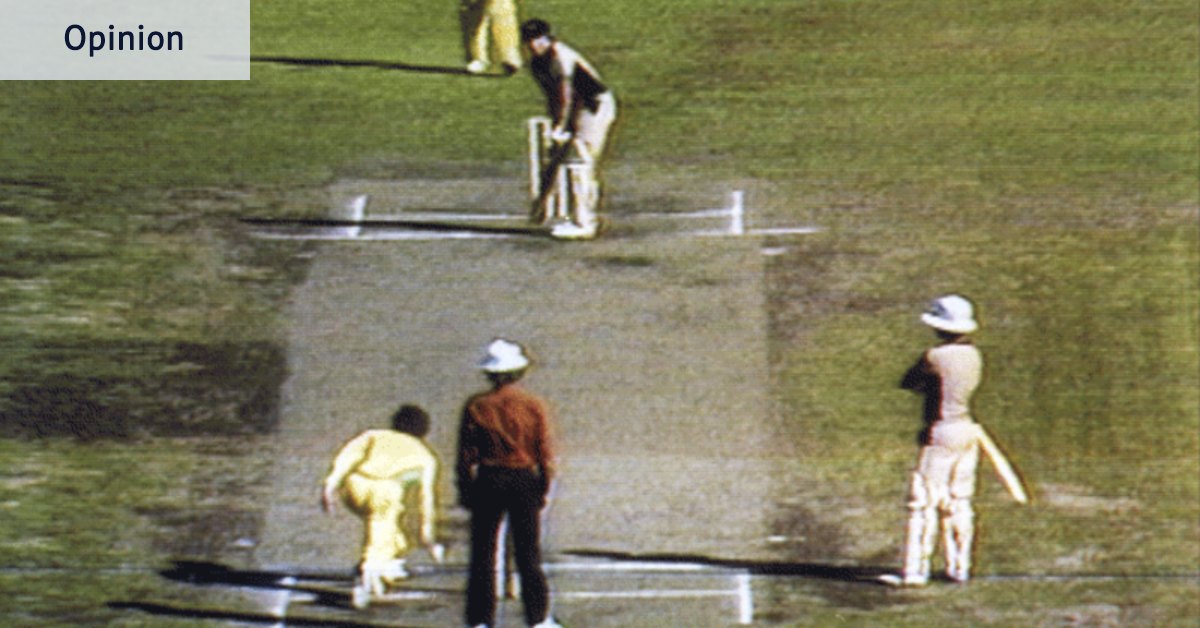
OpinionFormer Australian Test captainNovember 13, 2026 — 10:09amNovember 13, 2026 — 10:09amI’ve thought about Newlands more than I expected to.Not the footage, which we’ve all seen, but the feeling that came with it. It was heavy and familiar, the sense that Australian cricket had been walking towards something like this for a while, and that a lot of us had watched it happen and kept quiet.Trevor Chappell sends down his infamous underarm delivery to Brian McKechnie.Channel NineI’m not writing as a bystander. I made my own mistake in 1981, and I’ve lived with it long enough to know the shame is rarely about the act alone. It’s about knowing you had the chance to be better but inexplicably slipped up. That’s what I saw in the faces of those young men at Newlands.Three young men, one terrible decisionSteve Smith and David Warner were suspended for 12 months and Cameron Bancroft for nine. Smith and Warner were barred from leadership roles. They broke the rules and they knew it. Nobody should pretend otherwise, and none of them has.Cameron Bancroft and Steve Smith face the media in Cape Town 2018.Getty ImagesBut I could never watch that press conference and see only wrongdoing. I saw a captain who couldn’t hold himself together and a young opener who looked like he wished the floor would swallow him.These weren’t hardened cheats. They were young men who’d picked up on what the surrounding environment rewarded, and they did something they deeply regret and will carry for the rest of their lives.Others from the 2018 squad can say for themselves what they knew. Some may remember it differently, and that’s their right.The culture we builtSimon Longstaff’s review found Cricket Australia and the national team had drifted into a culture where winning mattered more than almost anything.I read that and felt implicated. I was part of that world for most of my life, as a player, captain, coach and commentator.Test captain Pat Cummins addresses the media on Friday in an attempt to put the 2018 sandpaper scandal behind him.Getty ImagesWe told ourselves that hard, fair cricket was Australian cricket. We admired the stare and the sledge and the refusal to give an inch, and we mistook ruthlessness for strength. Nobody sat down and decided to build a culture that would produce Newlands. It crept in. A decision defended because it worked. A line crossed and forgotten because the team won. A young player watching what the senior men let slide and what they cheered.I wish more of us had said, much earlier, that this wasn’t who we wanted to be. Hard cricket and honest cricket aren’t opposites. The best Australian sides I saw were fiercely competitive and still respected the contest. Somewhere along the way we lost sight of that.What a single afternoon costsI know a bit about being defined by one decision. The underarm still comes up at dinners, in interviews, in letters from strangers, more than 45 years on.I’m not after sympathy. I made the call and it was mine to own. But it’s shown me how long one moment can follow a person, and how little room people leave you to be more than the worst thing you’ve done.That’s partly why the aftermath of Newlands sat so badly with me.There was a fair argument that the bans were too harsh, and a fair argument that they weren’t harsh enough for men wearing the baggy green. I could see both.What troubled me was the appetite. At times, it felt less like a demand for accountability and more like a hunger to watch someone fall.Smith rebuilt his career through hard work and humility. Bancroft has spoken honestly about what it did to him. Warner spent years asking for his leadership ban to be reviewed. None of them escaped the consequences, and none should have. But a game that talks so much about character ought to be able to hold two ideas at once: what happened was wrong, and people can earn their way back.Dave Warner, Steve Smith and Cameron Bancroft during the 2019 Ashes in England.Getty ImagesI have empathy and admiration for Usman Khawaja, for confronting this head on.That he’s done it after eight years doesn’t make it any less significant or any less true.And the suggestion that he’s doing it to sell a book? Anyone who says that either doesn’t know the publishing industry or doesn’t know Uzzy. Uzzy isn’t making it up.The lesson that’s easy to missUsman Khawaja’s memoir, Sabr, is published by Penguin Random House and available from November 10.It’s tempting to say Newlands was the fault of three men, and the game is cleaner today for having punished them. I don’t believe that. The harder lesson points back at the rest of us.Everyone at Newlands knew the rules. What failed was whatever sits underneath them, the instinct that tells you what you will and won’t do when nobody’s stopping you and winning is on the line.That instinct is learned. It’s taught by example, in dressing rooms and boardrooms, by what we reward and what we let slide.What I’d say to a young player nowI meet young people in cricket for whom one bad decision, or a run of bad luck, can mean losing everything. I tell them what I wish someone had told me: you’ll be tested on a day when you’re tired and under pressure, surrounded by people who want the same result you do. Knowing the rules won’t be enough that day. You’ll have to ask yourself what kind of person you want to be.I didn’t always ask. Those three young men didn’t ask at Newlands. And the culture, which I helped build, never taught them to.Cricket will always ask its players to compete with everything they’ve got. I’d only add that how you compete matters as much as whether you win. We learned that slowly, and at a cost. I hope we don’t have to learn it again.There has been enough said now about Newlands.Let us not disinter its bones.From our partners
I made my own mistake in 1981, and the shame is rarely about the act alone
Full Article
Original Source
Read the full article at Smh →KhanList aggregates and links to publicly available news content. We do not host full articles from third-party sources. Always verify important information with original sources.