
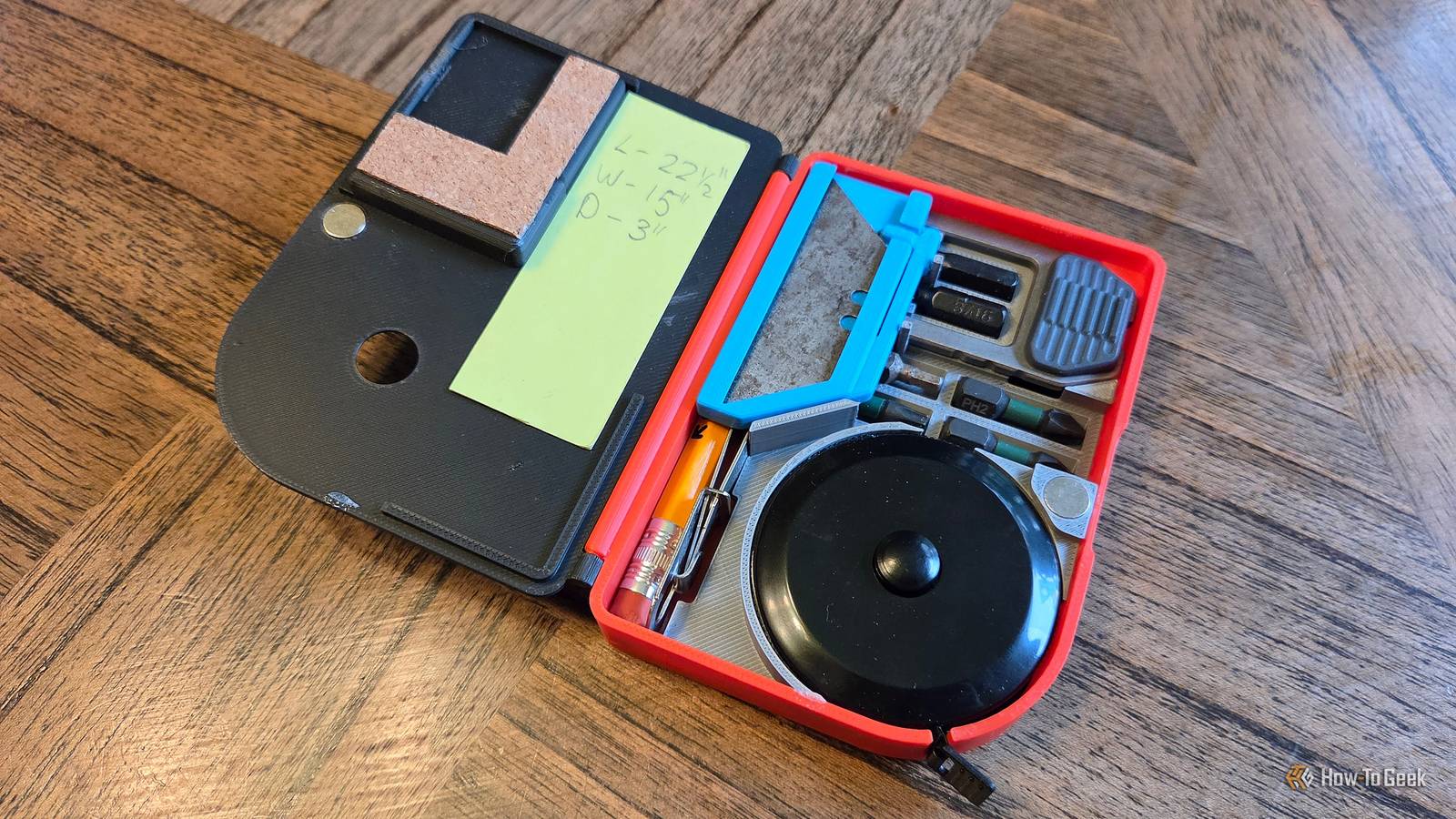
Published Oct 16, 2026, 9:00 AM EDT Joe Fedewa has been writing about technology for over a decade. Android and the rest of the Google ecosystem have been a focus for years, as well as reviewing devices, hosting podcasts, filming videos, and writing tutorials. Joe loves all things technology and is also an avid DIYer and food blogger. He has written thousands of articles, hundreds of tutorials, and dozens of reviews. Before joining How-To Geek, Joe worked at XDA-Developers as Managing Editor and covered news from the Google ecosystem. He got his start in the industry covering Windows Phone on a small blog, and later moved to Phandroid where he covered Android news, reviewed devices, wrote tutorials, created YouTube videos, and hosted a podcast. From smartphones to Bluetooth earbuds to Z-Wave switches, Joe is interested in all kinds of technology. After several years of jailbreaking and heavily modifying an iPod Touch, he moved on to his first smartphone, the HTC DROID Eris. He's been hooked ever since. Those of us who are DIY-minded reach for a few common tools every day. Screwdriver, utility knife, tape measure, pencil, tweezers, and more. I wanted to find a way to keep these tools nearby, so I designed a pocket toolbox with magnets. The idea for this project was sparked by a video titled "I Fit a Fully Functioning Toolbox into an Altoids Tin" from Maurice Moves. He was able to stuff Band-Aids, soap sheets, tweezers, a flashlight, a multi-tool, SuperGlue, a pen, Post-It Notes, and a bit holder with extra bits inside the 6.5 cubic inch tin. My goal was to trim it down into a slimmer package with MagSafe abilities. How big can I make this? My first order of business was to figure out how much space I had to work with. Ultimately, this won't live on the back of my phone full-time, but I wanted to have that option. I also wanted to be able to offer the files for others to print, which meant not customizing them to one specific phone size. To find a good general size to work from, I scoured Amazon for MagSafe organizers. I stumbled upon this Spigen magnetic pouch, and it seemed like a pretty good size. After a quick size test print, I only adjusted the dimensions by a few millimeters. Now, the hard part: choosing the tools. I knew that I wanted some sort of screwdriver with the ability to use multiple bits. I also wanted something with a blade, a measuring device, and a writing utensil. Anything else would be a cherry on top. Gerber Gear Driver Keychain Multitool The screwdriver was the toughest nut to crack. Maurice used one of these clever keychain bit holders, but I wanted a thinner solution. After several days of searching, I found the Gerber Gear Driver Keychain. It's thin, yet still offers ample torque mechanics (and it has a bottle opener built in). At $16.99, it was the most expensive thing I purchased for the project. I was able to use several tools from my own collection. The only other tools I bought were a compact tape measure with a retract button $(4) and the same Uncle Bill's Tweezers ($8) that Maurice included. I also already had a MagSafe ring that I've been holding onto for this exact type of thing (2 pack for $15). Tetris with tools With all the tools in hand, it was time to fit them inside. Nesting a handful of random objects together into a small space and making sure they're all easily accessible is not easy. I approached it from both a digital and physical perspective. First, I printed thin walls without a bottom so I could see the exact dimensions in real life. This allowed me to put the tools inside and see where things naturally fit. The one thing I knew was that the tape measure needed to be in the corner. The pocket knife I originally intended to use didn't fit with everything else, so I pivoted to a utility knife blade and slightly modified this 3D model. Once I had a general idea of where the tools should go, I took detailed measurements and placed the objects in my digital drawing. From there, I imported the SVG into Fusion and started modeling. After many hours of tweaking, it only took four prints to get everything fitting just right. The hinge and closing mechanism were the most difficult, but in the end, I just went with a very simple design. The grab-and-go DIY kit Here's the final list of tools in my little magnetic toolbox: Screwdriver Six 1/4-inch bits Large Phillips Small Phillips Flat head Square Torx Hex 5-foot/150cm tape measure Utility knife Bottle opener Tweezers Pencil and notepad I'm honestly very happy with how this came out. These are tools that I genuinely use often. Even if I'm not keeping the toolbox on my phone all the time, it's still great to have them all in one place. Plus, the magnets mean I can stick it to metal surfaces during a project as well. Admittedly, it could probably be smaller. The tape measure is easily the biggest tool of the bunch. When I saw it, I was immediately obsessed with the idea of the button sticking out through the lid, and the tape pulling out the side. I love this feature, but there are certainly smaller tape measures and other ways to measure things. If you'd like to print your own mini EDC toolbox, I've uploaded the model to MakerWorld. You can find links to all the tools in this article.
I made a pocket EDC toolbox that fits 6 tools (and attaches to my phone)
Full Article
Original Source
Read the full article at Howtogeek →KhanList aggregates and links to publicly available news content. We do not host full articles from third-party sources. Always verify important information with original sources.