
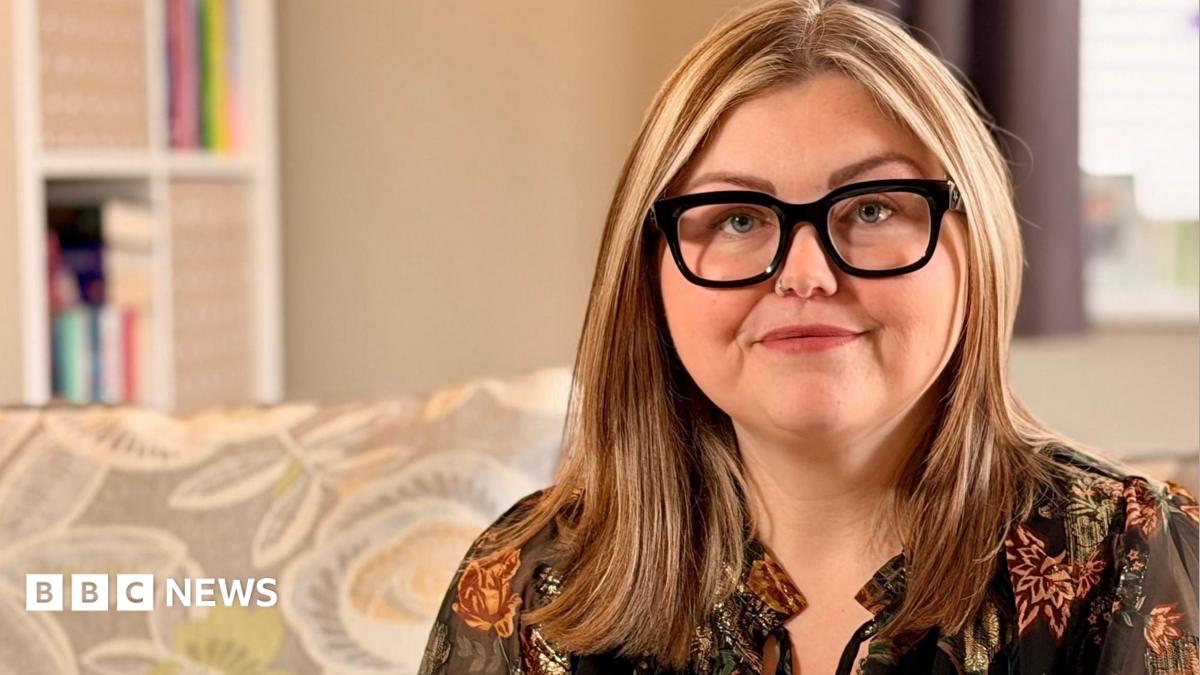
Hayley Locksley was 11 years old when she started her periods and excruciating pain became part of her life. "I used to spend every month in the sick room at school," she says.Hayley, from Shefford, Bedfordshire, would often pass out from the pain but the doctors' advice was to take paracetamol.Aged 24, she was diagnosed with endometriosis - a condition that affects one in 10 women, where tissue similar to the lining of the womb grows outside of the uterus.Hayley says she loved her job working in a nursery, but her employers questioned whether her symptoms were real and asked her to use annual leave to cover sick days.After she had surgery for endometriosis, Hayley decided to switch to office work, due to it being less physically demanding. But her new colleagues asked why she was spending so long in the toilet."I had to explain that my bladder sometimes did not empty fully, causing severe pain and horrendous diarrhoea. I found the questioning embarrassing and humiliating," she says.Faye Ramsey, 32, from Ipswich, spent 10 years in agony, with doctors suggesting she had irritable bowel syndrome before she was finally diagnosed last year.She had a hysterectomy in June and had her endometriosis removed but struggled mentally and physically to return to work as a teaching assistant. Through her work as the founder of a support organisation called Girls Anatomy, Faye has met women who have lost their jobs, had their hours reduced, or been physically sick at work after "dragging themselves in...because they don't want to lose their jobs".Faye, who also gave evidence to the inquiry, wants to see more endometriosis friendly recognised employers, external and better protection for women with the condition in their probation periods. "It's not pleasant to try and fight for your job and justify why you're the way that you are and why you're having that time off," she says."Your absence policy shouldn't be the same as someone who is able-bodied and has no medical condition, you shouldn't be [judged] against that person because it's just not fair."The government says it is working with employers to improve awareness of the condition.More than 6,000 women were interviewed for the inquiry and 94% said employers lacked a good understanding of endometriosis, and half received no workplace adjustments.Of the 250 employers surveyed, 72% said their organisation gives no training or guidance on women's health.But Matthew Percival, the Confederation of British Industry's future of work and skills director, says businesses are "increasingly aware of women's health issues".Firms are keen to explore how they can support women "without their careers being held back", in a "wider shift" towards helping improve health and wellbeing in the workplace, he adds.Hayley, Carla and Faye all say they hope employers can show more understanding of endometriosis in the future. They want women to be believed, treated with dignity and supported to remain in work. "Behind every absence, every appointment and every person who struggles at work, there may be a much bigger story than they realise," Hayley says.Hayley hopes she will be able to return to the classroom one day, but at the moment she knows it is not possible. "Endometriosis has taken so much from me. I don't want to be in this position. I loved my job and I worked really hard. To be told at 40 years old that I'm not fit for work, I'm now left wondering, is that it for my working life? "I'm still 25 years away from retirement age. Am I going to be able to ever work again?"Additional reporting by Nicola HaselerDo you have a story suggestion for Beds, Herts or Bucks? Contact us below.
I lost my job in a primary school due to endometriosis
Full Article
Original Source
Read the full article at Bbc →KhanList aggregates and links to publicly available news content. We do not host full articles from third-party sources. Always verify important information with original sources.