
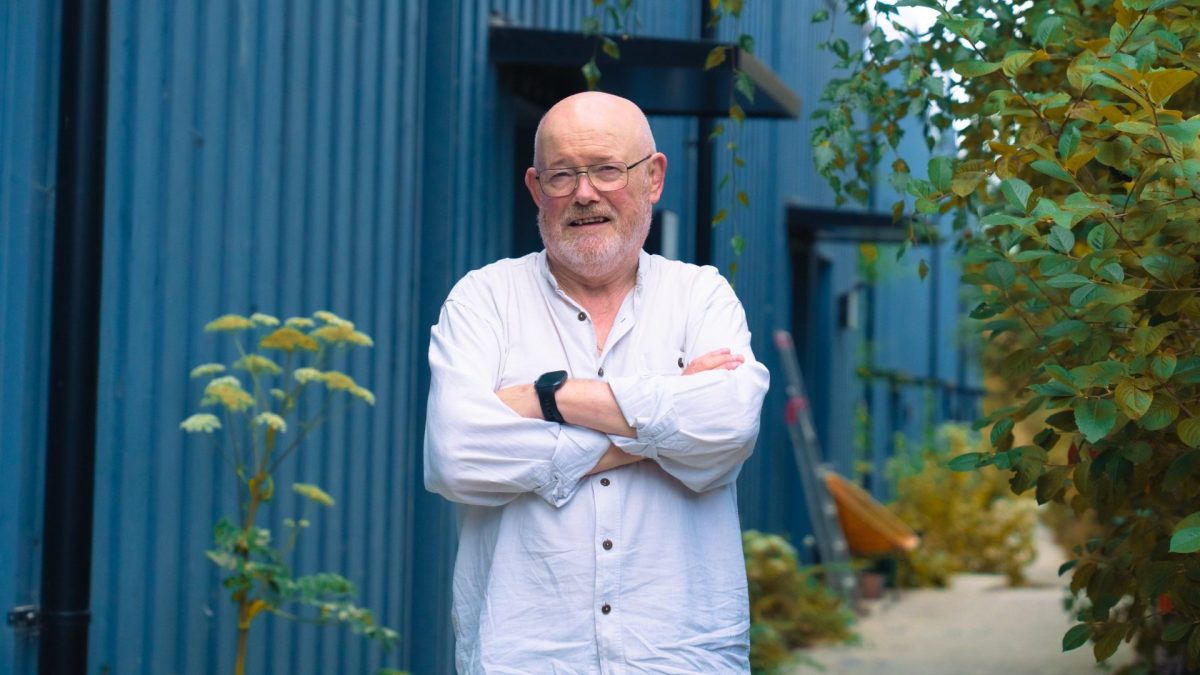
Many of us dread opening our energy bills, particularly in the colder months. But imagine opening your mail to discover your electricity bill is zero. For some people, like Fraser Jackson, it’s a reality. That’s because 73-year-old Jackson was one of the first customers in Britain to move into a “Zero Bills” new-build house, where he and his wife are guaranteed to receive free home energy for up to 10 years. A Zero Bills home is purpose-built to be energy efficient, with good insulation, triple glazing, solar panels, a heat pump, and a home battery. These technologies work together to power the home, and energy can be stored in the battery. It is effectively a miniature power station. Later, when demand on the grid is high, that energy can be used in the home or sold back to the grid. Shorts In 2022, Octopus Energy launched a world-first Zero Bills tariff to let hundreds of customers move into these homes with the promise of no energy bills. Now other brands are catching on to rewarding customers this way: Santander launched the first high-street mortgage for these Zero Bills homes. It allows buyers to borrow up to £30k more than for a “normal” house because it recognises they have lower monthly outgoings (no bills). * Four years ago, Jackson bought his property on the 10-unit development in Walthamstow. Ringed by dahlias flowers and edible plants, with a residents-only electric car club and reuse centre, and has won three awards for ingenuity for its architect, GS8. There is no gas on the site, to further reduce carbon emissions and the development is effectively self-sufficient. Indeed, it was a combination of the environmental benefits and the allure of not paying for energy bills that attracted Jackson to the property, but what really sealed the deal was the look of the home, with its soft blue-grey timber exterior. “We were looking for a two-bedroom ground floor flat in central London, and we just happened to be in the area, saw this house, and fell in love with it. Our previous home had poorly insulated walls, and because it was grade two listed, you couldn’t really upgrade it,” he says. ‘It stays cool in the summer, and warm in the winter, which is exactly what you need with the regular heatwaves,’ says Jackson, 70 Even the construction phase and hard landscaping embodied the environmental ethos, as materials from the original site were salvaged and were seamlessly recycled into the design. Prices for homes on this particular development typically ranged from £900,000 to £1,200,000, which is not inexpensive, even by London standards (Jackson’s home is one of the smaller ones on the site). But, as Jackson says: “While this home cost more than similar properties in the area, the house price won’t depreciate, and the zero bills aspect will help keep monthly costs down.” Jackson doesn’t recall the exact figure he was paying for energy in his previous four-bedroom house in Islington, but at current Ofgem price cap rates (between October-December 2026) for a typical (median) UK home, a typical Zero Bills household could save around £1,723 per year. As he comes up to the four-year anniversary of moving to the development, he should have saved at least £6,000. Jackson hasn’t used the savings to fund a lavish lifestyle, but admits that it can help him indulge in meals out and he doesn’t have to worry about being able to afford to heat his home every time another energy price hike is announced, unlike his friends. Jackson’s home initially was guaranteed as no bills for five years. That has now been extended to a decade. What happens when the guarantee runs out? Octopus says that they fully expect the tariff to continue, which reassures residents who can’t predict how high energy prices will climb over the next decade. One of the many benefits of the house is the insulation does its job well, as Jackson says: “It stays cool in the summer, and warm in the winter, which is exactly what you need with the regular heatwaves.” And despite all the gadgets that come along with the house, you don’t have to be tech-savvy, as the maintenance of the equipment is all done by the energy supplier. If the Zero Bills scheme seems too good to be true, it comes with some caveats. There is a fair use allowance, which is set at roughly double the average household usage. And electric vehicle charging is billed separately, but you are automatically charged at the cheapest rates. So far, Octopus has approved over 6,000 Zero Bills homes through partnerships, covering affordable and private rent, plus private and shared ownership properties. In 2024, Octopus and Sovereign Network Group (SNG) customers became the first social housing residents to move into homes with no energy bills for at least five years. The energy company is also working on retrofitting existing properties, turning a Victorian terrace in Walthamstow, London, into the first existing UK home to qualify for the Zero Bills tariff. Crucially, the terrace didn’t need to be gutted for upgrades. It already had double glazing and loft insulation, but was by no means a low-energy home. To transform it into a zero-bills home, it only needed solar panels, a battery and a heat pump, costing around £15,000 per house. The house is part of a series of trials by Octopus, aimed at rolling it out to homeowners and landlords everywhere. By working with developers, councils and innovators across the industry, they plan to build 100,000 Zero Bills homes by 2030. As for Jackson, he’s happy to have found his forever home: “I just love it here, I can’t imagine living anywhere else.”
I live in a zero-bills house – I’ve saved £6,000 in four years
Full Article
Original Source
Read the full article at Inews →KhanList aggregates and links to publicly available news content. We do not host full articles from third-party sources. Always verify important information with original sources.