
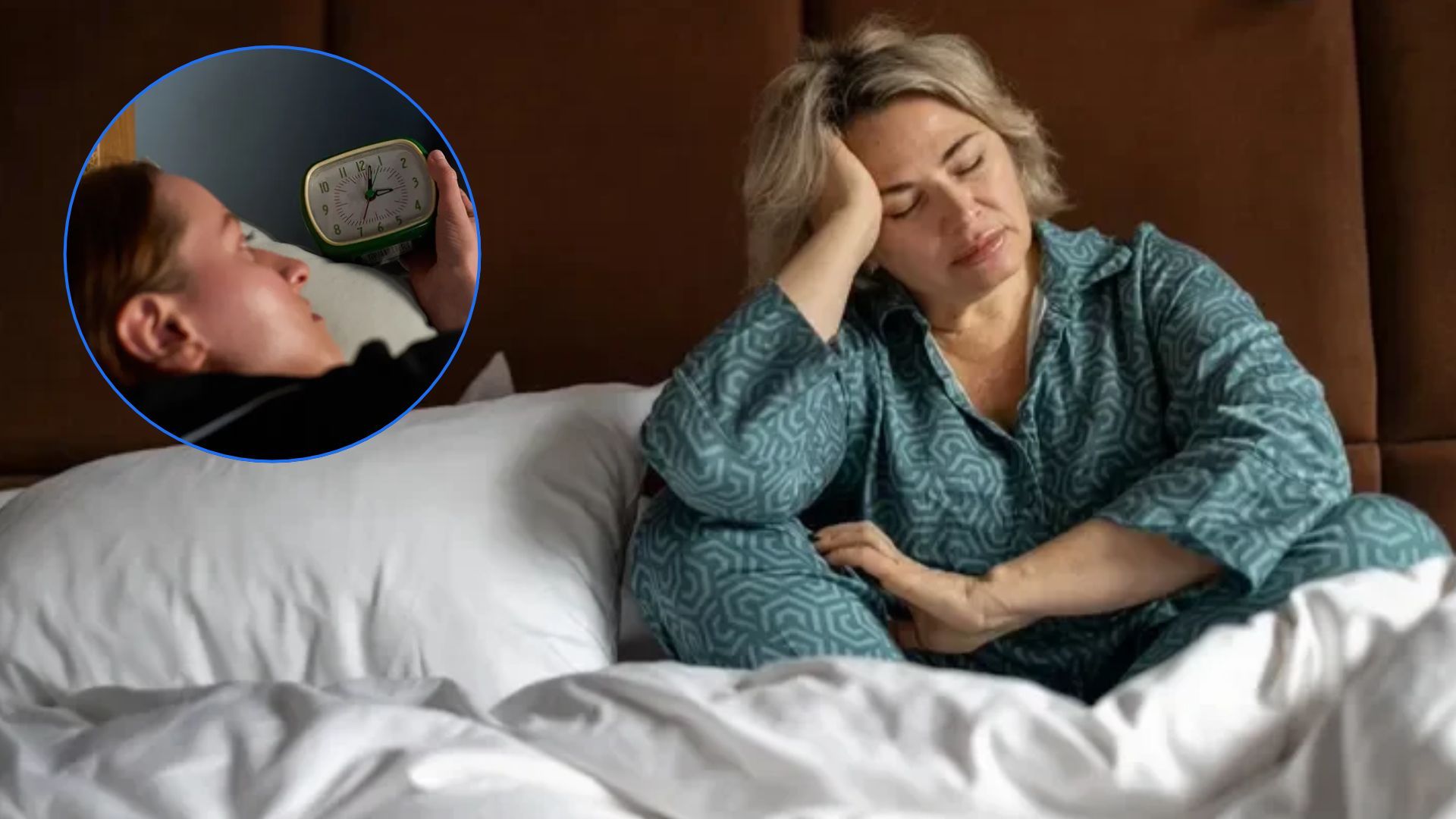
(Image credit: Getty Images) I used to be a great sleeper, nodding off at the drop of a hat and clocking my full eight hours every night. But then I hit 40 and suddenly I’m finding it difficult to fall asleep, stay asleep and am often wide awake at 3 a.m.Throughout my teens and twenties, sleeping was easy. It didn’t matter if I was on my friend’s couch, a plane or with my face pressed up against a bus window. My thirties were punctuated with raising young children, and sleepless nights were part of the gig.But now that I’m 40+ and my kids no longer disrupt my rest, sleep is something I’m still struggling with. To find out why and what I can do to get the rest I need, I spoke to Dr. Chris Winter, a double boarded sleep specialist and Dr. Shelby Harris, board-certified clinical psychologist at Better Sleep.How turning 40 impacted my sleep (Image credit: Getty Images)As a sleep writer and product tester, I have everything I need for a great night’s rest. I’m sleeping on the best mattress for my body type, I have a silk eye mask to block out ambient light and I pop in my sleepbuds every time noise threatens to disrupt my peaceful sleep sanctuary.And yet, sleep is elusive. Instead of feeling relaxed and ready for rest, anxiety often washes over me and I’m alert, with my heart pounding. On the nights that I do drop off quickly, it’s common for me to then be wide awake at 3 a.m., feeling haunted by some vague worry. It's a problem that's only developed in recent years.I’m exhausted, frustrated and ready for answers.4 common causes of sleep disturbances for those aged 40+"There is no switch that suddenly flips at age 40, but several biological and lifestyle factors can begin converging during this stage of life," explains Dr. Winter, a board certified neurologist with over 30 years of clinical experience.Get instant access to breaking news, the hottest reviews, great deals and helpful tips.These are the most common causes of sleep disturbances among those aged 40 and over...1. Sleep becomes lighter"Sleep naturally becomes somewhat lighter and more fragmented as we age, making us more susceptible to being awakened by noise, temperature changes or physical discomfort," explains Dr. Winter, who is a member of Natrol Scientific Advisory Board.Dr. Harris also highlights the biological shift that occurs as we get older, leaving us more susceptible to nighttime awakenings. (Image credit: Getty Images)"As we age, we spend less time in deep sleep and more time in lighter stages, making us more likely to notice brief awakenings," explains Dr. Harris, who specializes in behavioral sleep medicine.Dr. Winter points out that most people wake briefly several times during the night, perhaps without even remembering. "More meaningful considerations are how long someone remains awake, how distressed they feel about the awakening and whether it affects how they function the following day," he explains."The key is to look at what is happening around that 3 a.m. wake-up, like temperature, stress, alcohol, medications, snoring, or other symptoms, rather than assuming the clock time itself points to a particular cause," advises Dr. Harris.2. Hormonal fluctuationsAs a 42 year old woman, I can't ignore the hormonal shifts that could be contributing to my sleep disturbances. "As we move into our 40s, several factors can begin to disrupt sleep that may not have been an issue earlier in life," explains Dr. Harris."One of the biggest is hormonal change, particularly the fluctuations in estrogen and progesterone that occur during perimenopause and menopause, which can contribute to night sweats, temperature changes, anxiety, and more fragmented sleep," the psychologist adds.For me, nighttime anxiety has become a significant cause of my sleep disruptions. Knowing that hormonal fluctuations could be behind that shift in my mental health gives me hope that this feeling is temporary. (Image credit: Getty Images)3. Daily stressorsThose in the 40+ age category are often part of the sandwich generation; we're raising children and caring for ageing parents. Throw in money worries and work pressures and we've created a perfect storm of stress — and that has a knock-on effect on our sleep."We tend to become more sensitive to stress as responsibilities around work, family, and caregiving accumulate," agrees Dr. Harris.Stress can trigger the production of the 'stress' hormone cortisol. Levels of cortisol naturally begin to rise around 3 a.m. as part of our Cortisol Awakening Response (CAR), before peaking when we wake up. However, a higher baseline level of cortisol can lead to a stronger CAR, waking you up prematurely.4. More susceptible to sleep disorders (Image credit: Getty Images)Studies suggest that as we age, our risk of developing common sleep disorders such as restless legs syndrome, sleep apnea and nocturia increase.Dr. Winter concurs with this. He notes that "restless legs syndrome and sleep apnea, the risk of which can increase as we age" are among contributors to disturbed sleep for people in the 40+ age group.Regardless of your age or stage in life, if you have developed new symptoms that prevent you from getting the sleep you need it's important to discuss this with your doctor.How to sleep better throughout midlife and beyondGreat sleep can be harder to come by as we advance in years. However, Dr. Winter and Dr. Harris share their top tips for managing age-related sleep disturbances, so you can get the rest you deserve.Don't panic: "Don't panic about an occasional bad night; worrying about sleep can actually make the problem worse," says Dr. Harris.Stick to a consistent sleep schedule: "Maintaining a consistent wake time each day, even after a difficult night, can help anchor the body’s internal clock," says Dr. Winter.Get plenty of morning sunlight: Like a consistent sleep schedule, natural sunlight can anchor your circadian rhythm, helping you to feel tired and alert at the right times.Keep a sleep diary: "Keeping a sleep diary for a week or two can help identify patterns involving stress, food, alcohol, exercise, medications or physical symptoms," advises Dr. Winter.Optimize your bedroom for sleep: Sleep becomes lighter as we age, which means we're more susceptible to light, sound and temperature-related disturbances, so keep your bedroom cool, dark and quiet. Follow Tom's Guide on Google News and add us as a preferred source to get our up-to-date news, analysis, and reviews in your feeds. Nicola is the Sleep Editor at Tom’s Guide. With a career in journalism spanning two decades, Nicola brings experience to the team and the knowledge of what makes a great article, whether that’s a how-to mattress cleaning feature, a deep dive into melatonin gummies, or an in-depth mattress review. As a sleep editor, few better understand how important a decent mattress is to the overall quality of our sleep, and precisely how our sleep impacts our physical and mental health. As well as tackling the vast topic of sleep, Nicola joins the raft of expert mattress specialists at Tom’s Guide, who test and compare a wide range of mattresses in order to guide readers towards the very best options on the market.
I hit 40 and suddenly started waking up at 3 a.m. every night — sleep doctors explains why, plus how to fix it
Full Article
Original Source
Read the full article at Tomsguide →KhanList aggregates and links to publicly available news content. We do not host full articles from third-party sources. Always verify important information with original sources.