
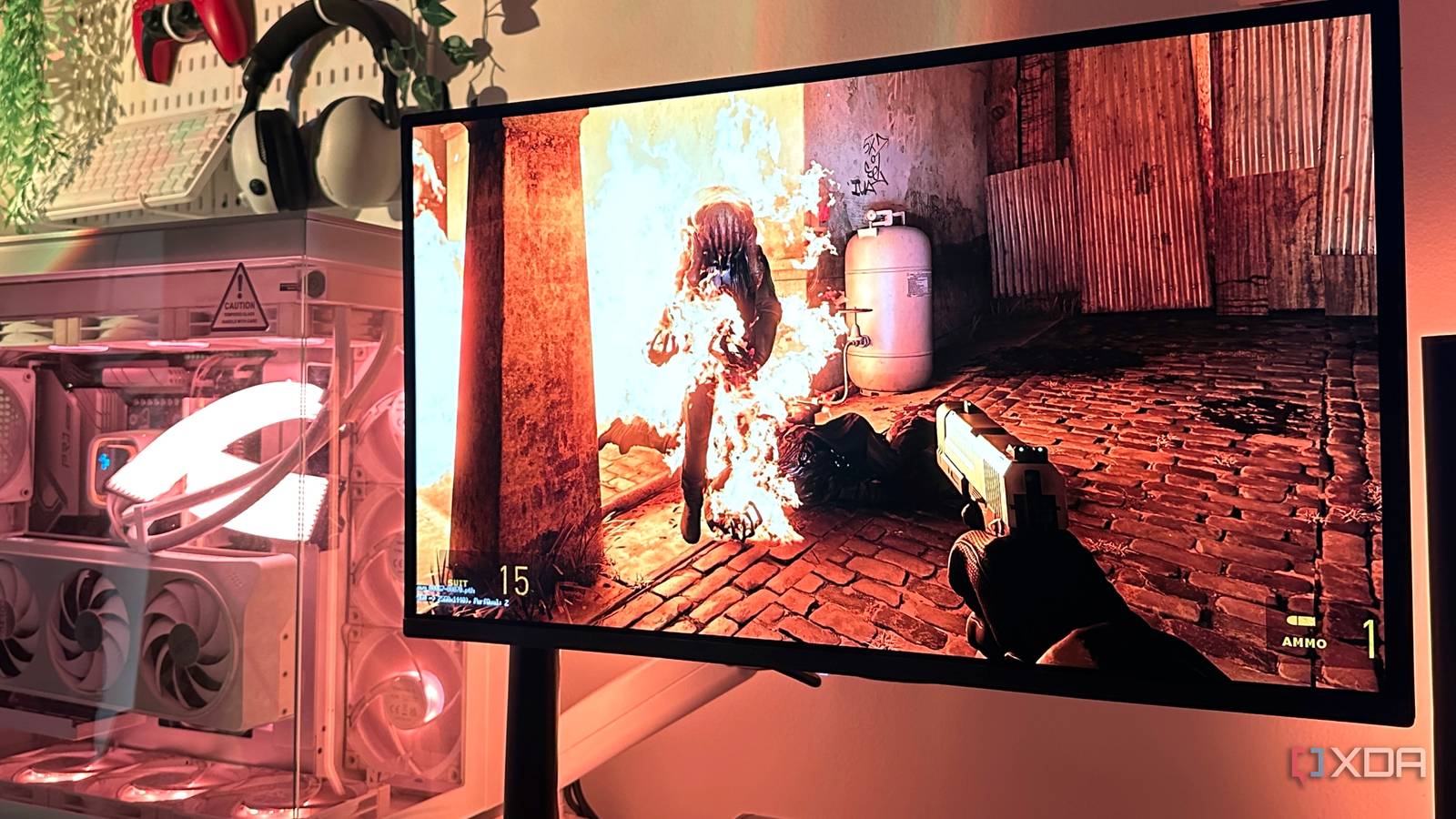
Published Nov 9, 2026, 6:00 PM EST Gaming has been Samarveer’s greatest passion, and the Literature graduate in him takes immense joy in dissecting games for their themes, messages, and impact. Samarveer holds a deep appreciation of gaming, and considers the platform to be the most immersive and impactful across all media. He can be found engaging with gaming communities online, always ready to debate the finer points of ray tracing or itching to write an 8-page collegiate thesis on any game that impacts him emotionally. I've spent the last few weeks forcing DLSS 5 into games that were never designed for it, so naturally, my next terrible idea was to go in the opposite direction. Instead of bringing Nvidia's latest neural rendering tricks to modern games, I decided to see what happens when you give some of my favorite old PC games a completely new lighting system. I'd been meaning to try RTX Remix for almost two years, but I never got around to it until now. Thankfully, three classic games in my own Steam Library had dedicated RTX Remix mods ready to play, and I couldn't believe my eyes when I finally played them. RTX Remix makes old games look new again The most ridiculous remaster you can make yourself RTX Remix is essentially Nvidia giving modders a way to tear apart the rendering pipeline of older DirectX games and rebuild it with modern lighting. Instead of simply increasing texture resolution, Remix can replace old materials with physically-based ones and introduce full path tracing, turning decades-old scenes into something that can look surprisingly contemporary. This isn't a conventional remaster, though. Nobody at Valve went back and rebuilt Half-Life 2 from scratch, after all. These are community-driven projects using Remix to fundamentally change how light behaves inside games that were never designed to handle it. We know that older games relied on baked lighting, static shadows, and clever visual tricks to create depth. RTX Remix takes that entire pipeline and replaces it with dynamically calculated lighting. This is also where my DLSS 5 obsession comes in. I've already spent enough time watching Nvidia's neural rendering transform modern games that I wanted to see whether path tracing could do something even more impressive to games old enough to drink. After firing up these RTX Remix projects, I think I may have found exactly that. Getting RTX Remix to work is only half the battle The magic happens after the game has already rendered RTX Remix works by intercepting the rendering calls made by compatible DirectX 8 and 9 games, and effectively replacing their ancient fixed-function rendering pipeline with a modern one. From there, Remix adds physically based materials, path-traced lighting, and Nvidia's upscaling and ray reconstruction technologies without requiring developers to rebuild the entire game. For my testing, I used my RTX 4070 Ti system, which is still a surprisingly capable little torture chamber for this sort of experiment. Half-Life 2 RTX and Portal with RTX were straightforward enough to get running, since they have simple Steam pages for downloading the RTX Remix mods. Depending on how much work a modder has put into a game, an RTX mod's assets, lighting, materials, and compatibility can vary wildly. Max Payne was particularly stubborn, because getting a community-made Remix project running isn't quite as simple as installing a Steam game and pressing Play. Clearly, RTX Remix isn't magic. The framework provides the tools, but someone still has to rebuild the assets and make everything behave. When it works, though, the difference between the original renderer and a fully path-traced version can be ridiculous. RTX Remix, when done right, trumps DLSS 5 Half-Life 2 RTX is still the star of the show Half-Life 2 RTX is technically unfinished, with the current mod limited to Ravenholm and Nova Prospekt, but I genuinely don't think that matters. These two chapters are among the best demonstrations I've seen of what modern lighting can do for a 2004 game. Ravenholm in particular feels almost unrecognizable once every light source starts behaving like an actual light source. Every flickering flame and creepily swinging lightbulb in the RTX Remix version of Ravenholm is breathtaking, and it's nothing short of a modern-day remake. The performance hit is, naturally, hilarious. My RTX 4070 Ti went from around 900 FPS to just 111 FPS with path tracing enabled. That's a ridiculous drop, but it's also par for the course, especially with anything with the "RTX" prefix in its name. The number that matters is 111 FPS, not the frankly useless 900 FPS I started with. More importantly, even multiple DLSS 5 neural rendering passes couldn't replicate what Nvidia achieved here. Path tracing fundamentally changes how Ravenholm is lit, shaded, and ultimately perceived, and that's a much bigger transformation than another layer of neural rendering could provide. For Portal RTX, the transformation is just as dramatic, although it hits differently. Portal's sterile test chambers were already built around clean surfaces, bright lights, and reflective materials, which makes them almost perfect for path tracing. The portals themselves are the obvious showstopper, but the way light spills through the chambers, bounces off surfaces, and interacts with the environment made me stop and stare. As with Half-Life 2, the price of admission was performance. Portal RTX absolutely hammered my GPU, but the visual difference it offered in exchange for that path-tracing tax was worth it and then some. And after seeing what Remix does here, I was starting to understand why comparing it with DLSS 5 isn't nearly as straightforward as I initially thought. RTX Remix is more than a nostalgia trip After spending time with RTX Remix, I don't think it's fair to call these projects simple visual upgrades anymore. It is a fundamentally better way of presenting environments that were already brilliantly designed. That doesn't mean everyone should start installing Remix mods, though. You still need an RTX GPU with enough horsepower to absorb the considerable performance hit, and even then, community projects can involve enough troubleshooting to make a normal remaster look wonderfully convenient. I'd personally draw the line at an RTX 40-series card, especially if you want to run path tracing without turning your graphics settings into a negotiation. Portal with RTX
I gave my old PC games path tracing with RTX Remix, and they look better than DLSS 5
Full Article
Original Source
Read the full article at Xda-developers →KhanList aggregates and links to publicly available news content. We do not host full articles from third-party sources. Always verify important information with original sources.