
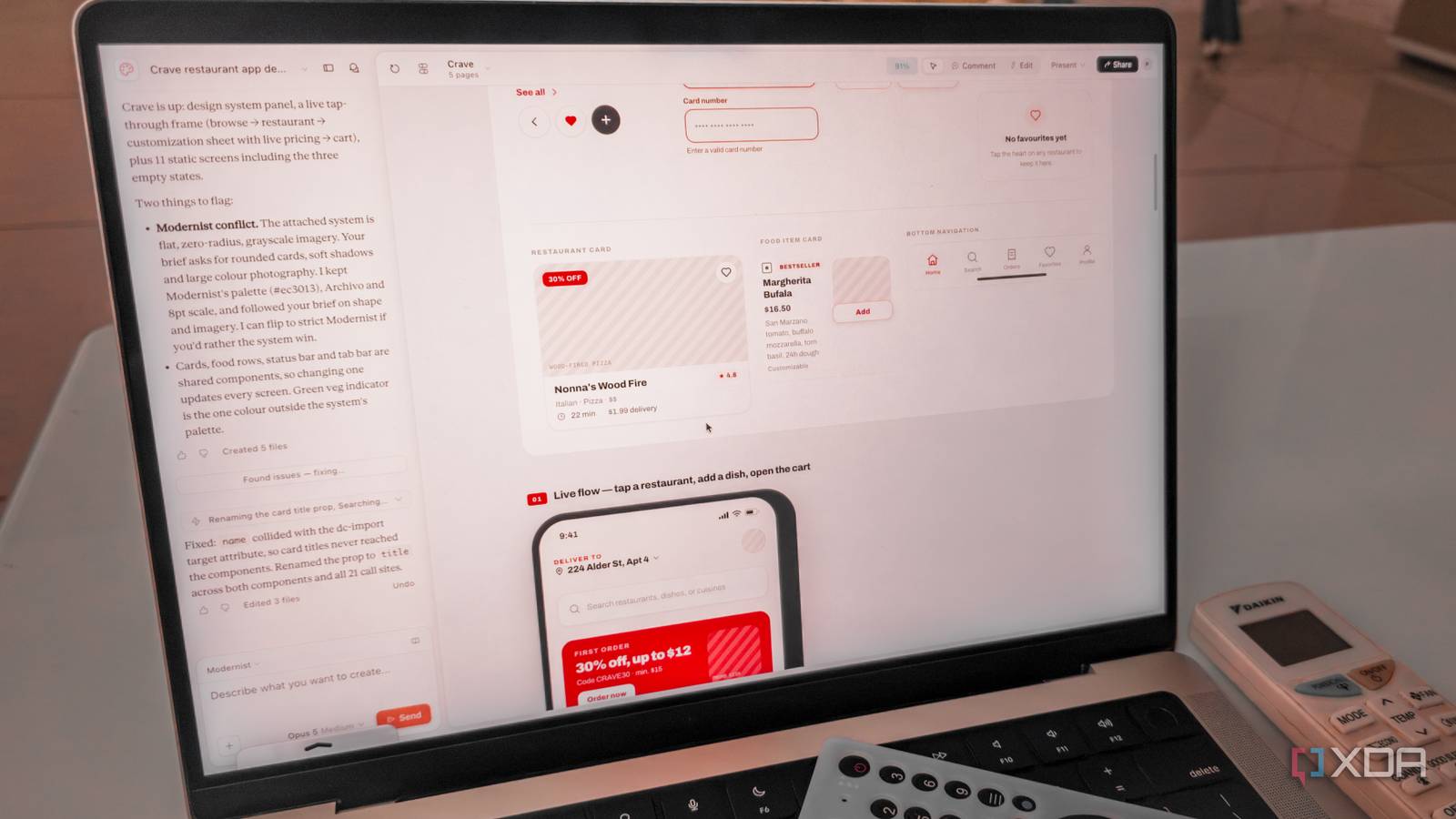
Published Aug 24, 2026, 6:00 AM EDT Parth, a seasoned tech writer, wields the keyboard (or pen) with finesse to unravel the intricacies of both Windows and Mac operating systems. He has covered evergreen content on mobile devices and computers for multiple publications over the last six years. You can find his work on AndroidPolice, GuidingTech and TechWiser. Whether it’s demystifying system updates, deciphering error codes, or exploring hidden features, Parth’s prose guides readers through the binary maze. When not immersed in tech jargon, you’ll find him sipping chai, pondering the next software review, and occasionally indulging in a friendly debate about mechanical keyboards. I have spent enough time switching between ChatGPT, Gemini, Perplexity, and Claude to know that most AI assistants are starting to feel similar. Switching between them often comes down to small differences in speed, integrations, or output quality. But recently, I came across something in Claude that felt different (in a positive way). Once I started using Claude Design for actual projects, I just didn’t find myself opening the other apps much anymore — so canceling them felt like an easy call. What is Claude Design, anyway? It doesn’t aim to rival Figma or PowerPoint Claude Design feels like a separate creative workspace built around Claude. The interface makes that obvious: a conversation area on one side and a visual canvas on the other. I can explain what I want in plain English, and Claude starts building it directly on the canvas instead of just telling me how to create it myself. Claude Design is Anthropic’s beta tool for creating visual work through conversation. It can handle mockups, interactive prototypes, presentations, landing pages, microsites, and other design concepts. With a traditional chatbot, I might ask for ideas for a dashboard and get a written description, some HTML, or perhaps an image. Here, the design itself becomes the thing I am working on. It almost feels like having an AI-powered design app sitting inside my existing subscription. I can start with a rough idea, watch Claude turn it into something visual, and then continue working on the same project rather than copying the output into another tool. And that’s before getting into the editing, prototyping, design system, and export features that made it useful for me. I can go from an idea to something tangible There are so many use cases This is where Claude Design started making a real difference in my workflow. I often have an idea in my head, but I don’t necessarily want to spend an hour opening Figma, PowerPoint, or Canva just to see whether it works. With Claude Design, I can start with a rough description and turn it into something I can view, share, and refine. The built-in templates make the process even faster. I can even set up a design system, so Claude has a consistent set of colors, typography, components, and visual rules to follow across a project. This becomes useful when I want several screens or assets to feel like they belong to the same product. If I am discussing a jewelry e-commerce website, for example, I can quickly mock up a premium-looking storefront with product cards, category sections, filters, and a checkout flow. For a food delivery app, I can create mobile screens showing restaurants, menus, carts, and order tracking. And if I am working on something different, such as a presentation about financial planning, I can turn the same rough ideas into a polished deck with charts, layouts, and a consistent visual language. That flexibility is what makes Claude Design so useful to me. I am not limited to websites or app interfaces. One day I can be working on a client wireframe, the next on a presentation, diagram, flyer, or animation. The possibilities are endless. The Claude Code handoff sold me I’m not locked inside Claude afterward The part that sold me on Claude Design is what happens after I am happy with a concept. I don’t have to treat the mockup as the end of the road. Claude Design can hand the project directly to Claude Code, which makes the transition from design to development much more natural. That changes how I approach quick client work. If I create a jewelry e-commerce mockup and the client likes the overall direction, I can move that design into Claude Code and start turning it into a working site instead of rebuilding the structure from scratch. The same applies to a food delivery app concept. I can first focus on the visual hierarchy, screens, navigation, and overall feel in Claude Design, then hand it over when I am ready to think about implementation. I also appreciate that Claude Design doesn’t force me to keep everything inside Claude. Once I am done, I can export the project in several useful formats, including PDF, PPTX, standalone HTML, or a ZIP file. I can also send designs directly to tools such as Canva and other supported services. That removes one of my biggest concerns with AI creation tools: getting something impressive on screen, only to realize that it’s trapped inside the service that generated it. Claude became more than a chatbot Canceling ChatGPT, Gemini, and Perplexity wasn’t really about deciding that Claude is better at everything. Most AI assistants can already handle the basics and code well. But Claude Design is what finally broke that pattern for me. It gave me a practical way to turn rough ideas into polished visuals, prototypes, and concepts without jumping between multiple tools. That one feature made it a complete creative workspace. I still think the competition has plenty of strengths, but for the way I work right now, Claude gives me something uniquely different. Claude is an AI assistant that rivals ChatGPT, Gemini, and Perplexity.
I found this Claude feature so good that I canceled ChatGPT, Gemini, and Perplexity
Full Article
Original Source
Read the full article at Xda-developers →KhanList aggregates and links to publicly available news content. We do not host full articles from third-party sources. Always verify important information with original sources.