
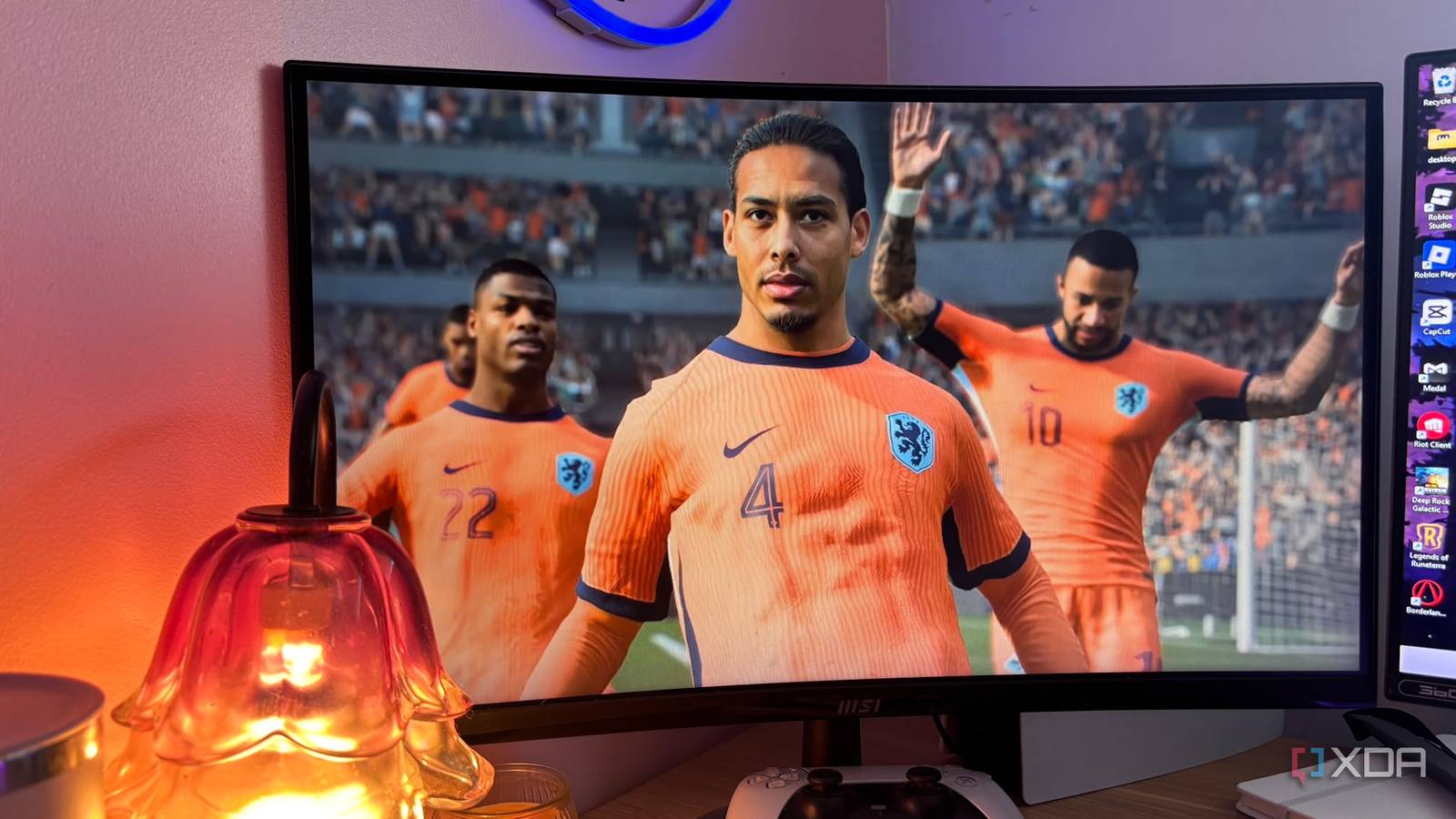
Published Oct 4, 2026, 8:00 PM EDT Jasmine is Software and PC Hardware Author at XDA with years of tech reporting experience ranging from AI chatbots right down to gaming hardware, she's covered just about everything. Whether it's breaking news about the latest AMD NPUs or creating video tutorials on social media platforms, Jasmine has contributed to the world of AI and tech in a variety of ways including interviewing the CEO of Razer, AMD's Director of Product Marketing and the VP of Lenovo. Passionate about gaming and PC technology, she has built countless computers, keyboards and other peripherals - knowing them inside and out. Within NVIDIA's initial rollout of DLSS 5 and its headline feature, 3D guided neural rendering, there was an element of excitement. However, this was quickly undercut by the reveal of the graphics it produces and the uncanny valley it creates. Outside of this, it promised unprecedented realism, geometry reconstruction, and fully realized AI-generated lighting pipelines, which sounded like a generational leap if you can look past the nightmarish AI-generated faces. Of course, the RTX 50 series hardware features an optimized tensor architecture designed to swallow heavy neural workloads. However, pushing DLSS 5 onto an RTX 4080 reveals a very different story. After toggling it on and dealing with unexpected frame drops, input latency spikes, and uncanny valley visual glitches, even more so than you'd expect, you realize that bleeding-edge AI features on previous-gen cards come with severe compromises. Realistically, NVIDIA wants you to think that DLSS 5 represents the future of real-time graphics, but forcing it onto last-generation hardware exposes a painful performance cost to the point that I actually regretted turning it on. Why is DLSS 5 so demanding? Your hardware is going to suffer DLSS 5 is so computationally heavy. It's a shift from traditional upscaling to full neural rendering, which makes it a pretty needy piece of kit. Unlike DLSS 2 or 3, which focused on temporal upscaling and frame generation, it moves beyond standard pixel reconstruction. DLSS 5 introduces intensive 3D-guided neural rendering stages that reconstruct complex geometry and lighting in real time. Of course, this all sounds great on the surface, but when factoring in whether or not your hardware is actually capable, even just the last generation, like the RTX 40 series graphics cards, feels like it's pretty much incapable of dealing with the demand. I'd hate to see how generations before that would cope with DLSS 5. While Ada Lovelace, the RTX 40 series, packs immense raw compute, its fourth-generation Tensor cores lack the specific architectural optimizations built into Blackwell for heavy neural network inference models. This causes a massive pipeline tax. Essentially, the Tensor core is the bottleneck here. DLSS 5 on my 4080 was not worth the effort I'll be switching it off immediately The hardware not being able to keep up with DLSS 5 leads to a major performance cost, especially in frame rate and latency. I observed a penalty during testing. Instead of a net performance gain, running early DLSS 5 implementations or unoptimized builds on an RTX 4080 can introduce unexpected performance degradation compared to later mature iterations like DLSS 3 or 4. Alongside this, there was quite a lot of stuttering. Managing the massive memory overhead required by neural rendering models pushes even a high-end 16GB card to its limit. This results in stuttering during heavy asset streaming, particularly As if all of this wasn't enough, there are also a lot of visual drawbacks too. Of course, you get that standard uncanny valley effect. This is something many users were quick to criticize when NVIDIA first revealed its DLSS 5 technology, and it's no different even on older architecture. Alongside this, there's a lot of artifacting because 3D guided neural rendering tries to predict and fill in complex spatial details. Fast motion can cause structural geometry to warp, leading to surreal, nightmarish visual artifacts on fine textures like chain-link fences, hair, or distinct foliage. There are a lot of lighting and reflection inconsistencies. I don't know if this is because the hardware isn't powerful enough or because DLSS 5 isn't fully optimized for every title yet. Real-time neural lighting models occasionally misinterpret shadow boundaries. This creates artificial halos or glowing artifacts in dark scenes that can completely break immersion. It feels inconsistent and ruins the gameplay experience, even more than running it without DLSS at all or with an earlier iteration. Are you still considering DLSS 5? It all depends on your hardware For users who are still running previous-generation hardware, you may be wondering whether DLSS 5 is worth chasing. Right now it's still very early, and you're better off waiting for official optimization. NVIDIA is still tuning DLSS 5 for older architectures, so these early enthusiast implementations, mods, or workarounds can't fully bypass hardware constraints. Yes, you can run DLSS 5, but that doesn't mean you'll be able to run it adequately. My experience has been proof of that. Sometimes, sticking to a rock-solid DLSS quality mode or traditional path tracing setting can yield a vastly superior stutter-free gaming experience rather than forcing an unoptimized generational feature. The payoff isn't big enough to justify running DLSS 5, and realistically, you don't want to stare at faces that don't look quite right instead of the artwork the developers intended you to see. Wait it out Optimization is hopefully coming DLSS 5 is a glimpse into an AI-driven graphical future, but forcing it onto older hardware means there are pretty intense limits on hardware transitions. Instead of just blindly toggling on every new AI graphics setting in pursuit of a buzzword, you're better off waiting until official mature optimizations arrive for older architectures. The best setting keeps your frame rate stable and your visuals artifact-free, because that is what guarantees a positive gaming experience.
I forced DLSS 5 onto my RTX 4080, and the performance penalty made me regret it instantly
Full Article
Original Source
Read the full article at Xda-developers →KhanList aggregates and links to publicly available news content. We do not host full articles from third-party sources. Always verify important information with original sources.